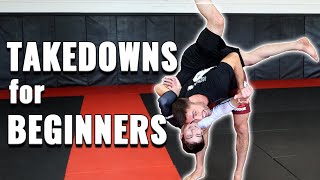
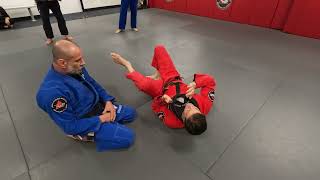
Why Starting Position Matters
The instructor prefers students choose a defined top or bottom position rather than starting on the knees, as this is more practical for both jiu-jitsu and self-defense applications. Starting from the knees often leads to stalling and favors larger opponents who can rely on strength rather than technique.
The Dangers of Dead Weight
When maintaining a static knee position with dead toes, larger opponents can drive forward and pin the legs underneath, forcing the defender onto their side and allowing an easy guard pass. The instructor emphasizes the importance of staying on live toes to maintain mobility and prevent this common problem.
Wrist Control as a Starting Advantage
Establishing a fake grip on the opponent's wrist immediately provides positional dominance. This fundamental control allows the defender to dictate the engagement and stay ahead of their opponent.
Arm Drag Technique from the Knees
The arm drag is executed by pulling the opponent's trapped arm across the body and stepping to their back in one fluid motion. This simple yet effective technique transitions the defender to a strong attacking position.
Knee Pick Takedown Setup
Using a head tie with the far-side hand, the defender executes a knee pick by dropping their elbow to the opponent's knee while peeling downward on the head with a scissor-like motion. This technique mirrors the ankle pick used in standing positions and effectively puts the opponent on their back.
Over-Under Counter Attack
When the opponent establishes an over-under position, the defender posts their foot and drives the elbow downward like a freestyle swimming motion to turn them over. The opponent can reverse this by posting their own leg and executing the same technique.
Snap Down to Offensive Opportunities
By hopping back and snapping the opponent down when they post their hands, the defender gains a superior position with multiple submission options including chin straps, anaconda chokes, guillotines, and loop chokes. The opponent's defensive position becomes a liability filled with vulnerabilities.
Combat Base as Optimal Starting Position
Combat base provides a balanced, mobile stance that allows the defender to either pull the opponent into guard or immediately begin a guard pass if the opponent pulls guard first. This position is superior to on-the-knees positioning and provides better control and positioning options.
Guard Pass from Grip Control
With proper grips established in combat base, the defender steps their foot beside the opponent's hip, then pulls and pushes simultaneously to transition into a dominant passing position. This high-percentage technique demoralizes opponents from the match's outset.
Defending the Backward Throw Counter
When the opponent resists the pass and throws backward, the defender maintains their grips and hooks the opponent's foot with their arm while securing the collar. They can then progress to an arm lock or reverse triangle by controlling the opponent's armpit and setting up the final position.
Starting From the Knees - Do's and Don'ts - Leviathan Brazilian Jiu-Jitsu Chattanooga
Key Takeaways
- •Why Starting Position Matters
- •The Dangers of Dead Weight
- •Wrist Control as a Starting Advantage
- •Arm Drag Technique from the Knees
Don't forget to SUBSCRIBE, like,share, and leave a comment🤙 www.leviathanacademy.com @StillRolling Origin USA https://originmaine.com/?ref=ukfvvSIA4Wbf07&utm_source=affiliate STILLROLLING 10% Off XMartial Gear https://www.xmartial.com/?ref=STILLROLLING Also use promo code: STILLROLLING for an extra 10% off Illusive Fight Wear https://www.ilsv.net/shop.html @illusiveapparel StillRolling22 10% off #xmartialgear #StillRolling #leviathanacademy #stillgrowing #leviathanbjj #leviathanbrazilianjiujitsu
Frequently Asked Questions
What does this video teach about beat down position?
This video covers why starting position matters, the dangers of dead weight, wrist control as a starting advantage. It provides detailed instruction from Still Rolling.
How long does it take to learn beat down position?
The basic mechanics can be understood in a single session, but developing reliable execution requires consistent drilling over weeks of practice. This 10-part breakdown helps structure your training by isolating each phase of the technique.
What are the key details for finishing beat down position?
With proper grips established in combat base, the defender steps their foot beside the opponent's hip, then pulls and pushes simultaneously to transition into a dominant passing position. This high-percentage technique demoralizes opponents from the match's outset.