Introduction to Side Control Attacks
Instructors Vince DeNable and Aaron Hurley demonstrate multiple submission techniques from side control, a dominant position in Brazilian Jiu-Jitsu. The lesson focuses on maintaining control while setting up various finishing techniques from a single positional framework.
Foundational Side Control Structure
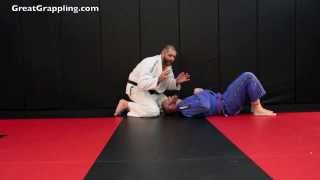
The basic side control setup utilizes a gable grip (underhook catching the opponent's hand) with the attacking player's shoulder driving into the opponent's neck to prevent turning. Proper leg placement—with the attacking player's leg under the opponent's arm—prevents the opponent from posting their elbow and escaping via shrimping.
Transitioning to Attack Position
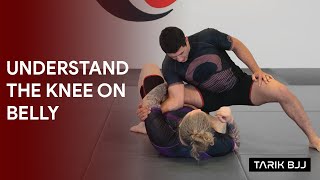
From the basic hold, the attacker opens their leg position to transition into a more aggressive posture. The knee is placed across the opponent's low belly while maintaining an underhook, creating isolation of the opponent's arms and neck. The attacking player's foot is flexed and positioned snugly against the opponent's hip to move fluidly with any escape attempt.
Guillotine Choke Variation
With the opponent turned toward the attacker, an arm is brought over the neck in guillotine fashion. The far lapel is fed into the hand, and the choke is finished by pulling upward. This submission capitalizes on the isolated arm position created in the setup phase.
Wrist Lock Attack
When the opponent's arm is isolated with the attacker's shin positioned across the elbow, the arm is lifted to set up a wrist lock. This technique exploits the trapped arm position and requires minimal additional movement to complete.
Kimura Lock Finish
The Kimura grip is established by capturing the opponent's wrist while maintaining control with an underhook at the shoulder. To complete the submission, the attacking player removes their knee, replaces it on the opposite side of the head, steps over, and drives the captured arm downward to finish the lock.
Far Side Spinning Armbar
The isolated arm is controlled tightly around the shoulder as the attacker pulls upward and steps over the opponent's head. The attacking player's knees are squeezed together while achieving a thumb-up grip on the wrist, then leans back to apply pressure and complete the armbar.
Maintaining Fluid Control
Rather than remaining rigid in a single position, the attacking player should move fluidly with the opponent's escape attempts. The key principles are keeping the opponent's arm pinned, maintaining shin contact, and keeping the foot attached to the opponent's hip to prevent half-guard entry or knee insertion.
Action-Reaction Philosophy
Side control's strength lies in providing a dominant control position from which multiple submissions can be launched based on the opponent's responses. The attacker can patiently wait for defensive mistakes and capitalize on openings, embodying the adaptive principle of Brazilian Jiu-Jitsu.
4 BJJ Submissions From Side Control
Key Takeaways
- •Introduction to Side Control Attacks
- •Foundational Side Control Structure
- •Transitioning to Attack Position
- •Guillotine Choke Variation
BJJ Coach Erin Herle is back with Vince 'The Anomaly' to show you 4 submissions from a very dominant side control position. You will learn a 1. guillotine lapel choke, 2. wrist lock, 3. kimura, and 4. spinning armbar. Let us know if you have any questions or requests down in the comments below! Erin Herle's IG►https://www.instagram.com/erinherle Subscribe to FIGHTTIPS►http://bit.ly/1APnzvw FOLLOW: Facebook | http://bit.ly/fightTIPSFacebook Twitter | http://bit.ly/fightTIPSTwitter Instagram | http://bit.ly/fightTIPSInstagram
Related Techniques
Frequently Asked Questions
What does this video teach about side control?
This video covers introduction to side control attacks, foundational side control structure, transitioning to attack position. It provides detailed instruction from fightTIPS.
How long does it take to learn side control?
The basic mechanics can be understood in a single session, but developing reliable execution requires consistent drilling over weeks of practice. This 9-part breakdown helps structure your training by isolating each phase of the technique.
What are the key details for finishing side control?
Rather than remaining rigid in a single position, the attacking player should move fluidly with the opponent's escape attempts. The key principles are keeping the opponent's arm pinned, maintaining shin contact, and keeping the foot attached to the opponent's hip to prevent half-guard entry or knee insertion.