Basic Six-Count Inward Pattern
The fundamental doble bastón sequence begins with an inward strike that travels across the body to the opposite shoulder, followed by a backhand strike that extends fully outward before retracting underneath. This pattern repeats on the opposite side, establishing the foundational rhythm of the six-count family. The strikes chamber underneath the body between repetitions, creating a continuous flowing motion.
Heaven, Earth, and Standard Variations
Three primary variations of the six-count pattern are distinguished by target height: heaven strikes aim high, standard alternates between high and low targets, and earth keeps all strikes pointed downward. When executing earth strikes, practitioners should squat at the knees and rotate the body while keeping the head back, rather than bending at the waist which exposes the head. These variations provide defensive angles and training progressions within the basic framework.
Prefixing Principle
Prefixing involves replacing the first stroke of any six-count pattern with any known striking combination, applying the principle of closest weapon to closest target. When receiving an angle one attack, the hand nearest the opponent is already positioned to execute a combination, eliminating unnecessary repositioning. This concept allows practitioners to adapt fluidly when either hand finds itself in the optimal position to initiate offense.
Downward Figure Eight Prefix
The downward figure eight serves as the first prefixing variation, where the initial motion becomes a three-count circular strike rather than a single blow. After completing three downward figure eight strikes with one hand, the opposite hand executes the remaining backhand and under strikes to complete the six-count cycle. This prefix builds hand coordination and creates flowing circular momentum within the pattern.
Watik and Horizontal Prefixes
Watik prefixes introduce linear striking variations into the six-count framework, with high watik and high horizontal watik options available. Practitioners should aim these strikes directly at the target—such as the partner's head in training—rather than raising the angle unnaturally to avoid contact. Proper target alignment ensures realistic application of the techniques while maintaining the drill's integrity.
Redondo and Four-Count Kawaiian
The redondo family represents circular striking combinations that can be integrated as prefixes within the six-count patterns. The four-count kawaiian variation sequences downward strikes, upward strikes, and a redondo circular motion before returning to the standard backhand and under finishes. This circular approach expands the practitioner's ability to flow through multiple striking angles.
Freestyle Integration and Flow
Freestyle doble bastón combines the structured patterns, prefixes, and transitions into continuous non-choreographed drilling, incorporating striking, blocking, and range changes with either hand. The resulting rhythm appears choppy with occasional breaks and mistakes, which indicates proper intensity rather than failure. Practitioners should increase pace if they successfully defend every strike, as continuous clean execution suggests insufficient pressure.
Sombrada and Mixed Freestyle Drills
Sombrada drilling allows both hands to freely strike or block independently, with transitions between long-range and close-range distances. This approach develops spontaneous adaptation as neither hand is assigned a fixed role, requiring constant tactical decision-making. The mixed freestyle format bridges structured pattern work with realistic application.
Mohara Running Drills
Moharas are named double-stick drill combinations performed while running, with the term meaning to encircle. One practitioner runs forward performing striking combinations while the other runs backward, with the aggressor sometimes spinning to assess environmental awareness. The San Miguel mohara exemplifies patterns like inward, backhand, heaven three transitions performed dynamically during movement.
Guro Harley Elmore: Doble Baston/Double Stick
Key Takeaways
- •Basic Six-Count Inward Pattern
- •Heaven, Earth, and Standard Variations
- •Prefixing Principle
- •Downward Figure Eight Prefix
These clips are from the Doble Baston DVD.
Frequently Asked Questions
What does this video teach about double stick — doble baston?
This video covers basic six-count inward pattern, heaven, earth, and standard variations, prefixing principle. It provides detailed instruction from WarriorswayTX.
How long does it take to learn double stick — doble baston?
The basic mechanics can be understood in a single session, but developing reliable execution requires consistent drilling over weeks of practice. This 9-part breakdown helps structure your training by isolating each phase of the technique.
What are the key details for finishing double stick — doble baston?
Sombrada drilling allows both hands to freely strike or block independently, with transitions between long-range and close-range distances. This approach develops spontaneous adaptation as neither hand is assigned a fixed role, requiring constant tactical decision-making. The mixed freestyle format bridges structured pattern work with realistic application.
Related videos
ESPADA Y DAGA BASIC TECHNIQUES | ESCRIMA STICK
Kali Center
KALI SINGLE STICK Fighting "tutorial" (pt 1) solo baston
Kali Kombat
Eskrima - Empty Hand Techniques (Mano Mano)
Chinese & Filipino Martial Arts
How to Disarm Arnis for Beginners
Maslee Official Vlog
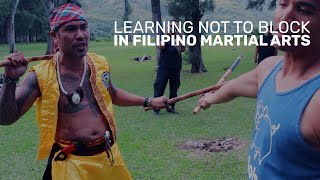
Learning Not To Block In Filipino Martial Arts
Budo Brothers