Why the Collar-Sleeve Pass Is Essential
The collar-sleeve pass is unique in jiu-jitsu because it remains effective from white belt level through elite competition. This technique is fundamental because it addresses a universal challenge: neutralizing the opponent's legs before executing any guard pass. By mastering this pass, practitioners gain a reliable threat that confuses opponents and enables seamless combinations with other passing strategies.
Fundamental Principles of Hip Control
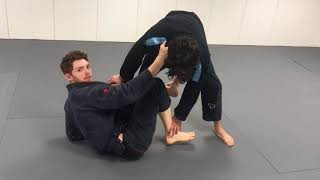
The core objective of the collar-sleeve pass is to rotate the opponent's hips away, eliminating their ability to generate power through leg and arm framing. When the opponent's hips face away, their defensive options diminish significantly. The practitioner locks the hip position using a single grip on the leg, making it nearly impossible for the opponent to rotate back or loop the leg over the top.
Exploiting Grip-Based Weaknesses
When opponents attempt to establish grips on the sleeve or collar, they sacrifice hip framing defense. The practitioner can identify which side the opponent is committing to and attack the opposite side. This defensive gap occurs instantaneously—even before the grip is fully established, the practitioner can initiate the pass and control the opponent's movement trajectory.
Knee Grip Mechanics and Finishing Principles
The knee grip provides superior hip control and generates stronger rotational force than alternative grips. When the opponent maintains a tight knee during the turn, the practitioner uses their free arm to pummels inside the leg space and applies continuous pressure. From this position, they can transition into knee-on-belly, side control, or north-south depending on how the opponent escapes.
Adapting to Side-Tilted Defense Positions
When the opponent is already tilted to one side, they cannot frame the hip with their arm, creating a critical vulnerability. The practitioner transitions to the opposite side with explosive momentum, pinning the opponent's hip without requiring full rotational force. The subsequent finishing sequences remain consistent: direct side control entry or exploitation of forward shrimp attempts to reach north-south position.
Maximizing Force Through Dual-Arm Application
Although the collar-sleeve pass is primarily a single-arm technique, practitioners can apply both arms when the opponent reaches for collar or sleeve grips and forfeits hip framing. In these moments, significant rotational force can be generated to turn the opponent decisively. Once the hip is locked, the practitioner immediately secures the pass by driving into the proper finishing position.
Simple Technique DESTROYS Black Belts
Key Takeaways
- •Why the Collar-Sleeve Pass Is Essential
- •Fundamental Principles of Hip Control
- •Exploiting Grip-Based Weaknesses
- •Knee Grip Mechanics and Finishing Principles
Frequently Asked Questions
What does this video teach about standard collar-sleeve?
This video covers why the collar-sleeve pass is essential, fundamental principles of hip control, exploiting grip-based weaknesses. It provides detailed instruction from JonThomasBJJ.
How long does it take to learn standard collar-sleeve?
The basic mechanics can be understood in a single session, but developing reliable execution requires consistent drilling over weeks of practice. This 6-part breakdown helps structure your training by isolating each phase of the technique.
What are the key details for finishing standard collar-sleeve?
When the opponent is already tilted to one side, they cannot frame the hip with their arm, creating a critical vulnerability. The practitioner transitions to the opposite side with explosive momentum, pinning the opponent's hip without requiring full rotational force. The subsequent finishing sequences remain consistent: direct side control entry or exploitation of forward shrimp attempts to reach north-south position.