Introduction to Body Triangle Control
The body triangle is the most effective control position when attacking from the back in no-gi grappling. Unlike neck-focused attacks, a properly executed body triangle forces the opponent to redirect their defensive focus, allowing the attacker to control the entire torso with minimal energy expenditure.
Mechanics: Locking and Pinching
The body triangle's effectiveness comes from pinching the knees together rather than cranking down on the lock itself. A light leg lock combined with knee-to-knee pressure constricts the opponent's diaphragm and can maintain control for extended periods without exhausting the attacker's legs.
Optimal Foot Placement
Ankle positioning directly above the opponent's ribs prevents them from rolling out or creating leverage against the attacking leg. Placing the foot too low allows the opponent to step over it and reverse the position, potentially hyperextending the attacker's ankle or securing their own lock.
Defensive Responses to Ankle Attacks
If an opponent successfully locks down the body triangle, the attacker can place their heel against their own knee to prevent full leg extension. While this reduces control quality, it eliminates dangerous leverage on the foot and buys time to establish a better position.
Positional Principles: High Lock, Low Underhooks
Maintaining the leg lock high on the torso while keeping underhooks low creates maximum control and prevents the opponent from creating space. This stacking principle mirrors fundamental back control mechanics and should be applied consistently across all variations.
Adaptation for Shorter Limbs
Athletes with shorter legs can modify the body triangle by stepping on the opponent's foot while using knee pressure against their torso. This variation sacrifices some diaphragm compression but provides excellent control and allows setup for additional submission attacks.
Critical Defense: Avoiding Prone Position
Rolling belly-down into the body triangle concentrates the opponent's full weight on the attacker's diaphragm, creating an untenable position that often forces immediate submission. Athletes must maintain a higher body position to distribute pressure and maintain breathing.
Switching the Body Triangle
When the opponent attempts to roll, the attacker can seamlessly transition the body triangle to the opposite side by keeping feet close to the body and driving straight backward. This switching mechanic should prioritize maintaining lock placement over complicated footwork transitions.
New Concept BJJ | Body Triangle Basics | NoGi Coach Caleb Flippin
Key Takeaways
- •Introduction to Body Triangle Control
- •Mechanics: Locking and Pinching
- •Optimal Foot Placement
- •Defensive Responses to Ankle Attacks
Body Triangle Basics with NoGi Coach Caleb Flippin @NewConceptBJJ Dallas, TX #grappling #bjj #jiujitsu #newconceptbjj #nogi #bjjmoves #bjjtechniques #dallas #grapplingskills #jiujitsutraining #ajj #americanjiujitsu
Related Techniques
Frequently Asked Questions
What does this video teach about under body triangle?
This video covers introduction to body triangle control, mechanics: locking and pinching, optimal foot placement. It provides detailed instruction from New Concept BJJ .
How long does it take to learn under body triangle?
The basic mechanics can be understood in a single session, but developing reliable execution requires consistent drilling over weeks of practice. This 8-part breakdown helps structure your training by isolating each phase of the technique.
What are the key details for finishing under body triangle?
Rolling belly-down into the body triangle concentrates the opponent's full weight on the attacker's diaphragm, creating an untenable position that often forces immediate submission. Athletes must maintain a higher body position to distribute pressure and maintain breathing.
Related videos
Body Triangle Concepts - Code "BLACKFRIDAY" 25% OFF
RVV BJJ
Escape the Body Triangle Every Time in Jiu Jitsu | Jiu Jitsu Tutorial | Matt Arroyo
Matt Arroyo Jiu Jitsu
Vagner Rocha Savage Body Triangle
Digitsu
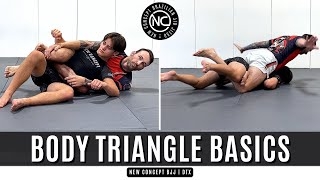
New Concept BJJ | Body Triangle Basics | NoGi Coach Caleb Flippin
New Concept BJJ
Body Triangle Concepts - Code "BLACKFRIDAY" 25% OFF
RVV BJJ