Historical Context and Submission Significance
The neck crank submission gained prominence when Josh Barnett successfully applied it against Dean Lister, a multiple-time world champion who had not been submitted in 16 years prior. Lister was forced to tap out with only 10 seconds remaining in the match, demonstrating the technique's effectiveness and the extreme discomfort it inflicts.
Arm Control Foundation
Proper arm control begins with gripping the opponent's tricep rather than the wrist or forearm. The controlling hand should position fingers inside the armpit as if tickling, then clamp down firmly to neutralize the arm's defensive utility.
Head Positioning and Arm Placement
The controlling arm must pass under the attacker's armpit rather than extending outward, preventing the opponent from using the arm for eye strikes or other defensive techniques. The attacker's head should remain close to the opponent's head to prevent the opponent's free leg or hand from entering the position.
Leg Placement and Bridging Prevention
The attacker's legs should crawl high toward the opponent's head rather than spreading wide, which prevents leg hooks and counters. Maintaining upward pressure on the opponent's head prevents bridging, as allowing the opponent's head to rest on the mat grants significant leverage for escape attempts.
Weight Distribution Technique
To maximize pressure without compromising positional stability, the attacker lifts the buttocks just enough to slide a sheet of paper underneath. This minimal elevation transfers weight entirely onto the opponent's chest while maintaining the attacker's center of gravity and balance, making the position nearly invisible from external observation.
Defense Against Bridging and Turning
An opponent's primary escape attempt involves bridging, an instinctive movement that requires no technical skill. Maintaining an elevated head position and keeping body weight distributed low counters bridging attempts; skilled wrestlers may attempt to turn sideways and retract their arm, requiring the attacker to pull upward and reestablish control.
Common Escape Sequence
Once the attacker releases tricep control, the opponent should immediately tuck their elbow inward and rotate to their side, which constitutes a complete escape regardless of subsequent defensive actions. Many practitioners remain flat on their backs when they should be actively working to their side, and attempting leg-based submissions instead of executing this fundamental escape.
Striking Defense and Positional Awareness
In mixed martial arts contexts, punching attempts from the opponent signal an opportunity for the bottom fighter to execute the elbow tuck escape. Once the elbow is tucked and the body is rotated to the side, the opponent cannot prevent progression toward the knees and eventual full escape.
Position Drilling Protocol
Training partners should first drill achieving the correct position before attempting the submission crank itself. The top position should be tested by having the bottom partner attempt turning to their side, pushing the face, and hooking with their leg—all movements that should be prevented by proper positional control.
Neck Crank by Avellan (like Josh Barnett vs Dean Lister) MMA BJJ
Key Takeaways
- •Historical Context and Submission Significance
- •Arm Control Foundation
- •Head Positioning and Arm Placement
- •Leg Placement and Bridging Prevention
http://www.FFAcoach.com Marcos Avellan explains how to finish a neck crank from the sit-out position (aka head and arm pin) - similar to the finish that Josh Barnett executed versus Dean Lister in Metamoris. Discover hundreds of more videos about mixed martial arts (MMA) and Brazilian jiu-jitsu (BJJ) at the Avellan's website which is http://www.FFAcoach.com . If you're from the south Florida area, they have two schools in Miami and Broward, call 1-888-FFA-GYMS (1-888-332-4967) for more info on their 30 Day Free Trial.
Related Techniques
Frequently Asked Questions
What does this video teach about crank and twist lock?
This video covers historical context and submission significance, arm control foundation, head positioning and arm placement. It provides detailed instruction from Freestyle Fighting Academy.
How long does it take to learn crank and twist lock?
The basic mechanics can be understood in a single session, but developing reliable execution requires consistent drilling over weeks of practice. This 9-part breakdown helps structure your training by isolating each phase of the technique.
What are the key details for finishing crank and twist lock?
In mixed martial arts contexts, punching attempts from the opponent signal an opportunity for the bottom fighter to execute the elbow tuck escape. Once the elbow is tucked and the body is rotated to the side, the opponent cannot prevent progression toward the knees and eventual full escape.
Related videos
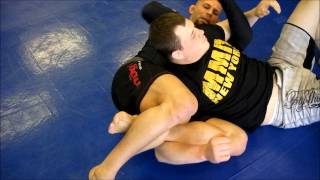
Stocks to Neck Crank
DOJO1MMA
Head And Arm Rear Naked Choke by Heath Pedigo
BJJ Fanatics

How To Do Rear Ezekiel Choke In Gi & No-Gi
Resenha BJJ
Sode Guruma Jime || Sleeve Wheel Choke
The Judo Way of Life
High Wrist Guillotine Choke Submission in Turtle. Arm In, High Elbow, Side Control, Mount, Butterfly
Pica Pau Jiu Jitsu & Grappling