Instructor Introduction and Quarter Position Setup
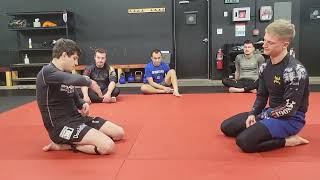
Landon, a Brazilian Jiu-Jitsu black belt and head instructor, demonstrates a neck crank attack from the quarter position with training partner Tom Creaser. The bottom opponent begins on all fours while the top position establishes a knee ride with the knee placed between the opponent's elbow and knee on the inside.
Knee Ride Positioning and Control Mechanics
Proper knee ride placement between the opponent's elbow and knee prevents easier escape options like rolling to guard or executing a single-leg takedown. The top player maintains weight control by avoiding sitting back on the opponent's leg and uses a leg spiral grip on the opponent's arm rather than trapping it, which reduces exposure to rolling reversals.
Arm Control and Exposure
The instructor waits for the opponent to naturally expose their arm rather than aggressively forcing it, then uses their lead leg to scoop and feed the arm to their inside leg. This controlled approach maintains pressure on the opponent's shoulder and arm while minimizing the opponent's defensive options.
Rolling Transition and Hip Escape
As the top player rolls through to finish the technique, they escape their hip out and place their hand inside to catch the top of the opponent's head. The height at which the grip is applied on the head determines the intensity of neck pressure, with the optimal position being where the head naturally slips.
Neck Crank Finish and Hip Positioning
Once mounted on the opponent's body, the top player stretches to complete the neck crank. Proper hip positioning—escaping far enough to prevent the opponent from pushing back—keeps the opponent elevated and prevents them from bridging or scrambling to recover.
Alternative Arm Lock Finish
If the neck crank is not progressing, the instructor demonstrates transitioning to an arm lock by placing their hand on the opponent's lat, extending the arm back, and securing a wrist lock. This secondary finish option maintains control of the opponent and provides a backup submission if the neck crank defense improves.
Final Arm Lock Execution
The top player goes under the opponent's arm, grabs their own wrist, and stretches their arm back to create pressure through a V-shaped formation. This tight arm lock completes the sequence of submissions available from the knee ride position.
Stocks to Neck Crank
Key Takeaways
- •Instructor Introduction and Quarter Position Setup
- •Knee Ride Positioning and Control Mechanics
- •Arm Control and Exposure
- •Rolling Transition and Hip Escape
Neck Crank Submission from attacking the Quater position. To learn this and other submissions from Brazilian Jiu-Jitsu and Submission Wrestling check us out at www.dojo1mma.com and www.dojo1elite.com! If you are in the area come train at Dojo 1, we know you'll love it and the first 30 DAYS ARE FREE!!!
Related Techniques
Frequently Asked Questions
What does this video teach about crank and twist lock?
This video covers instructor introduction and quarter position setup, knee ride positioning and control mechanics, arm control and exposure. It provides detailed instruction from DOJO1MMA.
How long does it take to learn crank and twist lock?
The basic mechanics can be understood in a single session, but developing reliable execution requires consistent drilling over weeks of practice. This 7-part breakdown helps structure your training by isolating each phase of the technique.
What are the key details for finishing crank and twist lock?
If the neck crank is not progressing, the instructor demonstrates transitioning to an arm lock by placing their hand on the opponent's lat, extending the arm back, and securing a wrist lock. This secondary finish option maintains control of the opponent and provides a backup submission if the neck crank defense improves.
Related videos
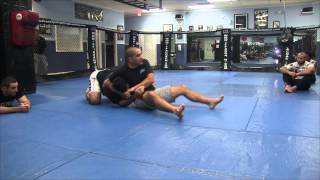
Neck Crank by Avellan (like Josh Barnett vs Dean Lister) MMA BJJ
Freestyle Fighting Academy
Head And Arm Rear Naked Choke by Heath Pedigo
BJJ Fanatics
How To Do Rear Ezekiel Choke In Gi & No-Gi
Resenha BJJ
Sode Guruma Jime || Sleeve Wheel Choke
The Judo Way of Life
High Wrist Guillotine Choke Submission in Turtle. Arm In, High Elbow, Side Control, Mount, Butterfly
Pica Pau Jiu Jitsu & Grappling