Brachial Plexus Pressure Point Overview
The brachial plexus on the shoulder serves as a vulnerable pressure point target. The technique requires the opponent's arm to be raised and extended to maximize effectiveness, as this position stretches the underlying nerves against the skeletal structure.
Anatomical Target Location
The brachial plexus contains three primary nerves: the medial nerve, radial nerve, and ulnar nerve. These nerves separate as they descend from the shoulder, and compression against the bone creates the desired effect. The target area is relatively large, allowing for moderate inaccuracy in application.
Application Method and Mechanics
The practitioner uses the last two knuckles to apply pressure with an upward angle directed into the nerve bundle. When the opponent's arm is raised during an attacking motion, the nerves stretch into an optimal position for compression. Proper application can temporarily incapacitate the entire arm, including finger function.
Scientific Basis and Anatomical Context
Pressure point strikes function through neurological compression rather than traditional meridian theory. The shoulder region contains numerous nerves that can be targeted through anatomical study. Understanding nerve pathways and skeletal landmarks provides a scientific framework for consistent technique application.
Locating the Target Point
The technique identifies the protruding bone at the shoulder joint as a reliable anatomical landmark. As the opponent raises their arm during an attack, this bony prominence becomes more accessible. The ease of location makes the technique practical under dynamic conditions.
Timing and Defensive Integration
The optimal moment for application occurs as the opponent draws their striking arm backward, creating maximum nerve tension. The technique can be integrated into defensive blocking sequences, with the counter-strike delivered while the opponent's arm remains extended. Multiple entry angles and timing variations exist depending on the opponent's attacking pattern.
Pressure Point Nerve Strike
Key Takeaways
- •Brachial Plexus Pressure Point Overview
- •Anatomical Target Location
- •Application Method and Mechanics
- •Scientific Basis and Anatomical Context
Master Angelo showing Nerve striking the shoulder using Pressure Points, seminars and dvd details are available from www.gmangelo.com
Frequently Asked Questions
What does this video teach about nerve lock?
This video covers brachial plexus pressure point overview, anatomical target location, application method and mechanics. It provides detailed instruction from GM Angelo Baldissone.
How long does it take to learn nerve lock?
The basic mechanics can be understood in a single session, but developing reliable execution requires consistent drilling over weeks of practice. This 6-part breakdown helps structure your training by isolating each phase of the technique.
What are the key details for finishing nerve lock?
The technique identifies the protruding bone at the shoulder joint as a reliable anatomical landmark. As the opponent raises their arm during an attack, this bony prominence becomes more accessible. The ease of location makes the technique practical under dynamic conditions.
Related videos
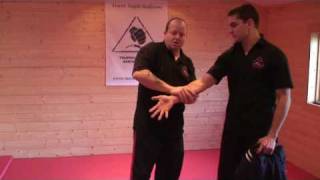
Striking Lung-6 Nerve on the arm
GM Angelo Baldissone
Head And Arm Rear Naked Choke by Heath Pedigo
BJJ Fanatics

How To Do Rear Ezekiel Choke In Gi & No-Gi
Resenha BJJ

Sode Guruma Jime || Sleeve Wheel Choke
The Judo Way of Life
High Wrist Guillotine Choke Submission in Turtle. Arm In, High Elbow, Side Control, Mount, Butterfly
Pica Pau Jiu Jitsu & Grappling