Pressure Point Nerve Strike
0
Nerve Lock·GM Angelo Baldissone
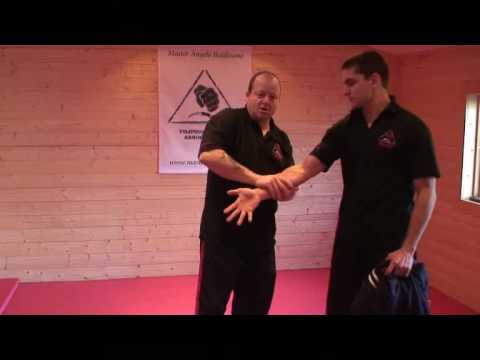
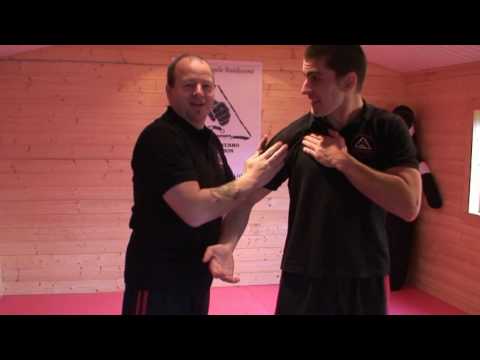
Master Angelo showing Nerve striking the shoulder using Pressure Points, seminars and dvd details are available from www…
神経圧迫技(Shinkei Appaku Waza)
TraditionalTranslation: Nerve Compression Techniques
Nerve locks are submission techniques that apply focused pressure directly to nerve bundles or pressure points, causing acute pain without necessarily threatening joint, vascular, or respiratory integrity. [8] The mechanism involves compressing a superficial nerve against underlying bone — for example, pressing the knuckles or forearm into the mandibular nerve under the jawline, the peroneal nerve on the outer leg, or the radial nerve on the forearm. [3] The pain generated can be intense and immediate, forcing the opponent to move, release a grip, or submit. Nerve locks are not widely used as primary competition submissions because their effectiveness varies significantly between individuals — pain tolerance, body composition, and adrenaline can reduce their reliability. [1] However, they serve important roles as positional tools: a nerve-pressure application under the jaw can force an opponent to lift their chin, exposing the neck for a choke; pressure on the intercostal nerves can break a defensive frame. [8] In competition, nerve locks are generally legal (they do not violate small-joint or spine-lock prohibitions) but are rarely decisive at the highest levels.
Pressure point and nerve manipulation techniques have deep roots in Asian martial arts traditions. Chinese martial arts developed kyusho-jitsu (vital point striking) and Dim Mak (點脈, point striking) systems that map pressure-sensitive nerve clusters throughout the body, with documentation dating to traditional Chinese medicine texts. Japanese martial arts incorporated these concepts as atemi-waza (striking vital points) in jujutsu and as nerve-pressure controls in law enforcement techniques (taiho-jutsu). [2],[3] In Okinawan karate, the study of pressure points (kyusho) was traditionally transmitted as advanced knowledge alongside kata interpretation. Western combat sports have also recognized nerve pressure applications — the 'can opener' in wrestling uses chin pressure to force spinal flexion, and various cross-face techniques in wrestling and MMA use forearm pressure on facial nerves as positional tools. [1],[8]
Nerve locks (pressure point attacks) appear in traditional jūjutsu, aikido, and self-defence systems, targeting nerve clusters to create pain compliance. [1]
Nerve locks are generally not effective at high-level competition and are banned or impractical in most competitive formats. [1]
No images yet for this technique.
Sign in to suggest an image.
Master Angelo showing Nerve striking the shoulder using Pressure Points, seminars and dvd details are available from www…
Master Angelo shows striking the nerve point lung-6 and explains how to activate this point, Dvds are available through …
No instructional courses yet for this technique.
Sign in to suggest a course.
Risk of injury to the person this technique is applied to
Nerve compression causes acute pain but minimal structural damage
Skill level needed to execute this technique reliably
Whether this technique is allowed under major competition rule sets
Kodokan Judo — Jigoro Kano (1986)
Atemi-waza and pressure point applications in judo context
Nerve pressure as positional tool in modern grappling
Official Kodokan ground technique classification system
Standard Japanese martial arts terminology (kanji/hiragana)
Established Japanese martial arts naming convention — native Japanese term (和語/漢語)
Atemi-waza and pressure point applications in judo context
Nerve pressure as positional tool in modern grappling
grip strength, joint isolation ability, positional control
strong forearms and stable base
forearm flexors, core stabilisers, hip muscles for base
Nerve locks target specific nerve points to create pain and compliance — used in aikido, hapkido, and law enforcement. Different from joint locks in that they attack nerves rather than joints. Limited competition application due to the difficulty of reliably targeting specific nerve points during live resistance. (Aikido and Hapkido texts; law enforcement manuals)
According to GM Angelo Baldissone, you can relieve the pain by massaging the area in a circle and then applying a light slap at about half the force you used initially. This helps dissipate the energy that was driven into the point.
GM Angelo Baldissone recommends using your last two knuckles (the small ones) because the angle allows you to strike effectively in and up toward the target.
GM Angelo Baldissone emphasizes that you don't need to strike hard—it's enough that your partner feels it and you know where the point is. The technique works best under tension as the opponent moves, because this naturally opens up the target area.
Nerve locks are submission techniques that apply focused pressure directly to nerve bundles or pressure points, causing acute pain without necessarily threatening joint, vascular, or respiratory integrity. The mechanism involves compressing a superficial nerve against underlying bone — for example, pressing the knuckles or forearm into the mandibular nerve under the jawline, the peroneal nerve on the outer leg, or the radial nerve on the forearm.
Pressure point and nerve manipulation techniques have deep roots in Asian martial arts traditions. Chinese martial arts developed kyusho-jitsu (vital point striking) and Dim Mak (點脈, point striking) systems that map pressure-sensitive nerve clusters throughout the body, with documentation dating to traditional Chinese medicine texts.
IBJJF: banned — Pain compliance without structural submission mechanism is prohibited; IJF: banned — Not a recognized submission category; ADCC: legal — Legal; Unified MMA: legal — Legal; FIAS Sport Sambo: banned — Prohibited; FIAS Combat Sambo: legal — Legal
Danger rating 4/10. Nerve compression causes acute pain but minimal structural damage
The standard setup chain: Achieve Controlling Position → Isolate the Neck → Set the Grip → Apply Pressure.
Standard counters include: Tuck Chin — protect the neck by lowering the chin to prevent the choke from sinking / Two-on-One Grip Fight — use both hands to strip the choking grip before it locks / Turn Into — rotate toward the choking arm to relieve carotid pressure / Posture Up — straighten the spine and create distance to break the choking angle.
Common variants: Standard variation (primary grip configuration and finishing angle); Gi variation (using the gi material for grip assistance and control); No-gi variation (adapted grips for submission grappling without the gi); Transition variation (applied during a positional change or scramble).
Nerve locks are generally not effective at high-level competition and are banned or impractical in most competitive formats.
Top errors to watch for: Relying on nerve locks as primary submissions — they are supplementary tools that enhance positional control, not sta… / Expecting nerve locks to work on everyone — individual anatomy and pain tolerance vary; some opponents will not respond / Applying nerve pressure without positional dominance — the opponent must be controlled first; a free opponent simply … / Using nerve locks instead of proper technique — nerve locks should enhance technique, not replace it; a properly appl….
The Nerve Lock is also known as Shinkei Appaku Waza, Pressure Point Techniques, Kyusho-waza, Nerve Compression.