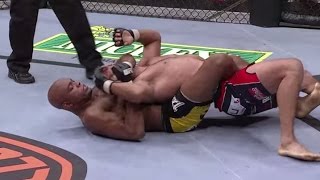
Triangle Choke
The triangle choke traps an opponent's arm and neck between the legs by locking them in a triangular configuration. Pressure is applied to block arterial blood flow to the brain. This submission can be executed from multiple leg positions, including rear triangle, side triangle, and reverse triangle variations.
Arm Triangle Choke
The arm triangle uses the attacker's bicep to pressurize one artery while forcing the opponent's arm into their neck to occlude the other. This submission is valued for its reliability and ability to be finished while maintaining top positional control.
Arm Bar
The arm bar immobilizes the opponent's shoulder using the legs while hyperextending the arm by pulling the wrist downward and using the hips as a fulcrum. Intense pressure is directed at the elbow joint.
Knee Bar and Heel Hook
The knee bar hyperextends the leg by attaching at the hip, pulling the ankle downward, and thrusting the hips forward to use them as a fulcrum. The heel hook, considered one of jiu-jitsu's most devastating submissions, tears ligaments in the knee by over-rotating the foot while the knee is immobilized through bridging.
Neck Cranks: D'Arce, Anaconda, and Rear Naked Choke
The D'Arce choke creates a triangle around the head and arm using the arms, with the lock positioned on the side of the neck to constrict both arteries. The Anaconda is similar but locks on the shoulder side, often using a gator roll entry. The rear naked choke, performed from behind without the gi, locks both arms around the neck and is considered the strongest submission in grappling due to the body's inability to defend rear attacks.
Guillotine and North-South Choke
The guillotine choke places the opponent's head in the attacker's armpit with arms locked in various configurations to pressurize the windpipe or arteries. The high elbow guillotine variant is strongest as it targets the artery directly. The North-South choke is executed from the North-South position and was popularized by Marcello Garcia.
Shoulder Locks: Kimura, Americana, and Omoplata
The Kimura and Americana both aim to over-rotate the shoulder using a figure-four grip, with the Kimura bringing the hand counterclockwise and the Americana clockwise, making the latter less effective. The Omoplata achieves similar shoulder over-rotation using the legs but is vulnerable to rolls that relieve pressure.
Foot and Ankle Submissions
The toe hold applies pressure using a figure-four grip around the foot, rotating the toes to damage the foot and knee. The straight ankle hyperextends the ankle joint by pressurizing the toes with the armpit while using the forearm as a fulcrum.
Advanced and Specialty Submissions
The buggy choke is performed from bottom side control by trapping the head and arm between the arm and leg to constrict arteries, though it is susceptible to slams. The twister, popularized by Eddie Bravo, damages the spine through twisting motion. The can opener and Boston crab bend the spine inward and outward respectively, with the latter resembling the WWE wrestling maneuver. The calf slicer and bicep slicer rupture muscle tissue by placing the shin or forearm on the target and compressing through hip pressure or leg engagement.
Every Jiu Jitsu Submission Explained in 8 Minutes
Key Takeaways
- •Triangle Choke
- •Arm Triangle Choke
- •Arm Bar
- •Knee Bar and Heel Hook
Every Jiu Jitsu Submission Explained in 8 minutes! XMartial: https://www.xmartial.com/?ref=joshrich Code:JOSHRICH The Boston Crab match is fixed: https://youtu.be/cLR5NvEtLUI?si=aCtKtcW42J7gZjNn 0:00 Triangle 0:18 Arm Triangle 0:30 Arm Bar 0:41 Knee Bar 0:53 Darce 1:07 Anaconda 1:24 Rear Naked Choke 1:42 Guillotine 2:00 North South Choke 2:10 Heel Hook 2:27 Kimura 2:44 Americana 2:59 Omoplata 3:11 Toe Hold 3:21 Straight Ankle 3:31 Buggy Choke 3:45 Mir Lock 4:01 Electric Chair 4:11 Twister 4:25 Boston Crab 5:23 Calf Slicer 5:40 Baratoplata 5:50 Tarikoplata 6:07 Wrist Lock 6:43 Gogoplata 7:01 Aoki Lock 7:11 Z lock 7:23 Smother Choke 7:33 Chest Compression
Frequently Asked Questions
What does this video teach about submission?
This video covers triangle choke, arm triangle choke, arm bar. It provides detailed instruction from JoshRichBJJ.
How long does it take to learn submission?
The basic mechanics can be understood in a single session, but developing reliable execution requires consistent drilling over weeks of practice. This 9-part breakdown helps structure your training by isolating each phase of the technique.
What are the key details for finishing submission?
The toe hold applies pressure using a figure-four grip around the foot, rotating the toes to damage the foot and knee. The straight ankle hyperextends the ankle joint by pressurizing the toes with the armpit while using the forearm as a fulcrum.