Historical Origins
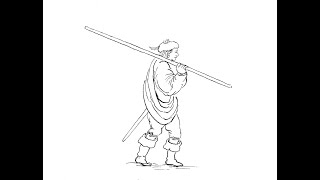
The quarterstaff originated in medieval England as a practical weapon employed by both common fighters and skilled warriors. It emerged as a simple yet effective tool that would endure through centuries of martial tradition.
Physical Specifications
Quarterstaff dimensions typically ranged from 6 to 9 feet in length with a diameter equivalent to the span of a man's hand. This proportioning provided sufficient reach for striking while maintaining adequate maneuverability in combat.
Materials and Construction
Craftsmen selected durable hardwoods such as oak and ash for their density and resistance to splintering. Many quarterstaffs featured metal bands reinforced at the ends to prevent splitting, increase durability, and enhance striking force.
Fundamental Stances
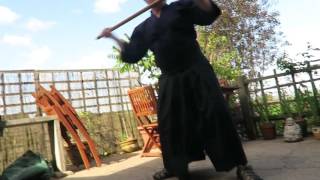
Quarterstaff combat relied on established guard positions including the low guard, high guard, and hanging guard, each offering tactical advantages in different combat situations. These foundational stances provided the framework for both offensive and defensive engagement.
Striking Methods
Practitioners executed strikes using multiple parts of the staff, including thrusts delivered with the ends, sweeps across the body, and strikes with the butt. This versatility created diverse offensive options dependent on distance and tactical opportunity.
Defensive and Counter Techniques
Defense involved parrying, blocking, and evasive footwork to neutralize incoming strikes. Skilled practitioners employed counter-movements and small-circle deflections to maintain momentum while creating openings for counterattacks.
Tactical Principles
Timing, distance, and footwork formed the cornerstone of quarterstaff effectiveness. Mastery required disciplined training to maintain balance, adjust positioning, and exploit openings in an opponent's defense with precision.
Cultural and Historical Significance
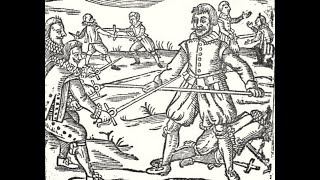
The quarterstaff became a symbol of strength and resistance in medieval England, famously associated with legendary figures such as Little John and Friar Tuck. Its prominence in folklore, literature, and medieval manuscripts preserved combat knowledge while elevating its status as an emblem of martial tradition.
Modern Legacy
Quarterstaff techniques persist in contemporary English martial arts through reconstruction of historical combat manuals. The fundamental principles of balance, timing, and coordination derived from quarterstaff training continue to influence modern self-defense systems and martial arts disciplines.
The Quarterstaff
Key Takeaways
- •Historical Origins
- •Physical Specifications
- •Materials and Construction
- •Fundamental Stances
he English quarterstaff has a rich history deeply embedded in the martial traditions of England. Its origins trace back to the medieval period, where it was used primarily as a defensive weapon by commoners and soldiers alike. Here's an overview of its history: Medieval Origins: The quarterstaff likely evolved from the more primitive stave or staff weapons used in ancient times. By the medieval era, it had become a popular weapon among English peasants and commoners due to its accessibility and effectiveness. The quarterstaff was typically made from hardwood and measured around 6 to 9 feet in length. Use in Combat: The quarterstaff was valued for its versatility and effectiveness in combat. It could be wielded with one or both hands, and skilled practitioners were able to execute a wide range of offensive and defensive maneuvers. The weapon was particularly well-suited for fighting on foot, making it a favourite among the working classes, soldiers and adventurers. Martial Traditions: Over time, the quarterstaff became associated with various martial traditions and fighting styles in England. It was often taught as part of the curriculum in fencing schools and martial arts academies. Notable treatises and manuals on the use of the quarterstaff were written by authors such as George Silver in the 16th century. Popularity in Folklore: The quarterstaff also found its way into English folklore and literature. Characters such as Robin Hood were often depicted wielding a quarterstaff, using it to outsmart and defeat their opponents. These tales helped to further romanticize the weapon and cement its place in English cultural history. Decline and Revival: With the advent of firearms and changes in warfare tactics, the popularity of the quarterstaff waned over time. However, interest in historical martial arts and traditional weapons has led to a revival of interest in the quarterstaff in recent years. Today, it is practiced as part of the English Martial arts and other martial arts communities. Overall, the English quarterstaff holds a special place in the martial heritage of England, representing a time when simple yet effective weapons were wielded with skill and finesse on the battlefield and in everyday life.
Frequently Asked Questions
What does this video teach about standard quarterstaff?
This video covers historical origins, physical specifications, materials and construction. It provides detailed instruction from The English Martial Arts .
How long does it take to learn standard quarterstaff?
The basic mechanics can be understood in a single session, but developing reliable execution requires consistent drilling over weeks of practice. This 9-part breakdown helps structure your training by isolating each phase of the technique.
What are the key details for finishing standard quarterstaff?
The quarterstaff became a symbol of strength and resistance in medieval England, famously associated with legendary figures such as Little John and Friar Tuck. Its prominence in folklore, literature, and medieval manuscripts preserved combat knowledge while elevating its status as an emblem of martial tradition.