Ridge Hand Definition
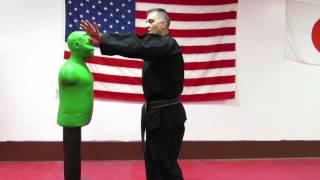
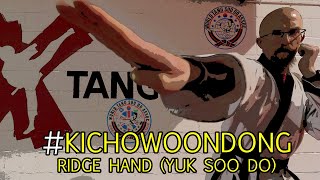
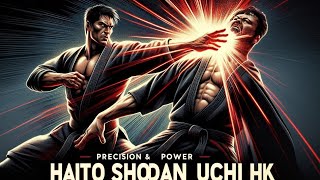
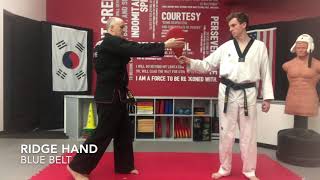
The ridge hand is a striking technique where the thumb is tucked under the palm, using the inside edge of the hand as the striking surface—contrasting with the knife hand chop, which uses the outside edge. This traditional technique appears frequently in formal training but sees limited practical application in sparring.
Problems with Traditional Straight-Arm Ridge Hand
The classical method of delivering a ridge hand with a locked, fully extended arm creates structural vulnerability at both the elbow and shoulder joints. When striking with a rigid arm, the force stops at the hand while the shoulder and elbow continue forward, creating torque that can cause injury to the elbow joint and shoulder complex.
Ridge Hand as Hook-Style Strike
The ridge hand becomes effective when thrown with a bent elbow similar to a hook punch, utilizing hip torque and rotation for power. This approach maintains the elbows close to the body, protecting the shoulder and elbow joints while still striking with the inner hand bone.
Temple and Neck Applications
After parrying an opponent's strike while stepping to two o'clock position, the striker can deliver a ridge hand to the temple or side of the neck from below the opponent's line of sight. The strike can be thrown as a sharp chopping action for shock value or with full hip rotation for maximum power.
Solar Plexus and Throat Targets
When positioned outside an opponent's extended arm after a parry, the ridge hand can target the solar plexus with an upward flipping motion, or the philtrum and throat when fighting from the outside. These applications avoid the injury risk of straight-arm delivery by maintaining elbow flexion.
Close-Range Clinch Application
In tight clinch situations, the ridge hand can strike the back of the neck while the other hand controls the opponent's head to prevent forward movement. By preventing the opponent's head from moving forward, the striker avoids the risk of inadvertent headbutting while delivering the strike.
Core Principles for Safe Execution
The thumb must remain tucked under to prevent thumb dislocation and hand injury. Elbows must stay close to the body rather than extended outward to protect both the shoulder and elbow joints from traumatic injury during impact.
How To Use The Ridge Hand
Key Takeaways
- •Ridge Hand Definition
- •Problems with Traditional Straight-Arm Ridge Hand
- •Ridge Hand as Hook-Style Strike
- •Temple and Neck Applications
How to properly use the Ridge Hand without injury. A traditional technique not covered often, and not really practical in the way it is traditionally taught. With a few common-sense changes, we can take the ridge hand from tradition to an effective tool in your arsenal. Be sure to Subscribe and Share! EQUIPMENT SEEN IN MY HOME GYM The B.O.B. (Body Opponent Bag) by Century Martial Arts - https://amzn.to/3ahSavo 3 Section Striking Wall Pad - https://amzn.to/33Qx5ag Wall Mounted Makiwara - https://amzn.to/3kCOkSd Wall Mounted Wood/Leather Makiwara - https://amzn.to/2DFcR8S Resistance Band Kit - https://amzn.to/3kzM0f3 Heavy Duty Resistance Bands - https://amzn.to/33T3Dk0 Flat Workout Bench - https://amzn.to/3kE2se3 Adjustable Dumbbells - https://amzn.to/30MQyqq Abdominal Incline Bench - https://amzn.to/31KxSXB
Frequently Asked Questions
What does this video teach about standard ridge hand?
This video covers ridge hand definition, problems with traditional straight-arm ridge hand, ridge hand as hook-style strike. It provides detailed instruction from Kevin W. Putala.
How long does it take to learn standard ridge hand?
The basic mechanics can be understood in a single session, but developing reliable execution requires consistent drilling over weeks of practice. This 7-part breakdown helps structure your training by isolating each phase of the technique.
What are the key details for finishing standard ridge hand?
In tight clinch situations, the ridge hand can strike the back of the neck while the other hand controls the opponent's head to prevent forward movement. By preventing the opponent's head from moving forward, the striker avoids the risk of inadvertent headbutting while delivering the strike.