Introduction to Ridge-Hand Strike
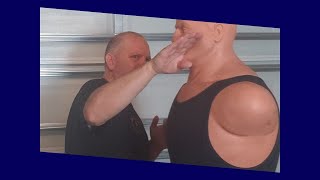
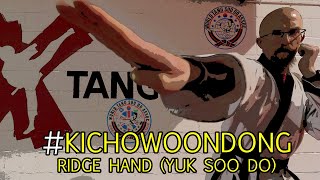
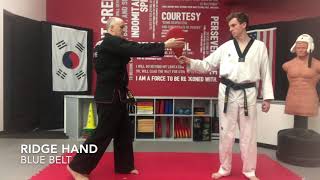
Shihan Angelo introduces the ridge-hand strike as a fundamental technique in karate training, belonging to the knife-hand family of strikes. The ridge-hand differs from other knife-hand techniques by striking with the opposite side of the hand rather than the blade edge.
Hand Position and Finger Alignment
Proper hand formation requires the thumb to be tucked underneath the palm away from the fingers, with fingers separated rather than compressed together. The striker should angle fingers away from the striking surface to avoid damage to the phalange bones, striking instead with the crook where the wrist meets the base of the thumb.
Elbow Alignment and Injury Prevention
The elbow must remain slightly bent during and at point of impact to prevent serious injuries such as bicep tears. Straightening the arm completely upon contact, particularly against an advancing opponent, can result in catastrophic soft-tissue damage requiring surgical intervention.
Target Areas and Striking Principles
The ridge-hand strike follows the principle of bone-on-flesh or flesh-on-bone contact, making it suitable primarily for soft target areas such as the neck, groin, and temple. Hard or bony targets should generally be avoided unless the striker's hand is well-conditioned through extensive training.
Primary Target Applications
Effective ridge-hand applications include strikes to the back of the neck, upward strikes to the head of a bent-over opponent, bridge-of-nose strikes, and collarbone strikes. In sparring situations, the technique can also be employed to sweep leg strikes or deflect roundhouse kicks.
Defensive and Sweeping Applications
The ridge-hand can function as a blocking technique similar to traditional closed-hand blocks, with the open hand positioned as if catching water. The strike can also be used to sweep the back of the leg while pushing away from the target simultaneously.
Practical Conditioning and Common Errors
Practitioners should test the ridge-hand strike on equipment such as punching bags to develop proper feel and technique. Despite its popularity in karate, many practitioners execute the technique incorrectly, creating unnecessary injury risk to both the striker and opponent.
Ridge-hand strikes
Key Takeaways
- •Introduction to Ridge-Hand Strike
- •Hand Position and Finger Alignment
- •Elbow Alignment and Injury Prevention
- •Target Areas and Striking Principles
Learn finer points of throwing a ridge hand.
Frequently Asked Questions
What does this video teach about standard ridge hand?
This video covers introduction to ridge-hand strike, hand position and finger alignment, elbow alignment and injury prevention. It provides detailed instruction from Angelo Oliveira.
How long does it take to learn standard ridge hand?
The basic mechanics can be understood in a single session, but developing reliable execution requires consistent drilling over weeks of practice. This 7-part breakdown helps structure your training by isolating each phase of the technique.
What are the key details for finishing standard ridge hand?
The ridge-hand can function as a blocking technique similar to traditional closed-hand blocks, with the open hand positioned as if catching water. The strike can also be used to sweep the back of the leg while pushing away from the target simultaneously.