Introduction to Cage Fighting Fundamentals
Cage clinch work is an essential yet often overlooked aspect of MMA competition. This instructional segment covers both offensive and defensive principles for controlling and escaping clinch positions against the cage, with emphasis on head control, hand positioning, and hip management.
The Three Control Points: Head, Hands, and Hips
The offensive fighter must establish dominance through three primary control mechanisms. The defensive fighter must simultaneously work to neutralize these same control points to create escape opportunities. Success in cage fighting depends on mastery of all three domains.
Head Control and Upper Body Positioning
Head control directly determines body positioning and footwork mobility. When the aggressor applies upward pressure with the head, the defender becomes pinned on their toes and loses lateral movement options. Controlling the head position is therefore a foundational power point in cage clinch work.
Underhook Mechanics and Grip Variations
The underhook position provides structural control through the opponent's shoulder and torso. Double underhooks with butterfly or S-grips create maximum compression and control. Even single underhook positions establish significant control when combined with proper body pressure and head placement.
Hand Control and Wrist Trapping
Controlling the opponent's wrist eliminates their offensive striking capability and removes defensive options. Combined with head control and underhooks, wrist control creates a layered defensive system that leaves the opponent severely limited. This three-point control system produces a dominant clinch position against the cage.
Hip Positioning and Leverage Distribution
Lower hip positioning relative to the opponent creates mechanical leverage advantage for throws, sweeps, and takedowns. Knee pressure against the cage combined with tight hip contact isolates the opponent and prevents escape. Controlling the hips while maintaining head and hand control establishes comprehensive cage dominance.
Defensive Head Escape Technique
The defender lifts their hips and drives their head into the aggressor's chin to create separation and regain head control. This technique clears space and shifts the control dynamic even when the opponent maintains hand control. Proper head positioning enables the defender to control movement and work toward cage escape.
Defensive Hand Control and Grip Breaking
When the opponent controls the wrist, the defender lifts the knee on the opposite leg while maintaining centered hip position, then elevates to break the grip. Following the grip break, the defender can swim an underhook or shoot the hips away from the cage. Balanced footwork is essential to generate sufficient leverage for grip separation.
Hip Escape and Base Recovery
The defender must lower their hips and widen their stance to prevent throws, sweeps, and takedowns when isolated against the cage. Remaining upright with elevated hips creates vulnerability to arm throws and leg sweep attacks. By achieving low, wide hip positioning, the defender regains balance and prepares for controlled escape or counter-offense.
Wallwork: Fighting Off of the Cage & MMA Clinch
Key Takeaways
- •Introduction to Cage Fighting Fundamentals
- •The Three Control Points: Head, Hands, and Hips
- •Head Control and Upper Body Positioning
- •Underhook Mechanics and Grip Variations
Fighting off the wall or cage is an art in itself, with very specific techniques that utilize leverage and control. 'The Anomaly' Vince Cachero shows standing grappling techniques, covering how to pressure your opponent against the cage to set up strikes and takedowns, as well as fighting with your back against the wall to stay on your feet and escape. Support Vince Cachero as he steps back into the cage for his 5th pro MMA fight, at LFA 45 in Cabazon, CA. You can purchase your tickets down below: Watch Vince fight live!►CageTix.com/LFA Subscribe to fightTIPS►http://bit.ly/1APnzvw FOLLOW: Facebook | http://bit.ly/fightTIPSFacebook Twitter | http://bit.ly/fightTIPSTwitter Instagram | http://bit.ly/fightTIPSInstagram
Frequently Asked Questions
What does this video teach about standard wall walk clinch position?
This video covers introduction to cage fighting fundamentals, the three control points: head, hands, and hips, head control and upper body positioning. It provides detailed instruction from fightTIPS.
How long does it take to learn standard wall walk clinch position?
The basic mechanics can be understood in a single session, but developing reliable execution requires consistent drilling over weeks of practice. This 9-part breakdown helps structure your training by isolating each phase of the technique.
What are the key details for finishing standard wall walk clinch position?
When the opponent controls the wrist, the defender lifts the knee on the opposite leg while maintaining centered hip position, then elevates to break the grip. Following the grip break, the defender can swim an underhook or shoot the hips away from the cage. Balanced footwork is essential to generate sufficient leverage for grip separation.
Related videos
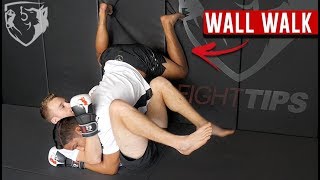
Sneaky Way to Pass Guard in MMA: Wall Walk
fightTIPS

MMA Cage Wall Training - Wall Control & Takedowns with Dean Barthelemy
Stuart Tomlinson
MMA Training with Special Forces | Wall Fighting System
FNG ACADEMY

MMA Using the Cage Wall Tutorial
Stuart Tomlinson
Helio Gracie Self Defense #7 Wall Pin Defense
Grayson Greener BJJ