Introduction to Hanging Guards
Hanging guards were extensively used in the military sabre systems of the historical period, despite criticism from later fencing traditions that employed different weapons. These guards offer significant defensive strengths alongside a few minor weaknesses that practitioners should understand.
Outside Hanging Guard Position
The outside hanging guard, also called first guard, positions the knuckle bow nearly vertically with the opponent visible beneath the blade. The sword point directs toward the opponent's shoulder depending on blade curvature, with the tip crossing the body for defense. This position is considered the strongest of all hanging guards.
Inside Hanging Guard Position
The inside hanging guard mirrors the outside position through a complete rotation around the body. The elbow bends slightly with the guard positioned just above the head, allowing the opponent to remain visible beneath the blade. While useful, this guard is notably less strong than the outside hanging position due to increased arm vulnerability.
Half-Hanging Guards
The outside half-hanging guard is created by lowering the hilt to shoulder height from the full outside hanging position, specifically designed to defend against low-line targets, thrusts, and cuts. The inside half-hanging guard similarly descends from the inside position while maintaining identical blade angles, simply shifting the defensive line.
Defensive Coverage and Vulnerabilities
The four hanging guards collectively cover nearly all attack angles through subtle side-to-side and vertical movements that create a protective box. The primary vulnerability exists to arm targets; however, initial fatigue from maintaining these positions diminishes with regular practice.
Application as Parries and Cuts
Hanging guards function both as stable standing positions and as parrying positions, with outside hanging typically parrying cut one and inside hanging parrying cut two. The lower half-hanging variations defend against cuts five and six as well as thrusts, while the flowing motion between all positions provides comprehensive defensive coverage.
Impact Distribution and Guard Strength
High parries from hanging guards direct blade impact toward the tip where it slides away, protecting vulnerable hand and guard components better than lower parries which direct impact toward the hilt. Historical sabre guards offered limited protection, making high-line parries strategically superior despite the importance of employing both high and low defensive techniques.
Suitability for Full-Power Cuts
Hanging guard positions are particularly well-suited for both delivering and receiving full-power, unrestricted cuts and parries. Their structural strength and defensive geometry make them effective for maximum-intensity training and combat applications.
Military sabre guards lesson 2
Key Takeaways
- •Introduction to Hanging Guards
- •Outside Hanging Guard Position
- •Inside Hanging Guard Position
- •Half-Hanging Guards
The second of three videos on the guard positions of British Military sabre from the Georgian era, according to Roworth.
Related Techniques
Frequently Asked Questions
What does this video teach about military sabre cut?
This video covers introduction to hanging guards, outside hanging guard position, inside hanging guard position. It provides detailed instruction from Academy of Historical Fencing.
How long does it take to learn military sabre cut?
The basic mechanics can be understood in a single session, but developing reliable execution requires consistent drilling over weeks of practice. This 8-part breakdown helps structure your training by isolating each phase of the technique.
What are the key details for finishing military sabre cut?
High parries from hanging guards direct blade impact toward the tip where it slides away, protecting vulnerable hand and guard components better than lower parries which direct impact toward the hilt. Historical sabre guards offered limited protection, making high-line parries strategically superior despite the importance of employing both high and low defensive techniques.
Related videos
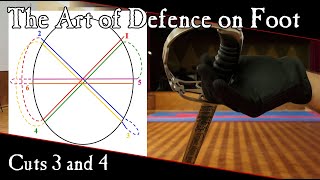
British Military Sabre Instruction - Cut 3 and 4
Espada Negra
Military Sabre Fencing - Grips and Disarms
scholagladiatoria
Lesson 24 - Royal Rap - Form 1 Basic Outside Arm Parry
Rogue Saber Academy
HEMA traditionalist vs. tournament fighter - who would win in sparring? What is better in bouting?
Oliver Janseps

Infantry Sword Exercise Manual, 1817, by Henry Angelo
Academy of Historical Fencing