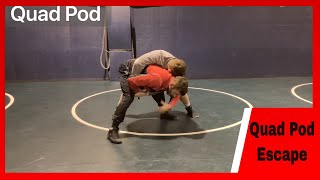
Technique Overview and Naming
The Peterson Roll is named after Olympic wrestling champion Ben Peterson and has been adapted for judo, sambo, jiu-jitsu, and submission grappling. The technique is designed to escape a top ride position and transition into either a dominant pin or an armlock finish.
Identifying the Opening
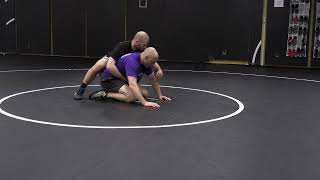
The escape becomes available when the top wrestler makes a critical error by reaching too far with the underhand rather than controlling the hip or leg. This overextension of the top player's arm creates the opportunity for the bottom player to initiate the Peterson Roll.
Initial Grip and Arm Trap
The bottom player grabs the top player's wrist with their right hand while simultaneously trapping the top player's elbow with their own elbow. This dual control neutralizes the top player's arm and prevents defensive resistance.
Hip Positioning and Leg Hook
The bottom player scoots their hips slightly to create clearance, then hooks the top player's leg with their left leg in a motion similar to a seoi nage (shoulder throw). The bottom player maintains the wrist grip throughout the rolling motion.
Transition to Rear Control
As the bottom player rolls the top player over, they transition directly into ura kesa gatame (reverse scarf hold) position. This differs from wrestling finishes by maintaining the pin rather than settling into a flat position, providing superior control.
Leg Trap Mechanics
When sweeping the leg over to complete the pin, the bottom player must trap the top player's legs rather than simply sweeping. This trapping action with the right hand provides essential control and prevents the opponent from escaping the pin.
Pin Finishing Position
The completed position features torso-to-torso contact with control of the far hip via the pants or belt and control of the near arm. From this hold, the player can transition to tate shiho gatame (vertical four-point pin) for an alternative pinning position.
Armlock Transitions
From the dominant pin position, the top player can transition into bent-arm locks from multiple angles—from underneath, from on top, or from the side. These submissions are available as finishing options depending on rule sets and sport context.
Bilateral Practice and Sport Application
Practitioners should develop the Peterson Roll on both sides since opponents may establish the ride from either direction. The technique is applicable across all grappling formats including gi judo, sambo, submission grappling, and no-gi competition.
PETERSON ROLL to Pin and Armlock
Key Takeaways
- •Technique Overview and Naming
- •Identifying the Opening
- •Initial Grip and Arm Trap
- •Hip Positioning and Leg Hook
The Peterson Roll is an effective way to get out from the bottom when an opponent rides you. In this video Coach Steve Scott teaches how to do the Peterson Roll and transition into Ura Kesa Gatame (Rear Scarf Hold) and Tate Shiho Gatame (Vertical 4-Corner Hold) and onto getting an Ude Garami (Arm Entanglement) to finish your opponent. Derrick Darling and Ben Goehrung demonstrate the move.
Related Techniques
Frequently Asked Questions
What does this video teach about peterson roll?
This video covers technique overview and naming, identifying the opening, initial grip and arm trap. It provides detailed instruction from welcomematstevescott.
How long does it take to learn peterson roll?
The basic mechanics can be understood in a single session, but developing reliable execution requires consistent drilling over weeks of practice. This 9-part breakdown helps structure your training by isolating each phase of the technique.
What are the key details for finishing peterson roll?
From the dominant pin position, the top player can transition into bent-arm locks from multiple angles—from underneath, from on top, or from the side. These submissions are available as finishing options depending on rule sets and sport context.