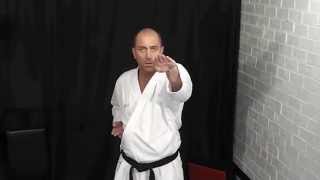
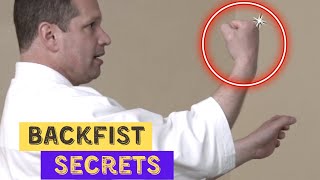
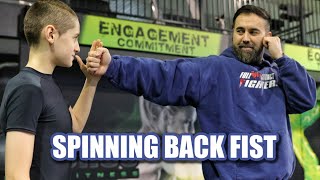
Foundation: The Cross-Step Principle
The cross-step from Naihanshi demonstrates a foundational fighting principle that masters like Mokubu sensei valued highly. By understanding why historical practitioners emphasized this technique, modern students can explore its applications with proper context and purpose.
Uraken Mawashi Uchi: Head Control Integration
The elbow strike following the cross-step and knee lift must incorporate head control to be effective. Rather than applying the technique superficially, practitioners should lower the opponent's head during the strike, creating leverage and ensuring the technique accomplishes its tactical objective.
Positioning the Strike: Trajectory and Follow-Through
The elbow technique gains power when directed downward or across the body rather than delivered carelessly. This positioning naturally transitions into the next movement, allowing practitioners to continue applying pressure rather than resetting to neutral.
Head Control and Face Pressure
The practitioner uses hip guard positioning to push the opponent's face away while securing the back of the skull with the fist and the jaw with the hand. This dual-point control ensures the opponent cannot effectively counterattack and prepares for subsequent techniques.
Balance Disruption Prevents Counter-Attacks
When balance is sufficiently compromised, an opponent cannot effectively strike or defend. The practitioner's focus should remain on maintaining postural control, as an off-balanced opponent is preoccupied with remaining upright.
Progressive Technique Menu: Adaptive Strategy
Each successful movement in the sequence reduces the need for subsequent techniques, creating a logical progression of options. Practitioners should view the combination as a decision tree where successful execution at any stage eliminates the need for following steps.
Bunkai Logic: Distance Management and Timing
Traditional kata demonstrate blocking followed by striking, but practical application requires closing distance and maintaining control to execute these techniques effectively. A purely demonstrative approach where the practitioner remains untouched does not reflect realistic fighting principles.
Systematic Application: One Logic Step at a Time
Practitioners must analyze each movement with clear intention, understanding why each technique is performed before executing the next. This logical progression ensures techniques serve tactical purposes rather than following rote patterns.
mawashi empi Bunkai Strategies 2018 week 15 koryu karate oyo jutsu
Key Takeaways
- •Foundation: The Cross-Step Principle
- •Uraken Mawashi Uchi: Head Control Integration
- •Positioning the Strike: Trajectory and Follow-Through
- •Head Control and Face Pressure
http://www.bunkai.co.uk for the free Bunkai Strategies Newsletter and our range of DVDs, Books, and Downloads. In this week's clip, we take a look at the roundhouse elbow from Tekki Shodan or Naihanchi ...
Related Techniques
Frequently Asked Questions
What does this video teach about uraken mawashi uchi?
This video covers foundation: the cross-step principle, uraken mawashi uchi: head control integration, positioning the strike: trajectory and follow-through. It provides detailed instruction from John Burke.
How long does it take to learn uraken mawashi uchi?
The basic mechanics can be understood in a single session, but developing reliable execution requires consistent drilling over weeks of practice. This 8-part breakdown helps structure your training by isolating each phase of the technique.
What are the key details for finishing uraken mawashi uchi?
Traditional kata demonstrate blocking followed by striking, but practical application requires closing distance and maintaining control to execute these techniques effectively. A purely demonstrative approach where the practitioner remains untouched does not reflect realistic fighting principles.