Establishing Defense Parameters
Effective knife defense instruction requires clear boundaries. This guide focuses on two distinct threat scenarios: overt threats where the blade is already visible, and covert threats where a knife may be presented. Active knife attacks are excluded from this instruction in favor of threat-based defensive responses.
Priority One: Disengagement
The primary objective in any knife threat is avoidance. The defender should disengage, create distance, and leave the area whenever possible. When feasible, maneuvering to a position with physical barriers or obstructions between the defender and threat significantly increases safety margins.
Distance Management and Threat Range
Maintaining proper distance is critical to knife defense. The effective range of a knife extends just beyond arm's reach, accounting for lunging movements and blade length. The defender must actively monitor for pre-attack indicators such as weapon indexing, blading away, and postural shifts that suggest imminent threat presentation.
Understanding Common Attack Trajectories
The majority of knife attacks originate from indexed positions—grab-and-stab scenarios. Understanding probable strike angles based on weapon-bearing limb position allows the defender to anticipate trajectory patterns. Positioning on the outside of the threat's weapon arm typically results in backhand strikes, while inside positioning typically generates forehand thrusts and slashes.
Interception Methods: Blocks and Covers
Initial defense against knife threats prioritizes gross motor interceptions including high blocks, high covers, and bisecting line techniques. These methods rely on parrying—swatting incoming threats away from their intended targets. Parrying can be trained as a reliable, instinctive response through deliberate practice.
Accepting Calculated Risk and Vulnerability
No perfect defense exists against all knife attack variations. Every defensive posture creates vulnerabilities—a high block exposes the lower lines; left-side dominance exposes the right side. Effective defense requires accepting these trade-offs while using positioning and footwork to manipulate odds in the defender's favor.
Parrying Drill: Development and Progression
Parrying develops through structured drilling using safe training tools. A training partner randomly presents attacks from common trajectories while the defender practices reaction and accuracy. As proficiency improves, footwork and mobility elements can be layered into the drill to simulate realistic conditions.
Scope Limitations and Pressure Testing
This instruction covers only initial threat interception due to the infinite variables in extended knife encounters. Practitioners should pressure-test techniques against resistant opponents to validate effectiveness. The instructor encourages seekers of advanced knife work to consult additional resources and qualified instructors.
Importance of In-Person Instruction
No instructional video can substitute for hands-on training with a qualified knife defense instructor. Knife defense represents a lifelong learning journey with extensive complexity. Practitioners should prioritize finding and training with qualified instructors in their area for safe, effective skill development.
Knife Defense Simplified: Essential Techniques For Everyday Safety
Key Takeaways
- •Establishing Defense Parameters
- •Priority One: Disengagement
- •Distance Management and Threat Range
- •Understanding Common Attack Trajectories
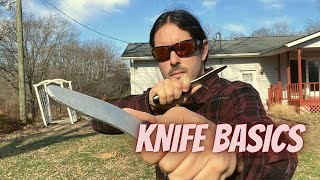
Let's go over essential basics and develop safety skills for the every day non-ninja, non-commando regular average person. But look, there are no shortcuts to this. Knife defense is serious business and you can't get good at it just by watching a video, so get out there and train!! Follow GN the Creator: https://www.instagram.com/gn_funkertactical Learn Knife Work at: https://www.trainwithgn.com/ Business: [email protected] Notice: Subject matter experts presented on this channel are not necessarily affiliated with one another, nor are they representatives of the channel itself. My goal is to bring you opinions and expertise from a wide variety of perspectives across the full spectrum of fighting. It is ultimately up to you, the viewer, to observe - orient - decide and hopefully act upon the material presented by seeking in-person training under credible and qualified supervision. -GN
Related Techniques
Frequently Asked Questions
What does this video teach about disengage thrust?
This video covers establishing defense parameters, priority one: disengagement, distance management and threat range. It provides detailed instruction from Funker Tactical - Fight Training Videos.
How long does it take to learn disengage thrust?
The basic mechanics can be understood in a single session, but developing reliable execution requires consistent drilling over weeks of practice. This 9-part breakdown helps structure your training by isolating each phase of the technique.
What are the key details for finishing disengage thrust?
This instruction covers only initial threat interception due to the infinite variables in extended knife encounters. Practitioners should pressure-test techniques against resistant opponents to validate effectiveness. The instructor encourages seekers of advanced knife work to consult additional resources and qualified instructors.
Related videos

Sword Fighting Basics: Standing in the Guard
Lauren Danger Shaw

Bela's lessons at honved .change thrust with disengage from line
sandra egginton
Basic Knife Thrust Techniques - Kali Arnis Eskrima
Kali Center

11.3 Learn Sabayan High Thrust | Filipino Martial Arts Angles of Attack
iKali TV

Renaissance Fencing Tutorial 2 Stoccata Thrust
Edinburgh Renaissance Fencing Academy