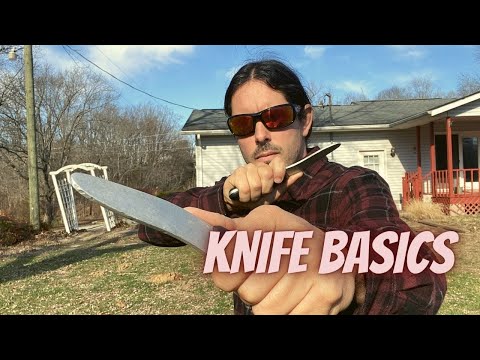
11.3 Learn Sabayan High Thrust | Filipino Martial Arts Angles of Attack
0
Direct Thrust·iKali TV
Focus on offense, counter offense, and recounter offense! Practice with Tuhon Apolo Ladra, founder of iKali and the Ar…
Translation: direct thrust
The Direct Thrust (stoccata) drives the rapier point straight forward along the centreline toward the opponent's chest, throat, or face, initiated by extending the sword arm and followed by the body advancing via a lunge or pass. [1] Italian rapier masters teach that the arm must extend before the body moves, ensuring that the point threatens the opponent throughout the action. [1],[2] The stoccata can be delivered in any of the four hand positions (prima through quarta), each targeting a different line. [2],[3]
The direct thrust (stoccata) is the fastest and most economical rapier attack, travelling the shortest distance between the point and the target. [1] Capo Ferro demonstrated that the thrust is mechanically superior to the cut for a one-handed sword because the point travels in a straight line while a cut must describe an arc, giving the thrust an inherent speed advantage. [2]
The direct thrust is the most fundamental scoring action in foil and épée competition, used at every level from beginner to Olympic. [1]
No images yet for this technique.
Sign in to suggest an image.
Focus on offense, counter offense, and recounter offense! Practice with Tuhon Apolo Ladra, founder of iKali and the Ar…
Get the NEW Kali Apex training course here: https://www.kalicenter.training/ And Join the APEX Members for continued tra…
The direct thrust in rapier and knife work is a foundational offensive technique that prioritizes accuracy and speed over power. Both iKali TV and Kali Center emphasize the thrust as the primary tactical approach—iKali TV frames it within Filipino martial arts angles and offensive-counter-offensive philosophy, while Kali Center explicitly designates thrusting as superior to slashing due to its capacity to penetrate vital organs and skeletal structures. iKali TV focuses on high and low thrust angles, using the bridge of the nose or eyes as preferred targets, and stresses the importance of alternating thrust angles to maintain offensive positioning while defending against counterattacks. The instructor demonstrates how proper angling allows early interception of incoming attacks. Kali Center codifies three fundamental thrust angles: center line (attacking groin, abdomen, throat, face), backhand (targeting lung, armpit, neck, eyes), and forehand (mirroring backhand targets on the opposite side). Both instructors emphasize retraction after each thrust—Kali Center calls this 'broken energy'—and advocate extensive drilling of these basic motions. Kali Center adds critical safety considerations for double-weapon training, ensuring blade paths never intersect the practitioner's own body. The consensus across both sources is that mastery requires repetitive practice of fundamental angles before progressing to more complex combinations.
Synthesized from 2 instructors
No instructional courses yet for this technique.
Sign in to suggest a course.
Risk of injury to the person this technique is applied to
Edged weapons cause fatal lacerations; historical battlefield mortality rates >30% (Amberger 1999)
Skill level needed to execute this technique reliably
Whether this technique is allowed under major competition rule sets
The Art of Fencing (Luigi Barbasetti, 1932)
Alias sources — [1] The Sword and the Centuries (Castle, 1901) [2] Classical Fencing (Rogers, 2014) [3] Classical Fencing (Rogers, 2014)
Effectiveness sources — [1] Anglo, S., The Martial Arts of Renaissance Europe (Yale University Press, 2000) [2] Mondschein, K., The Knightly Art of Battle (Getty Publications, 2011)
Established Japanese martial arts naming convention — native Japanese term (和語/漢語)
Alias sources — [1] The Sword and the Centuries (Castle, 1901) [2] Classical Fencing (Rogers, 2014) [3] Classical Fencing (Rogers, 2014)
Effectiveness sources — [1] Anglo, S., The Martial Arts of Renaissance Europe (Yale University Press, 2000) [2] Mondschein, K., The Knightly Art of Battle (Getty Publications, 2011)
wrist control for edge alignment, grip endurance, footwork precision
quick wrists, strong forearms, good posture
forearm extensors/flexors, deltoids, core, calves
According to iKali TV, you should aim for the bridge of the nose when practicing the high thrust, making sure your hand goes forward and then comes back in a controlled motion.
Kali Center recommends practicing thrusts on both your right and left hand with about 10-20 reps per side, then alternating between sides to build bilateral coordination and keep your brain engaged.
Kali Center emphasizes that you must ensure no weapon intersects another part of your own body during the thrust—the blade path must stay clear of your hands and torso, which is why beginners should practice slowly and deliberately.
According to Kali Center, the thrust is viewed as the primary knife tactic followed by slashing as secondary; iKali TV describes a continuous offensive strategy where you thrust, then counter-attack if your opponent responds, maintaining offensive momentum throughout the exchange.
The Direct Thrust (stoccata) drives the rapier point straight forward along the centreline toward the opponent's chest, throat, or face, initiated by extending the sword arm and followed by the body advancing via a lunge or pass. Italian rapier masters teach that the arm must extend before the body moves, ensuring that the point threatens the opponent throughout the action.
The straight thrust is the foundation of rapier fencing, emphasised by all major Italian masters as the fastest and most efficient offensive action. Fabris's Lo Schermo (1606) devotes extensive pages to the mechanics and tactical application of the direct thrust.
FIE: legal — Legal thrusting technique — primary scoring method in foil and épée; FIK Kendo: legal — Tsuki (throat thrust) is a valid target; HEMA: legal — Legal in applicable weapon categories
Danger rating 9/10. Extreme — edged weapons cause fatal lacerations; historical battlefield mortality rates >30% (Amberger 1999)
The standard setup chain: Assume Guard (Kamae/Hut) → Measure Distance (Ma-ai) → Initiate Cut/Thrust → Follow Through (Zanshin).
Standard counters include: Parry (Absetzen) — deflect the incoming blade with a counter-displacement / Void (Step Back) — withdraw from measure to avoid the cutting arc / Counter-Cut (Nachreisen) — strike into the opponent's opening during their attack.
Common variants: Standard cut (primary cutting angle from the ready stance); Thrust (tsuki) (straight thrust targeting the throat, chest, or face); Rising cut (kiri-age) (upward diagonal cut from low to high); Diagonal cut (kesa-giri) (downward diagonal cut following the kimono line).
The direct thrust is the most fundamental scoring action in foil and épée competition, used at every level from beginner to Olympic.
Top errors to watch for: Not extending the arm fully before lunging — the arm extension must precede the lunge for maximum reach and speed / Deviating from the straight line — the direct thrust's advantage is its directness; any curve reduces speed / Attempting the direct thrust when the line is closed — the line must be open or opened first / Not maintaining point alignment during the extension — the point must stay directed at the target throughout.
The Direct Thrust is also known as Choku-tsuki, Stoccata Dritta, Botta Dritta, Straight Thrust.