Introduction to Guard Positions
Guard positions, also known as stances, wards, or custodia, are foundational postures from which a fighter initiates and recovers between techniques. These positions provide the structural basis for all offensive and defensive movements in armed combat, regardless of weapon type.
Guards as Starting and Recovery Positions
Effective swordplay requires practitioners to move from a guard position, execute techniques, and deliberately recover to another guard position rather than engaging in continuous, uncontrolled movement. This cyclic approach—ready, attack, recover—is essential for maintaining control and readiness throughout the engagement.
Longsword Fundamental Guards: Plow and Ox
In the Lichtenauer tradition, the plow guard positions the sword horizontally at knee level with bent knees and elbows in, enabling efficient execution of all four primary cuts. The ox guard, with the sword held point-forward, facilitates both cutting and thrusting techniques from a high, threatening posture.
Alber and Positional Adaptability
The alber (fool's guard) positions the sword downward, seemingly vulnerable but effective for drawing opponents into committed attacks. Guard positions are not limited to opening stances; practitioners must develop competency recovering from any sword position encountered mid-combat, such as low positions after downward cuts.
Single-Handed Weapons: Messer Guard Transitions
With single-handed weapons like the messer, guards emphasize a forward-pointing blade that foreshortens the sight line while maintaining a central position. Smooth transitions between guard positions, keeping the point relatively centered rather than making exaggerated sweeping movements, develop fluidity and efficiency.
Pole Weapons: Staff Guard Fundamentals
Staff guards maintain the weapon's length above the head for comprehensive body coverage while allowing rapid transitions between upper and lower positions. Hand movements precede footwork in these transitions, enabling defenders to adjust positioning swiftly while maintaining defensive geometry.
Strategic Recovery and Reset
Rather than committing to continuous attack-and-defend cycles, competent fighters strategically recover into established guard positions to reset their offensive and defensive options. These deliberate pauses allow practitioners to assess the opponent and launch renewed attacks from a position of advantage and control.
Sword Fighting Basics: Standing in the Guard
Key Takeaways
- •Introduction to Guard Positions
- •Guards as Starting and Recovery Positions
- •Longsword Fundamental Guards: Plow and Ox
- •Alber and Positional Adaptability
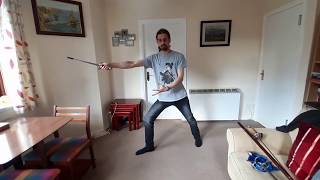
What is a guard and why do we stand that way? Today it's an overview of guard positions, also called wards, stances, custodia and many other things. Essentially, knowing how to position the sword to start or continue an exchange with an opponent helps you execute your cuts, thrusts and blocks. As always, this video is based on what I've been taught and my own research, and your opinions may differ.
Related Techniques
Frequently Asked Questions
What does this video teach about disengage thrust?
This video covers introduction to guard positions, guards as starting and recovery positions, longsword fundamental guards: plow and ox. It provides detailed instruction from Lauren Danger Shaw.
How long does it take to learn disengage thrust?
The basic mechanics can be understood in a single session, but developing reliable execution requires consistent drilling over weeks of practice. This 7-part breakdown helps structure your training by isolating each phase of the technique.
What are the key details for finishing disengage thrust?
Staff guards maintain the weapon's length above the head for comprehensive body coverage while allowing rapid transitions between upper and lower positions. Hand movements precede footwork in these transitions, enabling defenders to adjust positioning swiftly while maintaining defensive geometry.
Related videos
Knife Defense Simplified: Essential Techniques For Everyday Safety
Funker Tactical - Fight Training Videos
Bela's lessons at honved .change thrust with disengage from line
sandra egginton
Basic Knife Thrust Techniques - Kali Arnis Eskrima
Kali Center
11.3 Learn Sabayan High Thrust | Filipino Martial Arts Angles of Attack
iKali TV
Renaissance Fencing Tutorial 2 Stoccata Thrust
Edinburgh Renaissance Fencing Academy