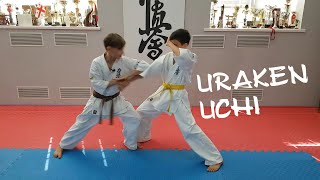
Introduction to Shuto
Shuto, the knife-hand strike, is a versatile open-hand technique in karate with multiple applications. This instructional guide covers five distinct variations of the strike, each designed for specific combat scenarios and opponent positions.
Target Areas and Tactical Applications
Shuto strikes are most effective against an opponent's arms and legs during attacks, as well as vulnerable areas including the neck, collarbone, ribs, and temple. Proper distancing, hip movement, and arm rotation are essential for maximizing strike effectiveness and power.
Proper Hand Formation
The foundation of an effective shuto begins with correct hand structure: fingers pressed tightly together, thumb bent at the middle joint and held close to the palm. The wrist and back of the hand must form a straight line to generate maximum power and prevent injury.
Front, Side, and Back Chops
These three variations follow the same fundamental trajectory and mechanics, differing only in directional application based on opponent positioning. All three employ the alternating hand pattern with one hand attacking while the other remains chambered at the hip for defensive readiness.
Collarbone and Neck Chops
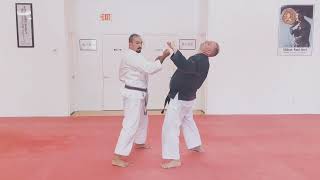
The collarbone chop employs a fully extended arm aimed directly at the opponent's collarbone, while the neck chop uses a slightly bent elbow with a twisting rotation at impact to strike the neck muscles. The neck chop can also be adapted to target an opponent's ribs depending on height and positioning.
Front Chop Application
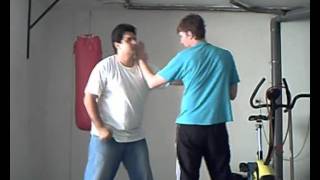
In practical engagement, the front chop is executed as an opponent approaches, with the attacking hand striking directly to the neck while the supporting hand maintains a defensive position. Proper hip rotation and body positioning ensure full power transfer to the target.
Side Chop Application
The side chop is applied from an angled stance and can target the neck, temple, or facial area depending on the situation. The practitioner sidesteps the opponent's attack and executes the strike with the rear hand while rotating fully into the technique.
Shuto as Defensive Block
Beyond striking, shuto can function as a powerful defensive block against incoming attacks, particularly striking an opponent's arm at the elbow bend. This blocking application carries sufficient striking force to discourage further aggressive advances.
Karate Chop / Knife-Hand Strike / Shuto
Key Takeaways
- •Introduction to Shuto
- •Target Areas and Tactical Applications
- •Proper Hand Formation
- •Front, Side, and Back Chops
#StayHome and Learn Karate #WithMe Day # 13 This video is part of 21 Techniques in 21 Days. Below is list of the techniques Day 1: Lower Block - Gedan Barai Day 2: Upper Block - Jodan Uke / Age Uke Day 3: Inner Forearm Block - Uchi Uke Day 4: Outer Forearm Block - Sote Uke Day 5: Punch - Tsuki Day 6: Back Fist - Front - Uraken Day 7: Back Fist - Side - Uraken Day 8: Back Fist - Back - Uraken Day 9: Chin Elbow - Hiji Uchi Day 10: Side Elbow - Hiji Uchi Day 11: Back Elbow - Hiji Uchi Day 12: Down Elbow - Hiji Uchi Day 13: Collar Bone Chop / Side Chop / Back Chop - Shuto Day 14: Normal Stance - Heiko Dachi / Horse Stance - Kiba Dachi / Forward Stance - Zenkutsu Dachi Day 15: Front Kick - Mae Giri / Thrust Kick - Kaykome / Snap Kick - Keage Day 16: Reverse Punch - Gyaku Tsuki Day 17: Lower Block Punch Combination - Gedan Barai Gyaku Tsuki Day 18: Upper Block Punch Combination - Jodan Uke Gyaku Tsuki Day 19: Inner Forearm Punch combination - Uchi Uke Gyaku Tsuki Day 20: Outer Forearm Punch combination - Soto Uke Gyaku Tsuki Day 21: Forward Stance in detail - Zenkutsu Dachi Shihan Syed from Lion Budokan Karate International New Zealand is passionate about teaching Karate to people of all age groups worldwide. This channel is dedicated to sharing his unique teaching style to beginners, intermediate and advance Karatekas. Anybody aged 6 years and above can learn certain things with little supervision of an adult. Younger than 6-year-old must have an adult supervision at all times. On this channel, you will learn basics, intermediate and advance Karate techniques. Having started the channel recently, Shihan is mainly focussing on the basic techniques at the moment. One of the main objectives of creating the channel and sharing among the community is to help parents and guardians of our members. It's great to see the excitement of parents/guardians watching their kids learn. These parents sometimes try to help their kids, but due to lack of sufficient knowledge, their support to their kids is not of much help. These videos are designed in such a way that a non-karateka can also take benefit from these videos. For example. Lower Block / Gedan Barai There are several different ways of teaching a downward block / lower block / gedan barai. Teaching a youth or an adult is much easier than teaching a kid (with some exceptions of course). Therefore it is necessary to break the technique into parts, slow it down and teach them at a pace that makes it easier for them to learn. That's one of the specialities of Shihan Syed. With his vast experience, he understands the common mistakes students do in each technique. These videos cover those common mistakes and offers a method to fix them in an easy to understand way. The other important audience of this channel are Karate instructors and assistant instructors. Learning and Teaching, these are two very different skills. But the good news is that teaching skill can be learnt. If you are an instructor and struggling to find a pace, or need some tips to keep that engagement with students and get their involvement then these videos will help you. Shihan Syed also welcomes viewers to ask for any specific technique, either by the students or the instructors world-wide. Enjoy!
Related Techniques
Frequently Asked Questions
What does this video teach about shuto uchi uchi?
This video covers introduction to shuto, target areas and tactical applications, proper hand formation. It provides detailed instruction from Lion Budokan Karate International.
How long does it take to learn shuto uchi uchi?
The basic mechanics can be understood in a single session, but developing reliable execution requires consistent drilling over weeks of practice. This 8-part breakdown helps structure your training by isolating each phase of the technique.
What are the key details for finishing shuto uchi uchi?
The side chop is applied from an angled stance and can target the neck, temple, or facial area depending on the situation. The practitioner sidesteps the opponent's attack and executes the strike with the rear hand while rotating fully into the technique.