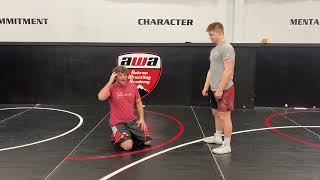
Introduction to Alternative Single Leg Finishes
The instructor presents three single leg takedown finishes that deviate from the conventional wrestling-style approach. These techniques are particularly useful when standard methods prove difficult due to posture, grip, or partner resistance.
Proper Single Leg Setup and Positioning
Entry begins from an inside position, capturing the opponent's leg with either the inside or outside hand. Rather than pinching the knees, the practitioner maintains wider leg positioning with both hands pulling the leg inward, while keeping the head connected to the opponent's chest rather than their ribs.
First Finish: Far Leg Tap Takedown
The practitioner steps forward with the lead leg and uses the rear leg heel to tap the opponent's far leg. This off-balancing technique often results in the opponent placing their hand on the mat or falling directly. If the opponent posts their hand, the practitioner can transition by catching the ankle with the rear hand and completing the takedown.
Second Finish: Behind-the-Back Transition
From the single leg position, the practitioner lowers their shoulder and steps backward, then reaches forward to control the opponent's knee. Walking around the opponent's leg brings them toward the mat, after which the practitioner can either lock hands around the waist or attack the second leg to achieve double-leg control.
Third Finish: High Leg Position Takedown
When the opponent takes a large step, the practitioner elevates the captured leg high across their body. This high leg position removes the opponent's balance, allowing the practitioner to clear the hips forward and tap behind the opponent's ankle to complete the takedown.
Head Position and Safety Considerations
The instructor distinguishes between single leg variations with the head on the inside, outside, or in the high leg position. Head-on-outside positioning is avoided in jiu-jitsu due to guillotine threats, while the high leg position with the leg across the body minimizes risk of flying triangle submissions.
Transition Strategy from Single to Double Leg
The instructor emphasizes that conventional wrestling-style single leg techniques are not always optimal for jiu-jitsu. Instead, focusing on off-balancing the opponent first and transitioning to double-leg control—whether with the opponent on their back or side—provides a safer, lower-risk finishing approach.
Finish The Single Leg Takedown (3 Ways)
Key Takeaways
- •Introduction to Alternative Single Leg Finishes
- •Proper Single Leg Setup and Positioning
- •First Finish: Far Leg Tap Takedown
- •Second Finish: Behind-the-Back Transition
3 simple finishes for your single leg takedown. Wrestling, yes - but BJJ specific! Thanks for watching 😊 Want to support this channel? Check out my BJJ Fanatics instructionals, where we go deep into the systems, principles and techniques you see in these videos. https://bjjfanatics.com/products/pressure-drop-dynamic-guard-passing-standing-vs-supine-by-brian-glick?_ab=0&_fd=0&_sc=1 https://bjjfanatics.com/products/only-way-out-dynamic-pin-escapes-by-brian-glick https://bjjfanatics.com/products/only-way-out-front-headlock-and-turtle-escapes-by-brian-glick . . . . . . . . . . . . WHO AM I? ➡️ MY BIO BY JOHN DANAHER - https://bit.ly/3gUMU5R FIND ME ON INSTAGRAM: http://www.instagram.com/bzglick 👊 ALL MY INSTRUCTIONAL VIDEOS: https://bjjfanatics.com/collections/all/fighter_BRIAN-GLICK .
Related Techniques
Frequently Asked Questions
What does this video teach about single leg finish?
This video covers introduction to alternative single leg finishes, proper single leg setup and positioning, first finish: far leg tap takedown. It provides detailed instruction from Brian Glick.
How long does it take to learn single leg finish?
The basic mechanics can be understood in a single session, but developing reliable execution requires consistent drilling over weeks of practice. This 7-part breakdown helps structure your training by isolating each phase of the technique.
What are the key details for finishing single leg finish?
The instructor distinguishes between single leg variations with the head on the inside, outside, or in the high leg position. Head-on-outside positioning is avoided in jiu-jitsu due to guillotine threats, while the high leg position with the leg across the body minimizes risk of flying triangle submissions.