Setup and Initial Positioning
The single-leg takedown begins with a simple penetration step to the corner. As the opponent's knee bends, this signals the attacker to circle around the corner rather than driving straight forward. The initial shot requires good angle and positioning before addressing the opponent's defensive sprawl.
Reading the Sprawl Type
The opponent's sprawl defense dictates which finish the attacker should pursue. A weak sprawl with a bent knee creates the optimal opportunity for a corner cut. A strong front sprawl requires lifting the corner or middle instead of driving the corner cut.
Elbow Placement and Arm Position
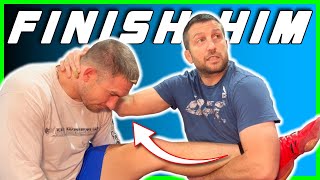
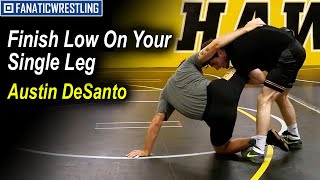
Once committed to the corner cut, the attacker drops the elbow inside while keeping the arm flat behind the opponent's leg. The shoulder and head pressure must drive into the opponent's body to maintain control and prevent escape.
Head and Shoulder Pressure
Maintaining head and shoulder pressure against the opponent is critical for success. The attacker's head must stay up and into the opponent rather than allowing it to drift outside, which relieves pressure and enables easier defense. Continuous shoulder pressure jamming inward prevents the opponent from creating space or rotating free.
Maintaining Shoulder-Over-Elbow Position
The attacker must keep the shoulder directly over the elbow to maintain solid downward pressure. If the opponent is able to push the attacker's elbow outside, the position becomes weak and vulnerable to being stretched out. This structural alignment prevents shoulder injuries and keeps the opponent controlled.
Arm Position Against the Mat
The attacking arm must remain completely flat against the mat rather than allowing the elbow to pop up. Lifting the elbow creates problems and allows the opponent to slide their heel out and escape. Keeping the arm flat combined with head and shoulder pressure prevents the opponent from generating sufficient defensive space.
Knee Control and Capture
Securing control of the opponent's knee is essential to finishing the single-leg takedown. Without capturing the knee, the opponent gains freedom to defend with techniques like the collar tie or shield wizard. The attacker should maintain hand contact on the knee while driving elbow and shoulder pressure downward.
Defending Against Knee Pull
Once the knee is captured, the opponent will attempt to pull it free and create distance. This becomes a competitive battle where the attacker must maintain pressure into the opponent while resisting the knee pull. Successful maintenance of knee control greatly increases finishing percentage.
Training from Contested Positions
High-level practice involves drilling from positions where the opponent has foot elevation and hand placement, creating realistic resistance. Athletes should focus on executing proper head and shoulder positioning while maintaining knee capture in these contested scenarios. This training method reinforces the technical details necessary for consistent takedown completion.
Single Leg Technique
Key Takeaways
- •Setup and Initial Positioning
- •Reading the Sprawl Type
- •Elbow Placement and Arm Position
- •Head and Shoulder Pressure
Cutting the corner and shelf single leg technique with Coach Ben. Head to awawisconsin.com/camps to register for camp before they sell out!
Related Techniques
Frequently Asked Questions
What does this video teach about high-crotch single leg?
This video covers setup and initial positioning, reading the sprawl type, elbow placement and arm position. It provides detailed instruction from Askren Wrestling Academy.
How long does it take to learn high-crotch single leg?
The basic mechanics can be understood in a single session, but developing reliable execution requires consistent drilling over weeks of practice. This 9-part breakdown helps structure your training by isolating each phase of the technique.
What are the key details for finishing high-crotch single leg?
Once the knee is captured, the opponent will attempt to pull it free and create distance. This becomes a competitive battle where the attacker must maintain pressure into the opponent while resisting the knee pull. Successful maintenance of knee control greatly increases finishing percentage.