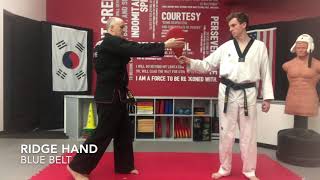
Introduction to Chungdan-Suro-Maki
The center knife hand block, known as chungdan-suro-maki, is a fundamental technique in martial arts training. Unlike reactive blocks such as the haramaki low block or sangan-maki high block, this movement uses contributive force to build pressure and power for subsequent techniques.
Hand Position and Orientation
The striking hand must be rotated outward with the palm facing away from the body, similar to waving. The thumb should remain tucked and pressed against the side of the open palm. This orientation ensures proper contact and prevents striking with the back of the knuckles.
Basic Hand Movement Drill
Practitioners should cross both arms with hands positioned outside the body, then pull and snap them back in a controlled motion. This foundational drill isolates the hand mechanics and should be repeated five times on each side to develop muscle memory.
Starting Position and Arc Motion
Both hands begin at the back hip and arc upward like drawing a rainbow. The striking hand finishes at eye level while the supporting hand stops at the solar plexus, palm facing upward. Both hands must reach their finishing positions simultaneously, requiring synchronized timing and control.
Adding Forward Stepping
The technique gains power when practitioners add a forward step to the hand movement. The hips should rotate and close as the hands are pulled back, then quickly return to center as the block executes. Exaggerating hip movement during initial practice maximizes force generation.
Hip Power and Finishing Position
Proper execution requires aggressive hip rotation combined with a firm, tight finishing position. The supporting hand maintains equal pressure as the blocking hand to generate maximum power and stability. This coordinated hip and hand engagement distinguishes an effective center chop from a weak one.
Practice Recommendations
Students should perform forty repetitions total—twenty on each side—beginning at slow speed to ensure correct hand positioning. Practicing in front of a mirror allows practitioners to verify proper form before increasing speed and power. Consistent repetition refines technique quality and develops reliable execution.
Legacy Martial Arts Center Chop Instructions
Key Takeaways
- •Introduction to Chungdan-Suro-Maki
- •Hand Position and Orientation
- •Basic Hand Movement Drill
- •Starting Position and Arc Motion
Frequently Asked Questions
What does this video teach about standard chop strike?
This video covers introduction to chungdan-suro-maki, hand position and orientation, basic hand movement drill. It provides detailed instruction from Legacy Martial Arts.
How long does it take to learn standard chop strike?
The basic mechanics can be understood in a single session, but developing reliable execution requires consistent drilling over weeks of practice. This 7-part breakdown helps structure your training by isolating each phase of the technique.
What are the key details for finishing standard chop strike?
Proper execution requires aggressive hip rotation combined with a firm, tight finishing position. The supporting hand maintains equal pressure as the blocking hand to generate maximum power and stability. This coordinated hip and hand engagement distinguishes an effective center chop from a weak one.