Understanding Weight Distribution in Side Control
When an opponent applies heavy pressure in side control, the defender's arms alone cannot sustain the load indefinitely. The opponent will inevitably shift weight and close distance, requiring the defender to establish leg positioning before being completely pinned. Head control becomes critical—the defender must keep their head free to create escape opportunities.
The Elbow Push Escape Principle
When the opponent lands tightly on the defender's side, a direct elbow push escape becomes available. The defender cups a grip above the opponent's elbow on the tricep and rocks rhythmically to create separation. This technique works most effectively when the opponent has not yet settled their full weight and before they can control the head.
Recognizing the Sit-Up Position
After the opponent lands on their side from the initial escape attempt, they will naturally transition toward their knees to regain a stronger position. The defender must capitalize on this transitional moment by sitting up and preventing their back from being pinned to the mat. Maintaining an upright posture is essential to avoid being re-pressured.
Hook Placement When Opponent Re-Establishes Knees
As the opponent returns to their knees, the defender must immediately insert their closest leg inside the opponent's frame as a hook. Depending on leg length and space availability, the defender either swings their leg directly inside or repositions by going behind before threading the hook. Proper hook placement provides leverage for the recovery.
Maintaining Upright Position Post-Recovery
After successfully placing the hook, the defender must stay seated upright rather than falling back. A supine position allows the opponent to re-pin and re-pass the guard. The defender holds their ground while the opponent carries their weight, preparing for continued positional adjustments.
Complete Sequence Integration
The full escape combines all elements: rock the elbow to create initial separation, sit up as the opponent repositions to their knees, insert the hook against the opponent's closest knee, and maintain an upright seated position. This sequence works because each movement exploits natural transitional moments in the opponent's pressure application.
Marcelo Garcia: Elbow Push & Sit Up Escape vs Side Control
Key Takeaways
- •Understanding Weight Distribution in Side Control
- •The Elbow Push Escape Principle
- •Recognizing the Sit-Up Position
- •Hook Placement When Opponent Re-Establishes Knees
Marcelo escapes Side Control after his frames collapse or get deflected: If your opponent wriggles his or her shoulders free from your hands and lands at your side, keep them away from holding your head with a Cross-Face. If they land next to you on their knees, shift out from underneath and make a grip on the triceps for the Elbow Push Escape. If they land on their hip for a Modified Scarf-Hold, apply a collar tie and sit upright; pummel a Butterfly-Hook along with an Under-Hook to recover back your position.
Frequently Asked Questions
What does this video teach about standard push knee reguard?
This video covers understanding weight distribution in side control, the elbow push escape principle, recognizing the sit-up position. It provides detailed instruction from Marcelo Garcia Jiu-Jitsu.
How long does it take to learn standard push knee reguard?
The basic mechanics can be understood in a single session, but developing reliable execution requires consistent drilling over weeks of practice. This 6-part breakdown helps structure your training by isolating each phase of the technique.
What are the key details for finishing standard push knee reguard?
After successfully placing the hook, the defender must stay seated upright rather than falling back. A supine position allows the opponent to re-pin and re-pass the guard. The defender holds their ground while the opponent carries their weight, preparing for continued positional adjustments.
Related videos
The tried and true head-to-knee mount escape
JeanJacquesMachado
Effortless Escape from Side Control When They Block the Shrimp
Invisible Jiu Jitsu
Side Control Escaping-Pt 1: Frames + Bridge/Bump/Shrimp
Fuse Martial Arts & Fitness
2 Ways to Escape the Mount EVERY Time!
BIG OSS Jiu-Jitsu Channel
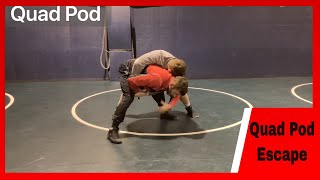
how to escape | quad pod | bottom wrestling
Footwork Trainer