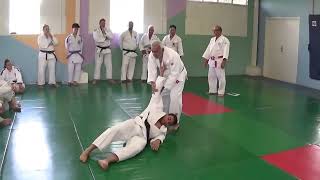
Grip Foundation and Initial Movement
The sumi otoshi begins with proper kumigata (grip). The instructor pulls the opponent forward, which naturally triggers a defensive step backward. This initial pull creates the opening necessary for the throw setup.
Entry and Shoulder Contact
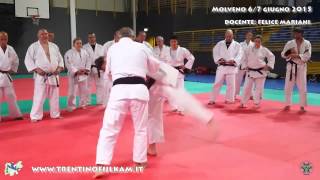
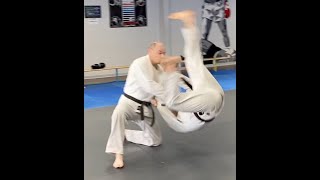
As the opponent steps back, the thrower enters by twisting the body and closing the distance. The key element is bringing the elbow in to establish shoulder contact with the opponent's shoulder, not the arm.
Grip Variations at the Collar
The grip can be adjusted to clutch the collar around the opponent's neck. This collar control becomes the anchor point for completing the throw, similar to the mechanics of a punch drive through the target.
Response to Defensive Withdrawal
When the opponent pulls back to break the grip, the thrower can adjust by elevating the elbow to maintain contact. The consistent shoulder strike ensures forward momentum is maintained despite the opponent's resistance.
Underneath Entry Variation
An alternative entry involves coming underneath the opponent's arm structure. The thrower steps deeply while maintaining control, allowing the shoulder to drive through the target for completion of sumi otoshi.
Obi Control and Step-In Timing
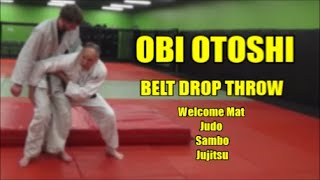
Gripping the obi (belt) at the side provides additional control. When the opponent pulls back in response, the thrower steps in with a shoulder strike to execute the throw before the opponent can reposition.
Lateral Movement Adaptation
If the opponent attempts to step around the thrower, the solution is to step with the opponent while maintaining control. This tracking footwork prevents the opponent from escaping the throw setup.
Direct Leg Entry
A direct entry can be executed by shooting the leg straight through the opponent's stance. The thrower allows the arm to pass through naturally, enabling the throw to complete without excessive backward driving force.
Transition from Uki Goshi
The sumi otoshi can follow naturally from an uki goshi attempt. When the opponent steps to escape, the thrower steps with them and executes the shoulder strike for an immediate sumi otoshi completion.
Makikomi Variation
By pulling the opponent around in a circular motion before stepping and striking with the shoulder, the thrower executes a makikomi-style sumi otoshi. This wrapping entry maintains rotational momentum through the throw completion.
Sumi-Otoshi Variations | Riki Judo Dojo
Key Takeaways
- •Grip Foundation and Initial Movement
- •Entry and Shoulder Contact
- •Grip Variations at the Collar
- •Response to Defensive Withdrawal
Riki sensei showed us many different grips and entries for sumi-otoshi (隅落 - corner drop) during judo class on 9-6-2021. 0:00 Both hands gripping one sleeve 0:16 Shoulder & sleeve grip 0:30 Double sleeve grip 0:40 Collar & sleeve grip 0:57 Grabbing the pants 1:23 Striking uke's ear 1:39 Armpit & sleeve grip 1:46 Under elbow & sleeve grip 1:56 Clothesline grip 2:06 Belt grip with shoulder strike 2:21 Neck grip 2:32 Painful illegal strikes 3:08 Armpit strike entry 3:47 Uki-goshi entry 4:12 Mawari entry 4:42 Left foot entry He showed us the fundamentals in that same class: https://www.youtube.com/watch?v=zdHHlcEbxE4 Riki sensei began Judo in Okinawa and is a Shichidan with over 56 years of study, practice, competition and teaching. He competed for 25 years at the local, national and international levels. A few of the great Judoka Riki sensei has studied and practiced with include: Kotani, Daigo, Ito, Inokuma, Okano, Kimura, Kaminaga and Nakatani. See Riki sensei teach every Monday, Wednesday, Thursday and Friday evening at 535 W. Iron Ave, Mesa, AZ 85210. Youth classes are 6 - 6:55 PM, adult classes are 7:00 - 8:30 PM. For more info, please visit rikidojousa.com The purpose of this YouTube channel is to pass on the original, traditional, authentic Kodokan Judo that Riki sensei loves so much. Riki sensei's students maintain this YouTube channel (and are responsible for any errors), but you can find more of his thoughts at the Riki Judo Dojo Facebook page: https://www.facebook.com/Riki-Judo-Dojo-USA-194351210607759 8
Frequently Asked Questions
What does this video teach about standard sumi otoshi?
This video covers grip foundation and initial movement, entry and shoulder contact, grip variations at the collar. It provides detailed instruction from Riki Judo Dojo.
How long does it take to learn standard sumi otoshi?
The basic mechanics can be understood in a single session, but developing reliable execution requires consistent drilling over weeks of practice. This 10-part breakdown helps structure your training by isolating each phase of the technique.
What are the key details for finishing standard sumi otoshi?
The sumi otoshi can follow naturally from an uki goshi attempt. When the opponent steps to escape, the thrower steps with them and executes the shoulder strike for an immediate sumi otoshi completion.