Setup: Underhook Position and Vulnerabilities
The instructor begins from an underhook position while the opponent attacks with an under-overhook. This position, while dominant for controlling the opponent's shoulder and breaking down their posture, creates a critical vulnerability: it gives the opponent a clear line to attack the legs. Understanding this trade-off is essential before executing the backdoor sweep.
Countering the Overhook Threat
As the opponent squares their hips and prepares to throw, the defender must immediately square their own body to establish a line on the opponent's legs. By threading the right arm and right leg between the opponent's legs simultaneously, the defender can capture the deep half guard while executing the sweep in one fluid motion.
The Yoko Guruma Takedown
The backdoor sweep is fundamentally a standing deep half takedown known as Yoko Guruma. After securing the deep half position by threading underneath the opponent's knee, the defender immediately plants their replacement foot on top of the opponent's leg to prevent the opponent from recovering to a standard half guard position. This control is crucial before initiating the sweep.
Adaptation to Deep Half Guard
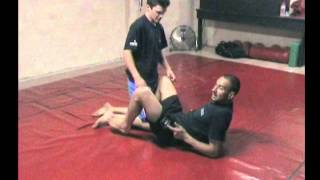
If the initial Yoko Guruma takedown is stuffed or meets significant resistance, the technique seamlessly transitions into a deep half guard position on the ground. From here, the defender can execute the waiter sweep, which offers two variations depending on arm length: an over-the-arm grip or an under-the-arm grip. The under-the-arm variation typically generates greater power.
Executing the Waiter Sweep
From deep half guard, the defender opens their hips while turning to pull the opponent's leg into their pocket. The left knee chops upward as the hips rotate, creating the sweeping motion. This technique is particularly effective against opponents with a strong base, as it directly undermines their stability through hip positioning and knee pressure.
Maintaining Control During the Pass
After successfully sweeping the opponent into side control, the defender must squeeze the captured leg tightly as they transition through the pass. This prevents separation and eliminates escape opportunities. From here, the defender can execute a cut pass or continue applying top pressure to advance position.
Kata-Hajime Setup and Mechanics
With the opponent on their side, the defender rolls them further onto their back while securing an underhook. The right hand feeds through underneath the opponent's armpit and cuts behind the head. This hand position is active and cutting, not merely bracing, creating the pressure necessary for a powerful submission.
The Kata-Hajime Collar Choke
The kata-hajime collar choke is completed by bringing the hands together at the opponent's collar. The cutting action of the right hand combined with the underhook position restricts the opponent's neck and creates a high-percentage finishing position. This choke is particularly effective because it opens opportunities for multiple follow-up techniques.
Complete Series Training Protocol
Students should practice the entire technical sequence: executing the Yoko Guruma takedown once or twice, then drilling the deep half guard adaptation one or two times, followed by the guard pass and finishing with the kata-hajime choke. This complete series trains seamless transitions between positions while developing multiple solution paths when initial techniques encounter resistance.
Deep Half Guard Positioning and Weight Distribution
The fundamental principle underlying this entire sequence is maintaining proper deep half guard positioning when on top. A solid base in deep half guard requires specific weight distribution; any compromised positioning leaves the defender vulnerable to being knocked over. Using the knees to control the opponent's weight and body positioning is essential for maintaining this advantage throughout the technique.
Japanese Jiu-Jitsu Takedown to Deep Half Guard Attacks
Key Takeaways
- •Setup: Underhook Position and Vulnerabilities
- •Countering the Overhook Threat
- •The Yoko Guruma Takedown
- •Adaptation to Deep Half Guard
Free Combat Grappling Techniques Course: https://tritacmartialarts.com/tritac-combat-academy In this TRITAC-Jitsu Lesson we will start off with a Jiu-Jitsu Takedown we use is called Yoko Guruma in Japanese Ju-Jitsu. This Japanese Ju-Jitsu Takedown is perfect for when you have a taller or bigger opponent who has an overhook control. This Jiu-Jitsu Takedown to Deep Half Guard flow, we review a lot of principles of "deep half guard" and fighting a single-leg using wrestling based movements. The deep half guard is a unique guard position where your opponent is balanced on top of you. It presents a lot of guard sweeps opportunities. Some may argue that the Deep Half Guard is not a great position for self-defense. We agree, but it is also an important movement prinicple that teaches you how to fight a bigger opponent using half guard techniques. Japanese Jiu-Jitsu Takedown to Deep Half Guard Attacks Overview / Timecodes: 00:00 - Standing Overhook Control Principles & Attack Defense 01:10 - Yoko Guruma - Japanese Jiu-Jitsu Takedowns to top half guard control 02:08 - Failed Yoko Guruma Jiu-Jitsu Takdown to Deep Half Guard Waiter Sweep 03:12 - Deep Half Guard Waiter Sweep to Half Guard Pass 05:00 - Kata Hajime Choke from Side Control 06:56 - Deep Half Guard Setup and Sweeping Principles 08:25 - Deep Half Guard Additional Principles 09:19 - Knee Shield Half Guard to Deep Half Guard to Backdoor Sweep Learn More about TRITAC Marital Arts: http://tritacmartialarts.com Free Combat Grappling Techniques Course: https://tritacmartialarts.com/tritac-combat-academy
Related Techniques
Frequently Asked Questions
What does this video teach about backdoor sweep?
This video covers setup: underhook position and vulnerabilities, countering the overhook threat, the yoko guruma takedown. It provides detailed instruction from TRITAC Martial Arts.
How long does it take to learn backdoor sweep?
The basic mechanics can be understood in a single session, but developing reliable execution requires consistent drilling over weeks of practice. This 10-part breakdown helps structure your training by isolating each phase of the technique.
What are the key details for finishing backdoor sweep?
Students should practice the entire technical sequence: executing the Yoko Guruma takedown once or twice, then drilling the deep half guard adaptation one or two times, followed by the guard pass and finishing with the kata-hajime choke. This complete series trains seamless transitions between positions while developing multiple solution paths when initial techniques encounter resistance.
Related videos
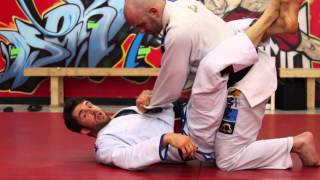
Standing Closed Guard Sweep : Waiter Sweep
Chewjitsu
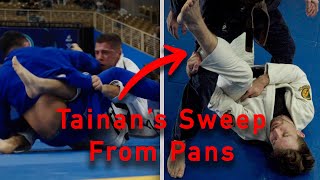
Learn The Waiter Sweep Tainan Dalpra Used To Win Pans
Paragon Jiu-Jitsu Academy Austin
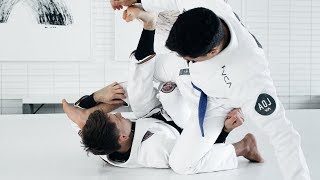
Rafael Mendes | Backtake Variation from Waiter Sweep | artofjiujitsu.com
ART OF JIU JITSU
Defense Against The Homer Simpson Choke (Battery Choke)
Fight Commentary Grappling
4 Purple Electric Chair Sweep
Groundworx Freestyle Jiu-Jitsu