Introduction to Technical Standup from Ground Position
This instructional segment addresses a common self-defense scenario: regaining standing position when grounded against an upright opponent. The technical standup provides a systematic method to create distance and return to feet safely, avoiding the misconception that aggressive striking alone will solve the problem.
Why Remaining Grounded is Disadvantageous
A grounded position against a standing opponent places the defender in a vulnerable state where the aggressor maintains full access to all striking and grappling weapons. Attempting to stand without a strategic approach invites immediate counter-offense. Creating a defensive barrier and controlled space is essential before transitioning upward.
Foot Positioning and Defensive Barrier
The defender must position both feet facing the opponent with soles visible, creating a defensive barrier. This orientation provides stronger leg positioning for kicks and prevents the opponent from easily circumnavigating the defense. Maintaining feet in a perpendicular rather than vertical alignment maximizes defensive effectiveness and prevents slipping.
Targeted Kick Mechanics: The Piston Method
Kicks should employ a piston-like motion targeting the opponent's front leg or both legs if the opponent is square-positioned. The defender must avoid overextending, which creates openings for clinch or takedown attempts. Foot orientation should remain perpendicular to the target leg for maximum impact and control.
Strategic Target Selection
The primary targets are the opponent's closest accessible points, typically the knees or lower body—not necessarily the head. While head strikes are opportunistic if the opponent commits forward, the primary objective remains creating space rather than inflicting maximum damage. Efficiency in kick selection directly supports the goal of standing safely.
Transition to Seated Position
After initial kicks create space, the defender transitions to a seated position before rising fully to standing. The seated position provides a stable base for more powerful kicks, as the bottom leg generates greater force through hip rotation than the top leg. This intermediate position maintains defensive capability while closing the gap to full standup.
Final Kick and Recovery to Standing
From the seated position, the defender executes a final powerful kick using the bottom leg's pendulum motion, then immediately capitalizes on the recoil to drive upward to standing. One hand maintains a protective guard to shield against incoming strikes during the recovery. Upon standing, the defender creates maximum distance with a large step backward to establish a reactionary gap.
Philosophical Approach: Space Creation Over Damage
The technical standup prioritizes creating sufficient space for safe recovery rather than relying on the guarantee of causing injury. Kicks should be viewed as tools for distance management and opportunity creation. Success is measured by returning to standing with improved defensive positioning, not by the damage inflicted during the transition.
The Technical Stand-Up Proper Application | Jiu-Jitsu Self-Defense Basics
Key Takeaways
- •Introduction to Technical Standup from Ground Position
- •Why Remaining Grounded is Disadvantageous
- •Foot Positioning and Defensive Barrier
- •Targeted Kick Mechanics: The Piston Method
The technical stand-up, or standing up in base, is one of the cornerstone movements of Jiu-Jitsu. The mechanics of it contain movements and mobility principles that are pervasive throughout ground fighting. There is a lot of confusion over this concept though, dealing mostly with the range, defensibility and kicking ability. I try to clear up some of this in this video and make it more accessible and understandable. If you like this, please like, subscribe and share! If you want more detailed technical instruction, check out Patreon.com/KnightJiuJitsu. Please follow me on Instagram @knight_jiu_jitsu_
Frequently Asked Questions
What does this video teach about standard technical standup position?
This video covers introduction to technical standup from ground position, why remaining grounded is disadvantageous, foot positioning and defensive barrier. It provides detailed instruction from Knight Jiu-Jitsu.
How long does it take to learn standard technical standup position?
The basic mechanics can be understood in a single session, but developing reliable execution requires consistent drilling over weeks of practice. This 8-part breakdown helps structure your training by isolating each phase of the technique.
What are the key details for finishing standard technical standup position?
From the seated position, the defender executes a final powerful kick using the bottom leg's pendulum motion, then immediately capitalizes on the recoil to drive upward to standing. One hand maintains a protective guard to shield against incoming strikes during the recovery. Upon standing, the defender creates maximum distance with a large step backward to establish a reactionary gap.
Related videos
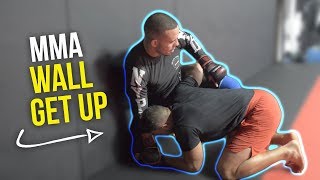
Wall Get Up (MMA)
Steven Strangles People
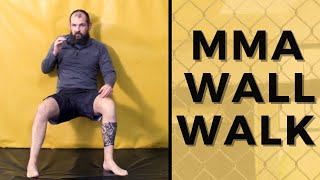
MMA Solo Drill - Getting Back To Your Feet
Predators MMA and BJJ Academy Manchester
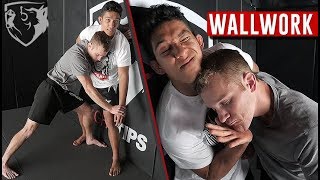
Wallwork: Fighting Off of the Cage & MMA Clinch
fightTIPS
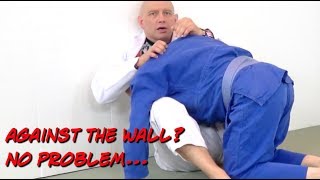
How to Use a Wall or a Fence While Grappling
Stephan Kesting
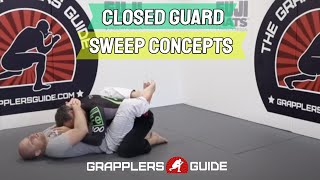
Closed Guard Sweep Concepts by Jason Scully
The Grapplers Guide by Jason Scully