Introduction to Cage Fighting Fundamentals
Cage clinch work is a critical skill often overlooked in MMA analysis. This instructional guide covers the essential offensive and defensive principles for controlling opponents against the cage, including head control, hand positioning, and hip management.
Core Control Principles: Head, Hands, and Hips
Successful cage fighting depends on three primary control points: the opponent's head, hands, and hips. Defensive fighters must simultaneously work to escape these same controls by creating space and neutralizing pressure at each point.
Head Control as a Dominant Position
Controlling the opponent's head creates immediate restrictions in movement and footwork. When the aggressor lifts the head upward while pressuring forward, the defender becomes pinned on their toes and loses mobility, allowing the controlling fighter to dominate the exchange.
Underhook Control and Grip Variations
Double underhooks provide maximum control over the opponent's torso and shoulders. Common grip finishes include the butterfly grip, S-grip, and gable grip—all executed by controlling the underhook position while maintaining tight body pressure against the cage.
Mixed Control: Single Underhook Battle
In realistic cage exchanges, both fighters often control one underhook each while battling for advantage. The controlling fighter should grip the opponent's wrist to add a third control point, creating comprehensive positional dominance that leaves the opponent unable to generate offense.
Hip Control and Leverage Manipulation
Maintaining lower hip position than the opponent creates mechanical advantage for takedowns and control. By isolating the opponent's hips and concentrating pressure on one side, the aggressor can neutralize their base and limit defensive options.
Defensive Counter: Head Pressure Escape
When trapped under head control, the defender should drive their hips upward while pressing the opponent's chin away, allowing them to insert their own head underneath for control. This head positioning creates immediate space and shifts momentum toward the defender.
Breaking Wrist Control Through Hip Positioning
To escape trapped hand control, the defender must first ensure their hips are centered and balanced. By lifting the knee and generating upward pressure while maintaining a low hip position, the defender can break the grip and create space for swimming an underhook or disengaging from the cage.
Defensive Hip Recovery and Stance Widening
When the opponent achieves dominant hip isolation, the defender must regain hip position underneath their center of gravity. Widening the stance and lowering the hips prevents the opponent from executing takedowns, sweeps, or trips while restoring defensive stability.
Wallwork: Fighting Off of the Cage & MMA Clinch
Key Takeaways
- •Introduction to Cage Fighting Fundamentals
- •Core Control Principles: Head, Hands, and Hips
- •Head Control as a Dominant Position
- •Underhook Control and Grip Variations
Fighting off the wall or cage is an art in itself, with very specific techniques that utilize leverage and control. 'The Anomaly' Vince Cachero shows standing grappling techniques, covering how to pressure your opponent against the cage to set up strikes and takedowns, as well as fighting with your back against the wall to stay on your feet and escape. Support Vince Cachero as he steps back into the cage for his 5th pro MMA fight, at LFA 45 in Cabazon, CA. You can purchase your tickets down below: Watch Vince fight live!►CageTix.com/LFA Subscribe to fightTIPS►http://bit.ly/1APnzvw FOLLOW: Facebook | http://bit.ly/fightTIPSFacebook Twitter | http://bit.ly/fightTIPSTwitter Instagram | http://bit.ly/fightTIPSInstagram
Frequently Asked Questions
What does this video teach about standard wall walk standup?
This video covers introduction to cage fighting fundamentals, core control principles: head, hands, and hips, head control as a dominant position. It provides detailed instruction from fightTIPS.
How long does it take to learn standard wall walk standup?
The basic mechanics can be understood in a single session, but developing reliable execution requires consistent drilling over weeks of practice. This 9-part breakdown helps structure your training by isolating each phase of the technique.
What are the key details for finishing standard wall walk standup?
To escape trapped hand control, the defender must first ensure their hips are centered and balanced. By lifting the knee and generating upward pressure while maintaining a low hip position, the defender can break the grip and create space for swimming an underhook or disengaging from the cage.
Related videos
MMA Solo Drill - Getting Back To Your Feet
Predators MMA and BJJ Academy Manchester
How to Use a Wall or a Fence While Grappling
Stephan Kesting
Wall Get Up (MMA)
Steven Strangles People
Closed Guard Sweep Concepts by Jason Scully
The Grapplers Guide by Jason Scully
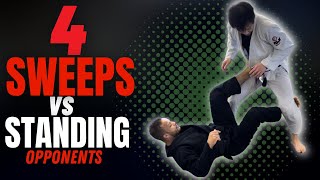
4 Ways to Sweep Anyone Vs Standing Opponents( Beginners Must Know it)
BIG OSS Jiu-Jitsu Channel