Course Context and Position Setup
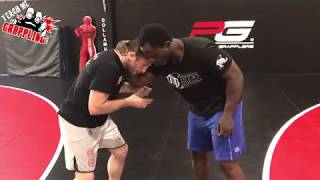
This lesson continues the Gracie Jiu-Jitsu self-defense course's takedown series, building from previous clinch work. The instructor establishes the modified seat belt position as the foundation, where one arm wraps underneath the opponent's waist while the practitioner stays to the side. This neutral position prevents the opponent from shooting effectively while maintaining control.
Modified Seat Belt Position Mechanics
The modified seat belt resembles a headlock but differs critically due to the underhook arm controlling the waist. The instructor's hips remain positioned neither away nor excessively close, with the head placed against the opponent's jaw. This setup prevents the opponent from generating power or executing takedown attempts.
Weight Distribution on Target Leg
Before executing the takedown, the practitioner must load weight onto the leg they intend to block. This pressure prevents the opponent from lifting or moving the leg during the technique. Weight distribution occurs through the underhook arm lifting the shoulder upward, establishing dominance.
The Run-By Initiation
The practitioner initiates the takedown by stepping the far leg first, transitioning the overhook arm to reach high toward the opponent's knee. The head remains elevated rather than looking down, maintaining positional awareness. The key principle involves continuous forward movement rather than static hand placement.
Continuous Motion Through the Takedown
The defining characteristic of the run-by technique is uninterrupted forward momentum. Rather than stopping after blocking the knee, the practitioner continues walking past the opponent, which generates the falling action with minimal hand force. This continuous movement proves more efficient than stationary grappling attempts.
Hand Placement and Force Application
The hand blocking the knee requires minimal force, as the practitioner's forward momentum and weight distribution accomplish the takedown. Once the block is established, the opponent's leg becomes difficult to move independently. This efficiency allows the practitioner to bypass the opponent and achieve a control position.
Historical Technique Lineage
The run-by knee tap shares origins with techniques used by elite mixed martial artists like Georges St-Pierre and Fedor Emelianenko, who employed overhead strikes before tapping the knee. The current variation maintains the same mechanical principle while executing from the overhook clinch position, proving the technique's effectiveness across combat sports.
Common Mistakes and Proper Execution
Practitioners often halt their forward momentum after initiating the block, requiring excessive effort to complete the takedown. The correct approach maintains continuous walking motion past the opponent's center line. Even if the opponent begins falling before the practitioner completes their pass, continued movement ensures superior positioning.
BJJ Self-Defense Course | Lesson 103: Run-By Knee-Tap Takedown
Key Takeaways
- •Course Context and Position Setup
- •Modified Seat Belt Position Mechanics
- •Weight Distribution on Target Leg
- •The Run-By Initiation
We hope everyone is enjoying our Gracie Jiu-Jitsu Self-Defense Course. We are offering these lessons for free, but If you are enjoying what we are doing and want to support us, you can make a donation to PayPal at [email protected]. Please click Like, Subscribe, and hit the notification bell for updates on this course. You can also Join my Patreon for more Content at: www.Patreon.com/RoyMarshJiuJitsu.com Or, check out my Video Instructionals at RoyMarsh.selz.com You can also read my Blog at: www.ConceptualJiuJitsu.Worpress.com My Websites: www.GracieSchwarzwald.com www.RoyMarshJiuJitsu.com www.Facebook.com/GracieSchwarzwald www.Instagram.com/GracieSchwarzwald
Related Techniques
Frequently Asked Questions
What does this video teach about knee tap?
This video covers course context and position setup, modified seat belt position mechanics, weight distribution on target leg. It provides detailed instruction from Gracie Schwarzwald Jiu-Jitsu.
How long does it take to learn knee tap?
The basic mechanics can be understood in a single session, but developing reliable execution requires consistent drilling over weeks of practice. This 8-part breakdown helps structure your training by isolating each phase of the technique.
What are the key details for finishing knee tap?
The run-by knee tap shares origins with techniques used by elite mixed martial artists like Georges St-Pierre and Fedor Emelianenko, who employed overhead strikes before tapping the knee. The current variation maintains the same mechanical principle while executing from the overhook clinch position, proving the technique's effectiveness across combat sports.