Introduction to Side Control Position
Patrick Fulop introduces the side control position, a fundamental ground fighting technique, along with three essential escape methods. This lesson covers both offensive and defensive applications of this dominant control position.
Establishing Side Control from the Top
To establish side control, position one knee against the opponent's hips and the other level with their face. Slide one hand under the neck to grab the opposite shoulder while placing your head inside their arm, then wrap their arm with your other arm to control the biceps and immobilize their hips.
Pressure and Control Mechanics
Apply a cross-face with the shoulder while filling the gap between your elbow and hip to prevent the opponent from inserting their elbow. Distribute weight across the chest and shoulder to create maximum control and immobilization, making this position ideal for self-defense and law enforcement applications.
Offensive Options from Side Control
Two primary offensive transitions exist from side control: transitioning to full mount position by driving the knee across the opponent's belly, or switching to scarf hold position by wrapping the triceps and repositioning the legs. Both positions create superior attacking opportunities compared to side control alone.
Escape One: Bridge and Shrimp
The foundational escape begins by inserting the elbow inside the opponent's hips, bridging if necessary to create space. Post the foot and straighten the leg while pushing on the hips, then shrimp to generate distance before inserting the knee across the opponent's belly and establishing a square-off position.
Escape Two: Slip and Flip
When facing a tight grip, insert the fingers over the opponent's body rather than the elbow, then bridge to create space. Grab the opponent's body with a tight hook on the neck and bridge explosively to flip them over and establish your own side control position on top.
Escape Two Variation: Slip and Slide
When the opponent is too heavy or counters the flip, use the existing grip on their back to slide out instead of lifting. Straighten the legs and pull with the heels while maintaining the grip, then invert to the knees and transition to top turtle position for continued control.
Escape Three: Sit-Up Escape
From the opposite side, insert the forearm under the opponent's neck to create distance and discomfort. Post the elbow to the mat and shrimp the hips out, then critically slide the other elbow underneath to generate additional space before sitting up and escaping the position completely.
Side Control Position & 3 Escapes – Ground Fighting | Effective Martial Arts
Key Takeaways
- •Introduction to Side Control Position
- •Establishing Side Control from the Top
- •Pressure and Control Mechanics
- •Offensive Options from Side Control
This video was a great start, but we've since updated it with a much more comprehensive, dynamic, and structured approach to understanding SIDE CONTROL from top & bottom! Check it out: https://youtu.be/HoWludigDGw Side Control for MMA v.2.0! Enjoy! 🙏 - Patrick Side Control is a key position for immobilizing an opponent on the ground, and an essential transition for more dominant positions. Knowing how to escape this position is also a must for self-defense. Instruction by Patrick Fulop. Enjoy! Live instruction on the Effective Martial Arts (TM) curriculum is currently only available at Kung Fu West Island, in Pointe-Claire (Montreal), Quebec, Canada. http://www.kungfuwestisland.com/ Video production, filming, editing and music by Sukhi Benning, http://www.sookz.ca/
Frequently Asked Questions
What does this video teach about standard mission control?
This video covers introduction to side control position, establishing side control from the top, pressure and control mechanics. It provides detailed instruction from Grappling SMARTY.
How long does it take to learn standard mission control?
The basic mechanics can be understood in a single session, but developing reliable execution requires consistent drilling over weeks of practice. This 8-part breakdown helps structure your training by isolating each phase of the technique.
What are the key details for finishing standard mission control?
When the opponent is too heavy or counters the flip, use the existing grip on their back to slide out instead of lifting. Straighten the legs and pull with the heels while maintaining the grip, then invert to the knees and transition to top turtle position for continued control.
Related videos
BJJ vs. Sambo 2-21-08 New York City
valentineu
Understanding The Jiu Jitsu Back Control by Andrew Wiltse
Bernardo Faria BJJ Fanatics
WWW.BJJONLINE.NET- No-Gi- Dog Fight Position Counter - The Leash
Tony Pacenski
5 BRUTAL Rubber Guard Submissions | Breakdowns
BJJ Trickster
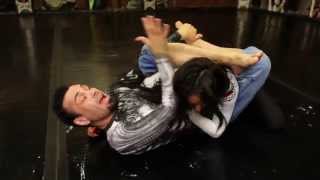
Eddie Bravo Rubber Guard to Mount Walkthrough | The Hooks MMA: Ep 1, Part 3
The Hooks MMA