Grip Establishment and Breaking
The practitioner begins by establishing control against an opponent holding the lapels. Using a pistol grip on one sleeve, the free hand grabs the practitioner's own wrist to break the opponent's grip. The controlled arm is then positioned underneath the wrist to prevent re-gripping, while the free hand controls the opponent's elbow.
Posture Breaking and Base Elimination
Leg pressure is applied to pull the opponent forward and break their posture, removing weight from their thighs and making their legs lighter. This creates the necessary space to transition from closed guard to butterfly guard.
Establishing Butterfly Hooks
The practitioner uses a grapevine motion on each side to stretch the opponent's knees away from their body. One foot hooks inside the opponent's lap, followed by the second hook on the opposite side, creating a secure butterfly guard position.
Seated Position Control and Arm Trap
From the seated butterfly guard, the far-side arm swims underneath the opponent's arm to grip behind the jacket. The trapped arm is secured by controlling the belt and using elbow pressure to prevent the opponent from freeing themselves.
Variation One: Traditional Mount Transition
The practitioner rocks backward while maintaining the arm trap, executing an underhook on the far side and overhook on the near side while gripping the belt. This coordinated movement flips the opponent into mount position.
Variation Two: Grip Breaking Without Space
When the opponent's forearm blocks the chest, preventing grip removal, the practitioner uses five fingers or an open palm to peel the opponent's grip from the gi. The technique then continues with the same posture break, hook placement, and arm control sequence.
Variation Three: Countering the Mat Post
If the opponent posts their hand on the mat while the practitioner attempts the transition, the free hand pushes the opponent's posted arm into their body to eliminate the base. The practitioner then turns their feet inward, rolls to the shoulder, and kicks the opponent over into knee on belly position.
Heavy Opponent Adjustment
For larger opponents, the practitioner pulls them forward before pushing them away, creating momentum for the sweep. A chest and hip connection is maintained while rotating and kicking over into knee on belly position.
Jiu-Jitsu | 2-on-1 Butterfly Hook Sweep Variations
Key Takeaways
- •Grip Establishment and Breaking
- •Posture Breaking and Base Elimination
- •Establishing Butterfly Hooks
- •Seated Position Control and Arm Trap
And we're back with some jiu-jitsu vids for you guys! In this one, we show you two sweeping variations that commence in the Closed Guard and transition into Butterfly Sweeping techniques, using a 2-on-1 Control Grip. Watch these details and put them into the practice room to reap the benefits! See you in the next one! D&A. Thanks for watching and if you're new here HIT that SUBSCRIBE button and chime that notification bell to receive a notification each time we upload a new video! FOLLOW: Facebook: https://www.facebook.com/ExperienceMMA Instagram: https://www.instagram.com/experiencemma Instagram: https://www.instagram.com/krudanny Instagram: https://www.instagram.com/alextheprodigy101 Alex The Prodigy's YouTube Channel: https://www.youtube.com/alextheprodigy For seminars, private classes, or any other business inquiries, contact: [email protected] EXPERIENCE MMA & FITNESS 360 Maloney Ouest, Unit 2 & 3, Gatineau, Qc, J8P 7R5 819.643.8444 www.experiencemma.com MUAY THAI || JIU-JITSU || NOGI || MMA || BOXING || FITNESS KIDS & ADULTS Fully accredited Muay Thai and Brazilian Jiu-Jitsu school. Experience the Difference.
Frequently Asked Questions
What does this video teach about overhook butterfly sweep?
This video covers grip establishment and breaking, posture breaking and base elimination, establishing butterfly hooks. It provides detailed instruction from Danny Fung.
How long does it take to learn overhook butterfly sweep?
The basic mechanics can be understood in a single session, but developing reliable execution requires consistent drilling over weeks of practice. This 8-part breakdown helps structure your training by isolating each phase of the technique.
What are the key details for finishing overhook butterfly sweep?
If the opponent posts their hand on the mat while the practitioner attempts the transition, the free hand pushes the opponent's posted arm into their body to eliminate the base. The practitioner then turns their feet inward, rolls to the shoulder, and kicks the opponent over into knee on belly position.
Related videos
33a Reverse Butterfly Sweep
Pathfinder Jiu-Jitsu Team
X-GUARD: Sweep #1
BJJ Joe
Reverse Butterfly Sweep | 33f
Pathfinder Jiu-Jitsu Team
3 Butterfly Guard Concepts That’ll Make Your Sweeps More Technical
Chewjitsu
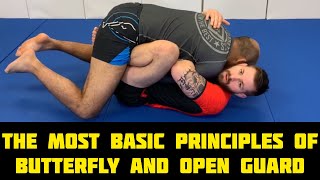
The Most Basic Principles Of Butterfly And Open Guard by Gordon Ryan
Bernardo Faria BJJ Fanatics