Introduction to 50/50 Finishing
The 50/50 guard position has experienced a resurgence in modern Brazilian Jiu-Jitsu, though instructors debate whether this stems from technical superiority or simply opponents forgetting proper defensive mechanics. As the saddle position has become heavily defended, practitioners are rediscovering the 50/50 as a viable finishing platform. This section addresses finishing mechanics once the heel is already secured from this position.
The Problem with Square Positioning
When finishing a heel hook from 50/50 while positioned square to the opponent, the opponent can easily defend by lifting their hips or using their hands to separate grips and create distance. Additionally, the opponent can grab the instructor's head, which severely limits hip utilization—the critical power source for heel hook finishes. Without proper hip leverage, generating meaningful breaking pressure becomes extremely difficult.
Proper Body Positioning: Side Control
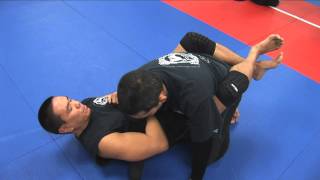
The correct finishing position from 50/50 requires shifting to a side control posture rather than remaining flat on the back. This positioning allows the instructor to apply the necessary pressure to break the leg by rotating the heel toward the floor while bringing the hips upward. The side position also increases distance between competitors, making it harder for the opponent to defend with their hands.
Hip Drive and Inside Knee Placement
From the 50/50 position, the instructor must keep their inside knee rotated toward the floor and positioned between the opponent's legs for safety. This placement protects against counter heel hooks, limiting the opponent to only rotational pressure on the ankle rather than damaging hip pressure on the knee. The finish combines rotating the heel toward the floor, driving the hips toward the sky, and using the inside knee to generate upward pressure.
Controlling Knee Angle for Clean Breaks
The instructor must ensure the opponent's knee points toward the sky to achieve a clean, efficient break. If the opponent's knee points too far laterally, the angles become compromised and the opponent gains the ability to slip the heel and escape. Proper knee alignment creates the mechanical advantage needed to secure a reliable tap.
Cross-Body Leg Variation
An effective alternative finish involves taking the leg cross-body while maintaining the inside knee position on the floor between the opponent's legs. This variation generates additional distance from the opponent, placing them further outside hand-fighting range. The instructor curls the heel toward the buttocks while keeping the inside knee grounded, then applies pressure by driving the elbow to hip and hips to sky.
Finishing Mechanics Without Rotation
This finish employs toe pressure toward the hip rather than rotational force on the heel, combined with the instructor's elbow-to-hip and hips-to-sky compression. The ankle receives sufficient rotational stress from the grip alone, so the primary finishing force comes from vertical hip pressure. This method proves more reliable than relying on rotation alone.
Key Principles: Distance and Positioning
The overarching principle when finishing from 50/50 is maintaining distance from the opponent's hands while positioning the body on its side rather than square. Side positioning increases the distance between competitors, reducing the opponent's ability to grab the head or separate the grip. Combined with proper knee angle control, this approach creates a clean, high-percentage finish from the 50/50 position.
Finishing From 50/50: CRAIG JONES BJJ Techqniques
Key Takeaways
- •Introduction to 50/50 Finishing
- •The Problem with Square Positioning
- •Proper Body Positioning: Side Control
- •Hip Drive and Inside Knee Placement
FINISHING FROM 50/50 BY CRAIG JONES // In this BJJ Techniques video, Craig Jones teaches Finishing From 50/50. Craig Jones is one of the best grapplers in Brazilian Jiu Jitsu. Known for his impressive lower body attacks and back takes Craig has taken the bjj community by storm. This is a clip off of his new instructional "Battle Tested Down Under Leg Locks" available exclusively at https://www.BJJFanatics.com. - For all your BJJ Gear and Apparel Needs Visit - https://store.bjjfanatics.com/ - Are you a BJJ Fanatics Insider? If not, you are missing out! Join now at: https://bjjfanatics.com/products/insiders-club - To learn more great Jiu Jitsu Techniques, visit https://www.bjjfanatics.com BJJ Fanatics was started by a pair of black belts (Bernardo Faria & Michael Zenga) who feel that nothing is more important than improving your BJJ skills as much as possible in the least amount of time. Their aim was to create a shop for BJJ Students who don’t look at BJJ as a sport – but as a lifestyle. Youtube: https://www.youtube.com/channel/UCAqme-CE-yLm01BV5nUjPPA Facebook Group: https://www.facebook.com/groups/733553463659020/ Instagram: https://www.instagram.com/bjj.fanatics/?hl=en 15% OFF On All Of Our BJJ Instructional Videos - Just Use The Coupon Code: FANATICSYOUTUBE Website: https://bjjfanatics.com . For the best fightwear, check out https://www.kojofightwear.com/ and use code " YTD15 " to get 15% off your first order.
Frequently Asked Questions
What does this video teach about standard fifty-fifty?
This video covers introduction to 50/50 finishing, the problem with square positioning, proper body positioning: side control. It provides detailed instruction from BJJ Fanatics.
How long does it take to learn standard fifty-fifty?
The basic mechanics can be understood in a single session, but developing reliable execution requires consistent drilling over weeks of practice. This 8-part breakdown helps structure your training by isolating each phase of the technique.
What are the key details for finishing standard fifty-fifty?
This finish employs toe pressure toward the hip rather than rotational force on the heel, combined with the instructor's elbow-to-hip and hips-to-sky compression. The ankle receives sufficient rotational stress from the grip alone, so the primary finishing force comes from vertical hip pressure. This method proves more reliable than relying on rotation alone.