Foundation: The Basic Teep
The foundation of Tawanchai's side teep begins with mastering the basic teep stance. The practitioner brings the foot underneath the body, lifts the leg fully, and keeps the foot turned outward rather than straight. The striking surface is the ball of the foot, delivered with a controlled push while maintaining an upright posture.
Proper Foot Placement and Recovery
Correct teep mechanics require placing weight on the back foot before striking, which provides stability and prevents backward momentum. After impact, the striking leg returns directly down to its starting position in the stance, rather than sweeping backward. This controlled recovery maintains defensive readiness and prevents the fighter from becoming vulnerable.
The Slide Teep Mechanics
The slide teep differs from a standard teep by incorporating lateral foot movement that disrupts the opponent's centerline. Rather than lifting then striking, the practitioner slides the foot horizontally while simultaneously extending the leg. The knee bends before the motion begins, allowing the power to generate from the leg bend rather than from arm swing alone.
Body Rotation and Power Generation
Tawanchai rotates his torso to maximize the slide teep's effectiveness, which generates significantly more power than a standing execution. The arm swings downward as the leg extends, coordinating the upper and lower body. A slight lean in the direction of the strike enhances power without overcommitting the stance.
Avoiding Common Technical Errors
The most critical mistake practitioners make is loading the technique too heavily, which telegraphs the attack and allows opponents to grab the leg. The slide teep should be delivered quickly with controlled power rather than maximum force. Excessive power creates openings that aggressive opponents can exploit by evading slightly and exposing the striker's back.
Tactical Application Against Aggressive Opponents
Tawanchai deploys the slide teep specifically against rushing opponents who press forward aggressively. The technique can be preceded by a light jab or feint to set up the strike while the opponent is committed to their advance. This defensive application creates distance and disrupts the opponent's attack while maintaining positional control.
Distance Management and Leg Bend Adjustment
Power and distance are directly correlated—when the opponent stands at range, the practitioner must increase knee bend to generate sufficient reach. The deeper knee bend creates greater distance coverage without requiring additional arm involvement. This principle allows effective striking from multiple distances without changing the fundamental technique.
Heavy Bag Training Protocol
Heavy bag work develops consistency by practicing the slide teep from multiple angles and distances, similar to developing range on jump shots. The practitioner takes two steps in each direction, executes a slide teep, then checks the bag momentum. Adding feints before striking patterns trains the technique's application against moving targets and reinforces realistic timing.
How To Do Tawanchai's Unstoppable Side Teep (Taught by WBC Youth Champion Tito Johnson)
Key Takeaways
- •Foundation: The Basic Teep
- •Proper Foot Placement and Recovery
- •The Slide Teep Mechanics
- •Body Rotation and Power Generation
In this tutorial, learn how to master Tawanchai’s powerful side teep technique. WBC Youth Champion Tito Johnson breaks down each step to help you execute this Muay Thai move with precision. Whether you’re just starting or looking to enhance your Muay Thai skills, this video will guide you through the essential techniques. 👉 Want Full Access & Full Workouts? http://wwwkingdommartialartsacademvhxtv.vhx.tv Enjoy our Online Muay Thai Training Program for exclusive content and advanced techniques! VIDEOS TO WATCH NEXT: 1. 3 Counters for Caught Muay Thai Kicks! https://youtu.be/BBeG8NuAewQ Discover the best counters for opponents who catch your Muay Thai kicks. 2. Muay Thai Switch Kick Tutorial: With High-Level Combos (Guaranteed Results) https://youtu.be/kJ8-2e6aNqQ 3. How to Land More Effective Teeps in Muay Thai https://youtu.be/BCkD3_HTHX0 Improve your teep accuracy and power with this focused drill. http://wwwkingdommartialartsacademvhxtv.vhx.tv TOUR OUR SHOP FOR MORE ⬇️ https://linktr.ee/thethinkingman Primo Fight Wear Discount Link https://www.primofightwear.com/charles FREE 8 Limbs Basics Download https://vimeo.com/user/158923351/folder/19114342 Laws Of Clinch Vol 2 & The Alamos Femur Collection Bundle Pack https://wwwkingdommartialartsacademvhxtv.vhx.tv/products/the-laws-of-clinch-alamos-seminar-collection Come train with us ! https://www.kingdommartialartsacademy.com 🎥 Video Footage Credit: Special thanks to Muay Ties for providing 3 seconds of footage from one of their uploads. Check out their channel for incredible Muay Thai fights: https://www.youtube.com/user/muayties 📧 Contact Us: Email: [email protected] Website: www.kingdommartialartsacademy.com 📱 Follow Us on Social Media: Instagram: @kingdommartialartsacademy @tjthethinkingman @titotheyounggod TikTok: @kmamuaythaitraining Facebook: Kingdom Martial Arts Academy Inquiries: [email protected] #muaythai #muaythaitraining #muaythaitechniques
Related Techniques
Frequently Asked Questions
What does this video teach about side teep?
This video covers foundation: the basic teep, proper foot placement and recovery, the slide teep mechanics. It provides detailed instruction from Kingdom Martial Arts Academy.
How long does it take to learn side teep?
The basic mechanics can be understood in a single session, but developing reliable execution requires consistent drilling over weeks of practice. This 8-part breakdown helps structure your training by isolating each phase of the technique.
What are the key details for finishing side teep?
Power and distance are directly correlated—when the opponent stands at range, the practitioner must increase knee bend to generate sufficient reach. The deeper knee bend creates greater distance coverage without requiring additional arm involvement. This principle allows effective striking from multiple distances without changing the fundamental technique.
Related videos
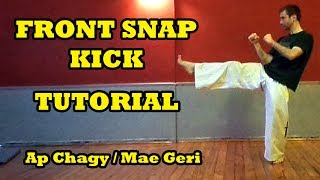
Front kick (Snap)Best In depth tutorial - Mae Geri - Ap Chagy
Liquidcadmus
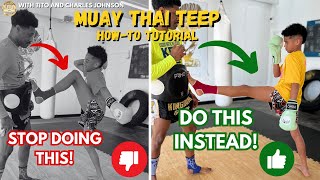
Learn the Muay Thai Teep in 11 minutes! Step-by-Step Tutorial for ALL Levels!
Kingdom Martial Arts Academy
How to do a Front Snap Kick
Excellence Martial Arts
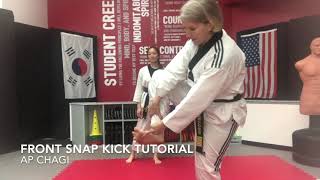
Front Snap Kick Tutorial
Beyond Taekwondo
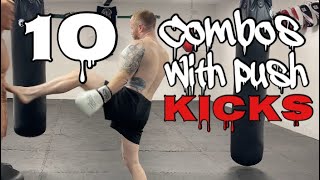
10 Combos with a PUSH KICK or TEEP #pushkick #teep
The Will To Fight