Introduction to the Lasso-Spider Guard Sweep
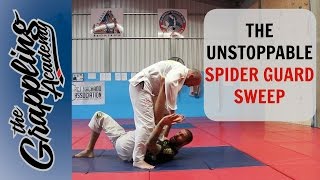
The lasso-spider guard sweep is a fundamental technique that teaches practitioners how to effectively coordinate their spider hook and lasso grip. This sweep serves as a foundational movement for more advanced spider guard variations performed when opponents stand or transition to a single knee.
Grip Setup and Guard Transition
From closed guard with a double sleeve grip, the practitioner transitions to open guard without placing their foot on the mat. By pinching the knees together and creating space, the defender establishes the base position necessary for the lasso-spider setup.
Creating the Spider Hook
The defender wings their opponent to break balance slightly, then places their spider hook on the opponent's bicep. This hook is essential for controlling the opponent's posture and preventing them from maintaining a stable base.
Lasso Grip Application
After establishing the spider hook, the defender switches their hips and applies the lasso grip by placing their big toe against the opponent's spine with an open palm. The lasso hand pulls the opponent's arm through while the elbow remains tight to the body.
The Sweep Execution
The defender simultaneously pulls the opponent down while kicking them over the top. The timing and coordination of these movements must occur together to complete an effective sweep, rather than hanging in the position without applying forward pressure.
Bicep Slicer and Wrist Lock Submissions
After sweeping the opponent to their back, the defender can establish a bicep slicer by sprawling into the opponent's arm—legal for purple belts in AGF tournaments and brown belts in IBJJF. A wrist lock can also be applied simultaneously, creating a compound submission opportunity.
Arm Lock Alternatives
If the opponent defends the initial bicep slicer by pushing with their free hand, the defender can transition to a straight armlock or fall back into a soma club submission. These variations maintain control of the trapped arm while adjusting to the opponent's defensive movements.
Transitioning to Side Control
From the arm trap position, the defender can sidescoot toward the opponent's upper face quadrant to establish an omoplata. This positioning keeps the opponent on their shoulder, making it difficult for them to achieve a turtle position.
Complete Technique Summary and Common Defense
The lasso-spider guard sweep combines open guard space creation, spider hook placement, lasso grip, and simultaneous pull-kick mechanics to complete the sweep. When opponents elevate their knee to break the spider hook or maintain balance, practitioners must commit to the sweep rather than passively maintaining the position.
Basic Lasso-Spider Guard Sweep
Key Takeaways
- •Introduction to the Lasso-Spider Guard Sweep
- •Grip Setup and Guard Transition
- •Creating the Spider Hook
- •Lasso Grip Application
Frequently Asked Questions
What does this video teach about standard spider sweep?
This video covers introduction to the lasso-spider guard sweep, grip setup and guard transition, creating the spider hook. It provides detailed instruction from Força Martial Arts & Fitness.
How long does it take to learn standard spider sweep?
The basic mechanics can be understood in a single session, but developing reliable execution requires consistent drilling over weeks of practice. This 9-part breakdown helps structure your training by isolating each phase of the technique.
What are the key details for finishing standard spider sweep?
From the arm trap position, the defender can sidescoot toward the opponent's upper face quadrant to establish an omoplata. This positioning keeps the opponent on their shoulder, making it difficult for them to achieve a turtle position.