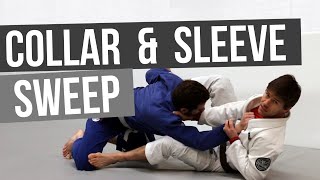
De La Riva Guard Foundation
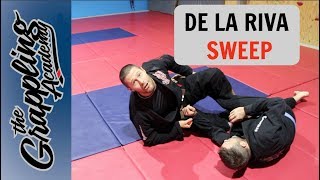
The De La Riva guard begins with one foot hooked around the opponent's thigh on the inside, which helps turn the knee slightly to the side. The same-side foot is controlled near the hip by gripping the ankle, pants, or threading through to grab one's own thigh. Maintaining proximity between the opponent's ankle and the practitioner's hip is critical, as distance weakens the hook and allows escape.
Far-Side Sleeve Control
The opposite leg creates distance and controls the opponent's base while generating momentum for attacks. The sweep targets the far-side sleeve, which becomes accessible when the opponent attempts to control the practitioner's legs by gripping the pants. Simultaneous kicking and pulling of the sleeve breaks the opponent's grip more effectively than pulling the leg alone.
Base Disruption and Arm Threading
After breaking the grip, the practitioner steps on the inside of the opponent's thigh above the knee and sits up. The controlling arm threads over the opponent's leg and passes the sleeve to the other hand, connecting the opponent's shoulder to knee. This shoulder-to-knee connection severely compromises the opponent's balance and base.
Secondary Control and Leg Posting
The free hand grabs either the collar or the armpit area for additional control, with the armpit providing a more powerful grip when accessible. The posting leg remains straight throughout to maintain distance and control; if it collapses to the floor, the opponent can step closer and posture up to break the connection. The practitioner initiates the sweep by pulling the opponent downward to the side.
Sweep Completion and Transition
As the opponent falls, they land on their side; the practitioner maintains both the collar and sleeve control while standing. A 180-degree turn positions the practitioner to transition into side control by threading the arm deep across the opponent's legs. The sweep concludes with the practitioner establishing side control while still controlling the opponent's upper and lower body.
Detailed Execution Sequence
When the opponent grabs the gi, the practitioner kicks to break the grip before stepping on the thigh. The controlling arm threads over the thigh (not under) and around the leg before switching to grip the sleeve. The free hand secures the collar or armpit pocket as the practitioner rises to their knees with a deep cross-face.
Final Position and Hip Control
The practitioner places their weight through the cross-face into the opponent's neck while keeping the leg straight. After stepping away and walking back in, the practitioner blocks the hip to establish complete side control. The transition should flow immediately from the leg kick without pausing, creating a continuous, efficient movement.
A Basic De La Riva Sweep
Key Takeaways
- •De La Riva Guard Foundation
- •Far-Side Sleeve Control
- •Base Disruption and Arm Threading
- •Secondary Control and Leg Posting
🔗 Links: Follow me on Instagram for more jiu-jitsu content: https://www.instagram.com/tarik_bjj/ Discover top-quality gear at Progress JJ. Use "TARIK15" for 15% Discount! UK Progress Referral: https://shorturl.at/joJMX EU Progress Referral: https://shorturl.at/pADPQ Teespring merch: https://shorturl.at/opHK3 Patreon: https://www.patreon.com/tarikbjj BJJ Fanatics: https://shorturl.at/cqsEI Twitch: https://www.twitch.tv/tarik_bjj
Related Techniques
Frequently Asked Questions
What does this video teach about de la riva sweep?
This video covers de la riva guard foundation, far-side sleeve control, base disruption and arm threading. It provides detailed instruction from Tarik BJJ.
How long does it take to learn de la riva sweep?
The basic mechanics can be understood in a single session, but developing reliable execution requires consistent drilling over weeks of practice. This 7-part breakdown helps structure your training by isolating each phase of the technique.
What are the key details for finishing de la riva sweep?
When the opponent grabs the gi, the practitioner kicks to break the grip before stepping on the thigh. The controlling arm threads over the thigh (not under) and around the leg before switching to grip the sleeve. The free hand secures the collar or armpit pocket as the practitioner rises to their knees with a deep cross-face.