Introduction and Context
The instructor begins by demonstrating a bruise sustained during sparring while checking a kick. This real-world example establishes the practical application of the techniques about to be covered in the lesson on grappling fundamentals.
Double Underpass Foundation
The instructor introduces the double underpass technique, a core defensive position from the bottom. The initial drill involves the bottom player resisting the stack before executing a backward roll and lifting the head to set up a double leg takedown.
Backward Roll Mechanics and Crucifix Awareness
As the top player applies pressure, the bottom player performs a backward roll while maintaining head control and positioning. The instructor emphasizes placing an arm between the opponent's legs to prevent getting caught in the crucifix position, a common submission vulnerability.
Recovery Variations from the Double Under
The instructor demonstrates multiple recovery options when the opponent executes a backward roll. By catching the leg at the right moment, the top player can prevent the double leg takedown and maintain control of the position through various adjustments.
Twister Finish from Truck Position
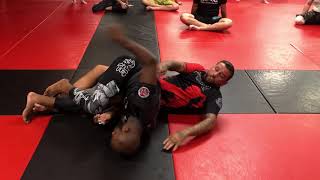
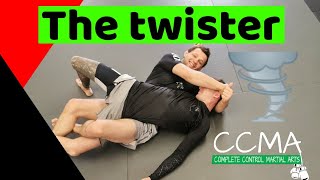
The instructor shows the twister submission as a finishing technique when the opponent attempts to escape from the truck position. The move involves raising the arm, stepping the leg up, and pivoting to create spinal pressure that forces the opponent to tap.
Flexibility Limitations and Position Adaptation
The instructor addresses real-world application by discussing flexibility constraints in grappling. With limited spinal flexibility, practitioners must resist the stack initially and allow a controlled backward roll when forced, rather than forcing a position that may cause injury.
Preventing the Backward Roll Escape
To prevent the opponent's escape via backward roll, the top player must grip the opponent's hands and utilize their body weight to slow the rolling motion. By shelving the opponent's buttocks on the knee and maintaining elbow pressure, the top player forces the opponent into a turtle position.
Seatbelt Control and Ankle Step
Once the opponent is forced into turtle position, the instructor secures a seatbelt grip around the torso. The top player then drives their knee inside and steps on the opponent's ankle before they can sit their hips down, eliminating escape options.
Back Take and Hook Insertion
With the ankle controlled, the top player keeps pressure while the opponent attempts to sit back. The top player then straightens their leg to insert the first hook, adjusts position with a hip escape, and establishes the second hook to achieve full back control.
Advanced Attacks from Back Control
From the established back control position, the instructor outlines multiple submission options including the truck position locks, twister, and banana split. These techniques provide the attacker with diverse finishing options based on the opponent's defensive reactions.
Double Under PASS to TWISTER!!???
Key Takeaways
- •Introduction and Context
- •Double Underpass Foundation
- •Backward Roll Mechanics and Crucifix Awareness
- •Recovery Variations from the Double Under
This video I demo a backward roll escape to a takedown when someone gets you in the double unders pass, as well as a back attack/twister when you are doing the double under pass. Check out the details and you are sure to find something useful! Enjoy! If you have any questions, comments, or suggestions, please comment below. More videos to come! Please like, share, and subscribe!! PLEASE Click this link to SUPPORT the TeachMeGrappling Channel!!! https://www.patreon.com/TeachMeGrappling or https://www.paypal.me/CoachBrianPeterson Your contribution is much appreciated and will help me continue to bring you content! 🙏 www.NextLevelGuy.com The NextLevelGuy Podcast with Coach Brian Peterson has been released!! Check it out!
Related Techniques
Frequently Asked Questions
What does this video teach about twister from back ride?
This video covers introduction and context, double underpass foundation, backward roll mechanics and crucifix awareness. It provides detailed instruction from TeachMeGrappling Coach Brian.
How long does it take to learn twister from back ride?
The basic mechanics can be understood in a single session, but developing reliable execution requires consistent drilling over weeks of practice. This 10-part breakdown helps structure your training by isolating each phase of the technique.
What are the key details for finishing twister from back ride?
With the ankle controlled, the top player keeps pressure while the opponent attempts to sit back. The top player then straightens their leg to insert the first hook, adjusts position with a hip escape, and establishes the second hook to achieve full back control.