Introduction and Opening Demonstration
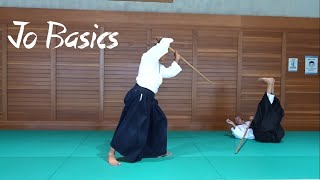
The instructor begins with a dynamic demonstration of jo staff techniques set to rhythmic music. This opening sequence establishes the basic flow and tempo of the standard jo strike.
Overhead Strike Mechanics
The instructor demonstrates the fundamental overhead strike pattern, executing controlled movements that target multiple angles. The emphasis is on generating power through proper body mechanics and staff positioning.
Directional Variation and Transition
The practitioner performs strikes from different angles, including lateral and diagonal approaches. These variations build adaptability and prepare the student for multiple combat scenarios.
Aerial Target Striking
The instructor executes strikes to multiple points in the air, emphasizing accuracy and control. The technique involves striking high targets while maintaining proper defensive positioning and eye awareness.
Safety Considerations and Head Protection
The instructor explicitly addresses safety protocols, emphasizing the importance of avoiding strikes to the eyes and face during partner practice. Proper spacing and awareness of incoming strikes from all angles are critical defensive principles.
Circular Defense and Awareness
The final sequence demonstrates the necessity of constant directional awareness as strikes approach from multiple sides. The practitioner maintains protective positioning while executing effective defensive and offensive transitions.
Habatakukai Martial Arts: Jo or Short Staff Movement
Key Takeaways
- •Introduction and Opening Demonstration
- •Overhead Strike Mechanics
- •Directional Variation and Transition
- •Aerial Target Striking
A series of movements with the Japanese "Jo" or short staff made up of the basic Jo suburi found in most schools... It's something I put together for myself and is practiced ambidextrously... There are 50 counts in it to memorize the movements... The jo I use is quite a dense oak and heavier than most standard "jo" The heaviness is good for developing wrist and forearm strength and aids in application of wrist techniques which is essential for effective aikido...When done at a good pace and speed it's very aerobic and good for health... The bit at the end is just for fun as the use and dexterity of the jo will come naturally once the basics are learnt....
Frequently Asked Questions
What does this video teach about standard jo strike?
This video covers introduction and opening demonstration, overhead strike mechanics, directional variation and transition. It provides detailed instruction from Tony Wagstaffe.
How long does it take to learn standard jo strike?
The basic mechanics can be understood in a single session, but developing reliable execution requires consistent drilling over weeks of practice. This 6-part breakdown helps structure your training by isolating each phase of the technique.
What are the key details for finishing standard jo strike?
The instructor explicitly addresses safety protocols, emphasizing the importance of avoiding strikes to the eyes and face during partner practice. Proper spacing and awareness of incoming strikes from all angles are critical defensive principles.
Related videos
Black Belt Weapons | Jo (Shinto Muso-Ryu Jojutsu Kata) Tutorial
MyKwonDo
6 Jō (Staff) Swinging Exercises You Can Train at Home
Let's ask Seki Sensei | Online Katana Lessons
Shinto Muso Ryu Gyakute zuki
funkrelaxo
SHINTO MUSO RYU JODO DEMONSTRATION | JODO AUCKLAND
AIKIDO SILVERDALE
Basic Jo Principles - Introduction to Chiba Sensei's Weapons System #7
Davinder Bath