Foundational Stance and Footwork
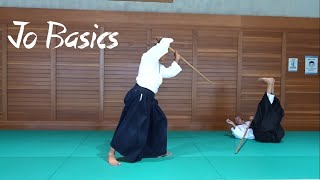
The practitioner begins in the Mi-Gi-Jul Down stance, an angled position that allows for effective head-level blocking. The critical element in this foundational tsuburi (practice swing) is the footwork timing—the legs switch at slightly different intervals with each repetition. Practitioners should focus intently on the footwork mechanics before advancing to subsequent exercises.
Lateral Strike with Dodging Application
This tsuburi develops the ability to dodge side attacks while countering toward the opponent's hands. The movement pattern mirrors the foundational stance but introduces directional evasion mechanics. Practitioners should visualize defensive positioning while executing the strike.
Reverse Grip Strike
This variation employs a reverse grip and is mechanically simpler than the first tsuburi. A critical distinction from previous staff training is the wrist position—the practitioner must keep the wrist straight rather than bent. This alignment prevents unnecessary tension and improves strike efficiency.
Strike with Thrust Extension
After striking, the practitioner releases the lower hand, allowing the staff to spin freely, then catches it near the waist to execute a thrust. The grip must change during the upward motion to maintain control and momentum. This combination develops fluidity between striking and thrusting applications.
Advanced Grip Transition
This exercise differs from the previous thrust by requiring the front hand grip to change rather than the back hand. Practitioners must carefully distinguish these grip transitions to maintain proper repetition. Confusing these mechanics compromises the effectiveness of both techniques.
Practical Combat Application
When executed smoothly, these tsuburi movements enable rapid successive strikes without telegraphing intention to an opponent. The first strike can target multiple points, with secondary strikes following before defensive response becomes possible. This principle demonstrates how foundational practice directly translates to tactical advantage.
Hand Position Consistency
For repeated execution, the practitioner must maintain the same hand contact point on the staff during all transitions. Consistent hand positioning is fundamental to controlling the weapon's trajectory and power delivery. Mastery of this single principle alone provides significant combat advantage.
Relationship to Katana Training
Staff training reveals the fundamental strengths and weaknesses of blade work, making it valuable supplementary practice for sword practitioners. Understanding how the jo moves builds deeper comprehension of sword mechanics and principles. Dedicated katana students are strongly encouraged to develop staff proficiency.
6 Jō (Staff) Swinging Exercises You Can Train at Home
Key Takeaways
- •Foundational Stance and Footwork
- •Lateral Strike with Dodging Application
- •Reverse Grip Strike
- •Strike with Thrust Extension
🎫Purchase Your Ticket to the Annual Asayama Ichiden Ryu Training Camp in Japan: https://asayamaichidenryu.shop/products/e-ticket-ichiden-ryu-training-camp-2026 ⚔️Join the Online Kobudo (Katana, Staff, Sickle, Chain) Training with Seki Sensei (One Lesson FREE): https://www.patreon.com/c/lets_ask_sekisensei/membership 🔴Complete Guide to Joining Our Online Lessons (What to Prepare, How to Join, What the Lessons Look Like): https://letsaskshogoharumi.com/blogs/asayama-ichiden-ryu-kyoto-dojo/how-to-join-shogo-s-online-katana-lessons No martial arts experience? No problem! Lessons are conducted entirely in English, and you can join freely from anywhere in the world. All classes are recorded, so you’ll never miss a session — watch and rewatch the archive anytime. 📅Add the Training Schedule to Your Calendar: https://calendar.google.com/calendar/u/2?cid=NGEwYjdlMjA2ZTBjNTE1ZDQxZjgzNjZlNWVkYjVkZTVjYTcxOTI5YzJiNTk0MDU0MDEzYzI1N2UwNWJjMDViZEBncm91cC5jYWxlbmRhci5nb29nbGUuY29t 💻 How the Lessons Work * Add our Google Calendar to keep track of class dates. * The Zoom link & password are shared every week through Patreon member-only posts. * Join the lesson using that week’s link. * Each lesson video will be uploaded to Patreon ASAP after class. 🧘♂️ What You’ll Learn * How to properly wear traditional Dōgi and Katana * Reihō (Etiquette) — the manners of traditional training * Fundamental Batto (drawing techniques) and Kenjutsu basics * 30+ Iai Kata of Asayama Ichiden Ryu & Shinkagé-ryu Hōgan-ha 🌸 Why Join This Training ★ A Rare Ancient Style with 400 Years of Samurai Tradition Born in Japan’s Sengoku war era (1467–1615), Asayama Ichiden Ryu preserves the authentic combat methods used in armor — a legacy you can experience today. ★ Earn Official Dan Ranks & Open Your Own Dōjō By passing our official exams (held every March and September), you can earn ranks from Shodan to Godan, receive certification, and even join our annual training camps in Japan. ★ Rewatch Every Lesson Anytime All lessons are recorded and posted for members. Review at your own pace, revisit techniques, and never fall behind — perfect for any time zone! 👉Looking for a Beginner-friendly and Cheaper option? Please also consider training online with Tsukada & Kurosawa Sensei ($50/Month): https://www.patreon.com/c/tsukadaandkurosawa/membership Or Shogo from Let’s ask Shogo ($50/Month): https://www.patreon.com/c/lets_ask_shogo/membership 💻Seki Sensei's Official Website https://sekisensei.com/ #katana #iaijutsu #kenjutsu #kobudo #onlinelesson
Frequently Asked Questions
What does this video teach about standard jo strike?
This video covers foundational stance and footwork, lateral strike with dodging application, reverse grip strike. It provides detailed instruction from Let's ask Seki Sensei | Online Katana Lessons.
How long does it take to learn standard jo strike?
The basic mechanics can be understood in a single session, but developing reliable execution requires consistent drilling over weeks of practice. This 8-part breakdown helps structure your training by isolating each phase of the technique.
What are the key details for finishing standard jo strike?
For repeated execution, the practitioner must maintain the same hand contact point on the staff during all transitions. Consistent hand positioning is fundamental to controlling the weapon's trajectory and power delivery. Mastery of this single principle alone provides significant combat advantage.
Related videos
Black Belt Weapons | Jo (Shinto Muso-Ryu Jojutsu Kata) Tutorial
MyKwonDo
Habatakukai Martial Arts: Jo or Short Staff Movement
Tony Wagstaffe
Shinto Muso Ryu Gyakute zuki
funkrelaxo
SHINTO MUSO RYU JODO DEMONSTRATION | JODO AUCKLAND
AIKIDO SILVERDALE
Basic Jo Principles - Introduction to Chiba Sensei's Weapons System #7
Davinder Bath