Setup and Leg Positioning
The instructor begins by placing one leg in the middle of the opponent's open guard to neutralize their movement and control options. Rather than pushing the guard to the side, this variation moves straight up the middle. The knee is angled to align with the opponent's knee, avoiding a perpendicular orientation that would expose the ankle to a heel hook or foot lock.
Simultaneous Control Mechanics
As the leg threads across the opponent's thigh, the instructor simultaneously underhooks the isolated leg. This coordinated approach prevents the opponent from establishing a knee shield, which would require excessive strength to overcome. The timing of these movements—stepping in, striking down, and bringing the underhook up—must occur as one fluid motion.
Back Leg Reinforcement
The instructor brings the back leg forward to reinforce the stack position and increase pressure. This additional weight distribution makes the position more difficult for the opponent to escape or counter.
Collar Grip Establishment
The instructor secures a deep collar grip by opening the opponent's gi collar and sliding the thumb in with knuckles pressed firmly to the mat. A shallow grip compromises control and effectiveness during the pass. Maintaining foot control throughout this transition is essential to prevent the opponent from re-establishing guard or executing a counter-attack.
Driving Forward and Weight Distribution
The instructor comes off the knee and drives forward onto the toes while maintaining a tight elbow position against the body. This prevents the opponent from securing a triangle choke. The forward pressure combined with neck control forces the opponent's leg to slide off naturally.
Leg Release and Side Control Transition
As the instructor looks away from the opponent, the trapped leg slides free while collar and knee control are maintained. The instructor transitions to a dominant cross-body side control position from which further positional work can proceed.
Complete Sequence Summary
The full pass involves: stepping one leg between the opponent's knees, dropping the foot to ground while capturing the inner leg with an underhook, bringing the back leg up for reinforcement, establishing a deep collar grip, driving forward with tight elbow positioning, and allowing the leg to slide free while transitioning to cross-body side control with a cross-face finish.
Passing the Open Guard with a Stack Pass Variation
Key Takeaways
- •Setup and Leg Positioning
- •Simultaneous Control Mechanics
- •Back Leg Reinforcement
- •Collar Grip Establishment
Using a stack pass variation in order to pass the opponent's guard.
Frequently Asked Questions
What does this video teach about open guard stack pass?
This video covers setup and leg positioning, simultaneous control mechanics, back leg reinforcement. It provides detailed instruction from Scott Ryan Chiriboga.
How long does it take to learn open guard stack pass?
The basic mechanics can be understood in a single session, but developing reliable execution requires consistent drilling over weeks of practice. This 7-part breakdown helps structure your training by isolating each phase of the technique.
What are the key details for finishing open guard stack pass?
As the instructor looks away from the opponent, the trapped leg slides free while collar and knee control are maintained. The instructor transitions to a dominant cross-body side control position from which further positional work can proceed.
Related videos
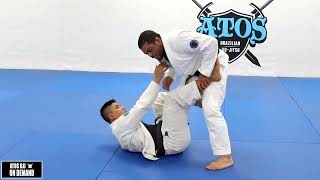
Throw By From Stack Pass - Andre Galvao
Atos Jiu-Jitsu HQ | World's Best BJJ Academy - Home Page

How To Avoid Being Choked with Double Under Stack Passes
Chewjitsu
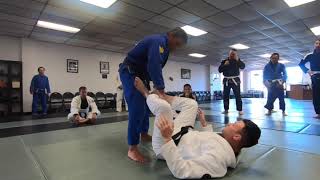
Jiu-Jitsu Technique: Stack Pass from Open Guard
Cassio Werneck BJJ
BJJ Stack Pass #bjjrolling
REALIZE BJJ LIFE
Rafael Mendes | Guard Passing Options Using the Shin Trap
ART OF JIU JITSU