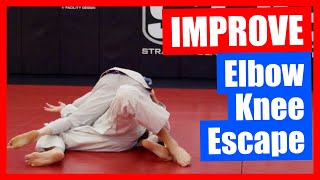
Introduction to the Hip Frame Escape
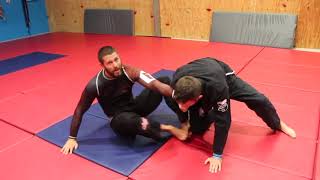
The hip frame escape, also called the elbow escape, is a fundamental side control escape that relies on connecting the elbow and knee through hip movement. This technique forms the foundation for safe guard recovery and is essential for all grappling levels.
The Critical Hip Frame
The first frame must be established on the opponent's hip using the forearm rather than the hand. This frame is non-negotiable—without it, the escape becomes extremely difficult. The practitioner bridges slightly and slides the elbow in to secure this initial connection.
The Neck Frame and Elbow Flare
The second frame is placed in front of the opponent's neck, with fingers buried at the shoulder bone. The practitioner then opens the elbow outward to create crucial space between their chest and the opponent's chest, reducing crushing pressure.
The Hip Escape Sequence
The practitioner plants their outside foot and executes multiple hip escapes, transitioning from flat on their back to a single-shoulder, single-hip position. This lateral movement is the key to breaking the opponent's control and creating separation.
Connecting the Knee to the Elbow
Once on their side, the practitioner brings their knee in to connect with the elbow, forming a V-shaped barrier called the side guard. With proper elbow-to-knee connection, the opponent will find it extremely difficult to regain side control or pass further.
Solo Movement Mechanics
The practitioner should practice the escape in sequence: establish the hip frame while already shifting to their side, bury the neck frame while flaring the elbow, plant the outside foot, and execute continuous hip escapes. The foot must always be positioned higher than the knee to allow proper insertion into the opponent's hip crease.
Addressing the Tight Cross Face
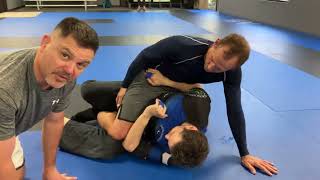
Against an advanced opponent maintaining a low head position and tight cross face, the practitioner executes a bridge toward the corner while extending their arm upward. This bridge-and-extend motion creates the necessary space to slide the forearm frame in front of the opponent's face.
Swimming Out of the Cross Face
If the opponent maintains their grip while the practitioner turns to their side, the inside arm can swim across the face to create an additional frame. This creates enough space to push away and continue the escape sequence.
Proper Guard Recovery
Many practitioners prematurely place their far leg on the opponent's back without establishing proper control. Instead, the inside leg must transfer weight through the knee shield before bringing the far leg in for half guard, closed guard, or butterfly guard. This prevents the opponent from simply passing to the opposite side.
Hip Escape Foot Placement and Side Guard Principles
The stepping foot should be positioned close to the buttocks and placed outside the hip for maximum range of motion. The resulting side guard position functions as late-stage guard retention, allowing even smaller practitioners to defend against heavier opponents by preventing the opponent from inserting themselves between the elbow and knee.
The FIRST side control escape EVERYONE Should Master
Key Takeaways
- •Introduction to the Hip Frame Escape
- •The Critical Hip Frame
- •The Neck Frame and Elbow Flare
- •The Hip Escape Sequence
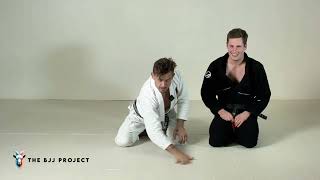
In this video, I cover the fundamental elbow escape, which is the foundation of escaping a standard side control. I go over basic frames, how to hip escape properly and how to configure your legs once you have created space from the bottom. **I'm sorry about the weird background noise. I will make sure to double-check the audio the next time I record**
Frequently Asked Questions
What does this video teach about standard hip frame?
This video covers introduction to the hip frame escape, the critical hip frame, the neck frame and elbow flare. It provides detailed instruction from Mads H. BJJ.
How long does it take to learn standard hip frame?
The basic mechanics can be understood in a single session, but developing reliable execution requires consistent drilling over weeks of practice. This 10-part breakdown helps structure your training by isolating each phase of the technique.
What are the key details for finishing standard hip frame?
Many practitioners prematurely place their far leg on the opponent's back without establishing proper control. Instead, the inside leg must transfer weight through the knee shield before bringing the far leg in for half guard, closed guard, or butterfly guard. This prevents the opponent from simply passing to the opposite side.