The standard bo-shuriken technique employs the jiki da-ho (direct hit method), a no-spin throwing technique that delivers the spike point-first at the target without rotation. [1] This method, refined in Negishi-ryu and Meifu Shinkage-ryu, requires precise wrist control to release the shuriken with minimal angular velocity, allowing consistent accuracy at distances of 3–7 metres. [2] Shirakami describes the standard throw as beginning from a concealed position — the shuriken held along the forearm or in the sleeve — emphasising the weapon's role as a surprise tool. [3]
Country of origin· shown in random order
🇯🇵Japan棒手裏剣の基本Shuriken-jutsu, Ninjutsu
Effectiveness
The standard bō-shuriken throwing technique uses a direct overhead release, spinning or non-spinning depending on the school. [1]
Lineage
Standard bō-shuriken techniques were transmitted within Japanese koryū as part of comprehensive weapon curricula. [1]
Competition Record
Standard bō-shuriken throwing is practised and demonstrated at koryū events. [1]
Images
No images yet for this technique.
Sign in to suggest an image.
Biomechanical Mechanism
Primary Action — Extending the body's reach and concentrating force through a weapon — the weapon acts as a force multiplier
Joints Involved — Wrists (weapon control and alignment), elbows and shoulders (striking arcs), hips (power generation)
Force Vector — Varies by weapon type — cuts, thrusts, strikes, and blocks each have distinct force trajectories
Weapon Principle — The weapon extends the kinetic chain — proper mechanics multiply force through leverage and concentration of impact
Position & Entry
From ready position — Grip the throwing weapon, establish distance and target, throw with proper spin or trajectory
From concealment — Draw the throwing weapon from concealed position and throw in a single motion
Variants
Standard technique — primary execution from the most common grip and stance
Competition variation — adapted for sport-specific rules and scoring
Traditional variation — classical execution as taught in the traditional art
Combination variation — chained with preceding or following techniques in a flow
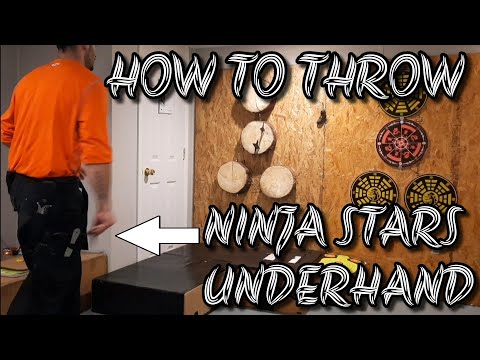
HOW TO THROW NINJA STAR SHURIKEN UNDERHAND E2 SECOND TECHNIQUE
0
Standard Bo-Shuriken·PRIDE MARTIAL ARTS
How to throw ninja stars episode 2 underhand.
As a amazon associate i earn money from eligible purchases. pride
To pu…
1 / 2
3 videos
What Instructors Say
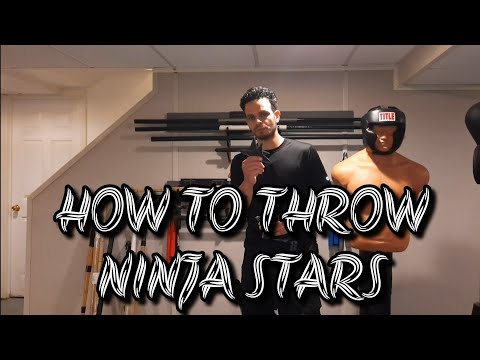
The standard bo-shuriken throw encompasses two primary delivery methods taught across martial tradition: the overhand and underhand techniques. PRIDE MARTIAL ARTS emphasizes the overhand throw as the foundational technique, prioritizing grip control with the thumb centered on one blade and pointer/middle fingers anchoring the opposite side, maintaining vertical alignment throughout the motion until release at the target. The instructor stresses keeping the weapon straight from pull-back to release, with elbow positioned tight rather than extended in a wide haymaker motion. PRIDE MARTIAL ARTS also introduces the underhand throw variant, executed from the hip with reversed thumb positioning relative to the overhand grip, producing a subtler motion with less upward hand travel—historically advantageous for assassination tactics requiring concealment. Both methods benefit from light, controlled practice to develop accuracy and proper release timing before adding power; premature release sends the projectile high while delayed release sends it low. The instructors collectively recommend consistent practice of grip, technique, and stance before attempting to embed the weapon, with safety paramount through target backstops and ground protection. Multiple throws can be executed simultaneously with proper technique. Neither instructor addresses bo-shuriken specifically distinct from star-shuriken mechanics in the provided material.
Synthesized from 3 instructors
PRIDE MARTIAL ARTS — HOW TO THROW NINJA STAR SHURIKEN: Detailed overhand grip, vertical alignment requirements, release timing principles, emphasis on technique-first training, dual-throw execution, and safety protocols for practice environments.
PRIDE MARTIAL ARTS — HOW TO THROW NINJA STAR SHURIKEN UNDERHAND E2 SECOND TECHNIQUE: Underhand throw mechanics initiated from hip, reversed thumb positioning, historical context for varied throws, shadow stance execution, and reinforcement that power develops naturally after technique mastery.
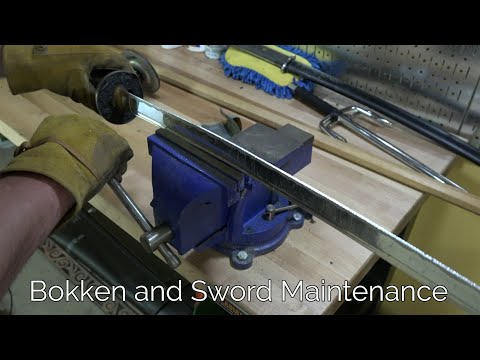
The Dojo Martial Arts Mason Ohio — Alloy Training Swords, Staff and Bokken Sanding Maintenance: No relevant content on bo-shuriken throwing technique; transcript addresses weapon maintenance only.
Learn This Technique
No instructional courses yet for this technique.
Sign in to suggest a course.
Ratings
Danger Rating
Risk of injury to the person this technique is applied to
8
Very High8/10
Projectile weapons including shuriken, throwing knives; high penetration risk
Difficulty
Skill level needed to execute this technique reliably
Advanced
Competition Legality
Whether this technique is allowed under major competition rule sets
— Traditional martial arts — Practiced in traditional kata/...
HEMA — Legal in applicable historical weapon categories {src— various organizations
Training Notes
✓The standard bo-shuriken technique uses the jiki-daho (direct hit method) — a no-spin throw that sends the spike point-forward to the target without rotation (Draeger, Classical Bujutsu, 1973)
✓Execution: hold the bo-shuriken between the thumb and forefinger with the point extending forward, the other fingers supporting underneath
✓The stance: stand naturally with the throwing-side foot slightly back, the body facing the target squarely
✓The throwing motion: extend the arm forward toward the target while the wrist remains completely locked — the spike slides off the fingers as the arm extends
✓The key to the direct method: the spike must leave the fingers without any rotation — the wrist and hand must be perfectly steady
✓The release is subtle: the fingers open gently as the arm reaches extension — the spike slides forward off the fingertips rather than being flipped or spun
✓Distance is limited with the no-spin method: effective range is typically 3-5 metres — beyond this, even small release errors cause the spike to deviate significantly
✓Practice begins at very close range (1-2 metres) and gradually extends as technique stabilises
Common Mistakes
!Flipping the wrist — the direct method requires zero wrist rotation; any flip causes the spike to tumble
!Releasing too aggressively — the spike should slide off the fingers, not be launched; forceful release reduces accuracy
!Standing at too great a distance — the no-spin method has a limited effective range; master close distances first
!Gripping the spike too far from the point — the fingers should be positioned to allow a clean, guided release
!Not practising at close range first — the technique must be perfect at short range before extending distance
!Using a heavy, muscular throw — the direct method is finesse-based; power throws are counterproductive
!Not maintaining a consistent stance — the body position must be identical for every throw to develop muscle memory
1Ready Position — assume the guard stance appropriate for the weapon
2Distance Control — manage spacing relative to the opponent
3Execute Technique — perform the offensive or defensive action with correct form
4Return to Guard — recover to a defensive ready position
Sources & References
Primary Source
Bubishi: The Classic Manual of Combat (Patrick McCarthy, 2008)
1BookThe Art of Fencing (Barbasetti, 1932)
Alias sources — [1] Secrets of the Samurai (Ratti & Westbrook, 1973) [2] Secrets of the Samurai (Ratti & Westbrook, 1973) [3] Secrets of the Samurai (Ratti & Westbrook, 1973)
2BookThe Book of Five Rings (Musashi, 1645)
History sources — [1] Draeger, D., Classical Bujutsu (Weatherhill, 1973) [2] Ratti, O. & Westbrook, A., Secrets of the Samurai (Tuttle, 1973) [3] Shirakami, E., Shuriken-Do: My Study of the Way of Shuriken (2001)
3OtherJapanese Martial Arts Standard Terminology (武道用語)
Established Japanese martial arts naming convention — native Japanese term (和語/漢語)
4CitationThe Art of Fencing (Barbasetti, 1932)
Alias sources — [1] Secrets of the Samurai (Ratti & Westbrook, 1973) [2] Secrets of the Samurai (Ratti & Westbrook, 1973) [3] Secrets of the Samurai (Ratti & Westbrook, 1973)
5CitationThe Book of Five Rings (Musashi, 1645)
History sources — [1] Draeger, D., Classical Bujutsu (Weatherhill, 1973) [2] Ratti, O. & Westbrook, A., Secrets of the Samurai (Tuttle, 1973) [3] Shirakami, E., Shuriken-Do: My Study of the Way of Shuriken (2001)
Community
Athletics
Requires
precision, wrist snap, hand-eye coordination
Favours
strong wrists and forearms, excellent proprioception
Key muscles
forearm extensors, wrist flexors, deltoids, core
Frequently Asked Questions
How should I grip a bo-shuriken for an overhand throw?
Place your thumb on the center of one blade, with your pointer and middle fingers resting against the opposite side, keeping a tight grip. Don't hold it too far out at the tip, as this reduces control—keep the thumb right on the blade for maximum stability.
What's the most common mistake beginners make with bo-shuriken throwing technique?
Keeping the shuriken vertical throughout the throw is critical; many beginners let it angle or curve their arm like a haymaker. Additionally, releasing too soon sends it high and releasing too late sends it low—you must release exactly at your target.
How should I practice bo-shuriken throws if I'm just learning?
Start by throwing light without expecting the shuriken to stick; focus on perfecting the grip, technique, and release motion first. Once accuracy is consistent, you can gradually add power, as the force component is easier to develop than proper technique.
What safety precautions should I take when practicing bo-shuriken throwing?
Always place something behind and below your targets, such as particle board behind and archery boxes below, to catch shuriken that miss or bounce off. Maintain awareness of your surroundings and practice with proper distance from your target.
How does the Standard Bo-Shuriken work?
Fundamental spike-shuriken throwing technique using a no-spin (direct) or half-spin release for point-first impact at short to medium range.
Where does the Standard Bo-Shuriken come from?
The standard bo-shuriken technique employs the jiki da-ho (direct hit method), a no-spin throwing technique that delivers the spike point-first at the target without rotation. This method, refined in Negishi-ryu and Meifu Shinkage-ryu, requires precise wrist control to release the shuriken with minimal angular velocity, allowing consistent accuracy at distances of 3–7 metres.
Is the Standard Bo-Shuriken legal in competition?
Traditional martial arts: legal — Practiced in traditional kata/forms and weapon-specific competition under var…; IWUF: legal — Legal in wushu taolu if applicable; HEMA: legal — Legal in applicable historical weapon categories
How dangerous is the Standard Bo-Shuriken?
Danger rating 8/10. Very High — projectile weapons including shuriken, throwing knives; high penetration risk
How do I set up the Standard Bo-Shuriken?
The standard setup chain: Ready Position → Distance Control → Execute Technique → Return to Guard.
How do I defend against the Standard Bo-Shuriken?
Standard counters include: Guard Position — return to a defensive ready stance / Distance Management — control the measure to avoid being in range / Counter-Attack — strike during the opponent's recovery or between movements.
What are the variants of the Standard Bo-Shuriken?
Common variants: Standard technique (primary execution from the most common grip and stance); Competition variation (adapted for sport-specific rules and scoring); Traditional variation (classical execution as taught in the traditional art); Combination variation (chained with preceding or following techniques in a flow).
How effective is the Standard Bo-Shuriken in competition?
Standard bō-shuriken throwing is practised and demonstrated at koryū events.
What are common mistakes when doing the Standard Bo-Shuriken?
Top errors to watch for: Flipping the wrist — the direct method requires zero wrist rotation; any flip causes the spike to tumble / Releasing too aggressively — the spike should slide off the fingers, not be launched; forceful release reduces accuracy / Standing at too great a distance — the no-spin method has a limited effective range; master close distances first / Gripping the spike too far from the point — the fingers should be positioned to allow a clean, guided release.
What are other names for the Standard Bo-Shuriken?
The Standard Bo-Shuriken is also known as Direct Bo-Shuriken Throw, Jiki Da-Ho, Straight Spike Throw.