3 Ways to Upper Cut
0
Upward Cut·The Sword Lynx
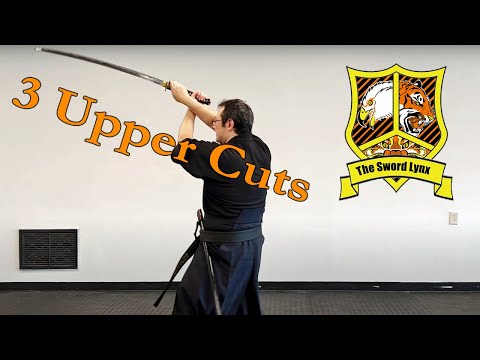
We all upper cut, so let's talk about how to do them differently. Whether it's for cutting bamboo or sparring, we can tr…
Translation: upward cut
The Upward Cut is a knife cutting action that travels vertically from low to high, typically targeting the underside of the opponent's forearm, the inside of the wrist, or the abdomen. [1] In Filipino martial arts this motion corresponds to angle 9 or angle 12 in various numbering systems and is often delivered from a concealed low position. [1],[2] The upward cut is tactically valuable because it attacks from below the opponent's line of sight and is difficult to parry with a downward block. [2],[3]
Upward cutting motions with a knife are found in Filipino martial arts, Indonesian pencak silat, and Western military combatives, where the rising trajectory exploits gaps in an opponent's guard. [1] The technique is emphasised in Fairbairn–Sykes combatives and in Pekiti-Tirsia Kali's close-range attack sequences. [2],[3]
The Unterhau was described in German Fechtbücher as one of the fundamental cuts in the Liechtenauer tradition. [1]
Upward cuts are used in HEMA longsword competition as both opening attacks and counters. [1]
No images yet for this technique.
Sign in to suggest an image.
We all upper cut, so let's talk about how to do them differently. Whether it's for cutting bamboo or sparring, we can tr…
Today's segment: Upward and downward cutting angles Learn the Sword Daily answers many of those hard to find details abo…
Single and double upwards figure eight drill for training deflect cut on forehand and backhand.
The upward cut is a fundamental strike executed by raising the blade from a lower position toward an upper target, taught across multiple weapon systems with distinct methodological emphases. Rykenfu emphasizes the upward cut within Wing Chun knife training, integrating it into the figure-8 pattern (tongou) as part of deflection-and-cut combinations that develop eye tracking and weapon awareness. The instructor stresses maintaining proper elbow bend, keeping the hand near centerline, and ensuring the edge leads the movement as the wrist rotates and straightens during the ascent. Learnthesword addresses upward cuts in sword training (Joho Giri) within down-up-down sequences, focusing on controlled blade management (shiboru) and achieving smooth transitions between angles at varying speeds. This instructor emphasizes that effective upward cuts must be precise despite their full range of motion, directing practitioners to visualize narrow target topography rather than wide arcs, and to execute the cut with proper follow-through without rushing blade withdrawal. The Sword Lynx provides three distinct methodologies: a power-oriented approach using full body acceleration (suitable for bamboo cutting), a rotational slash using core engagement and body twist for mid-range work, and a wrist-centric rolling cut emphasizing fluidity and speed over power (applicable to moving opponents). All three instructors agree the upward cut requires body rotation and proper sequencing, though they diverge on whether power, controlled angles, or wrist mobility should be prioritized depending on training context and opponent type.
Synthesized from 3 instructors
No instructional courses yet for this technique.
Sign in to suggest a course.
Risk of injury to the person this technique is applied to
Knives and short blades are the most common weapon in real-world assaults; high lethality
Skill level needed to execute this technique reliably
Whether this technique is allowed under major competition rule sets
Bubishi: The Classic Manual of Combat (Patrick McCarthy, 2008)
Alias sources — [1] Filipino Martial Arts (Wiley, 1994) [2] Hoplology (Burton, 1884) [3] Comprehensive Asian Fighting Arts (Draeger & Smith, 1969)
Effectiveness sources — [1] Fighting with the German Longsword (Tobler, 2004) [2] Medieval Combat (Talhoffer, 2000 translation)
Established Japanese martial arts naming convention — native Japanese term (和語/漢語)
Alias sources — [1] Filipino Martial Arts (Wiley, 1994) [2] Hoplology (Burton, 1884) [3] Comprehensive Asian Fighting Arts (Draeger & Smith, 1969)
Effectiveness sources — [1] Fighting with the German Longsword (Tobler, 2004) [2] Medieval Combat (Talhoffer, 2000 translation)
wrist control for edge alignment, grip endurance, footwork precision
quick wrists, strong forearms, good posture
forearm extensors/flexors, deltoids, core, calves
According to Shihan Dana Abbott, practitioners tend to pull the blade back out too quickly after making the cut instead of finishing the angle of attack properly. Think of it like an airplane landing on a runway—you need to complete the landing rather than reversing immediately.
Shihan Dana Abbott recommends a drill where you point the sword up to the ceiling, pull it down, push it forward, bring it back up, and repeat this cycle. After doing this many times—realistically a couple thousand repetitions—your arm muscles will adjust and lengthen, allowing you to make severing cuts with a swift blow.
The upward figure-8 pattern combines deflections with cuts: as you come up high enough to defend your upper gates, you deflect and cut in a continuous rotation around your body, connecting from one side to the other while keeping your hands near your center.
The Upward Cut is a knife cutting action that travels vertically from low to high, typically targeting the underside of the opponent's forearm, the inside of the wrist, or the abdomen. In Filipino martial arts this motion corresponds to angle 9 or angle 12 in various numbering systems and is often delivered from a concealed low position.
Upward cutting motions with a knife are found in Filipino martial arts, Indonesian pencak silat, and Western military combatives, where the rising trajectory exploits gaps in an opponent's guard. The technique is emphasised in Fairbairn–Sykes combatives and in Pekiti-Tirsia Kali's close-range attack sequences.
WEKAF: legal — Legal in padded stick competition; HEMA: legal — Legal in applicable weapon categories
Danger rating 9/10. Extreme — knives and short blades are the most common weapon in real-world assaults; high lethality
The standard setup chain: Ready Position → Distance Control → Execute Technique → Return to Guard.
Standard counters include: Parry (Absetzen) — deflect the incoming blade with a counter-displacement / Void (Step Back) — withdraw from measure to avoid the cutting arc / Counter-Cut (Nachreisen) — strike into the opponent's opening during their attack.
Common variants: Standard cut (primary cutting angle from the ready stance); Thrust (tsuki) (straight thrust targeting the throat, chest, or face); Rising cut (kiri-age) (upward diagonal cut from low to high); Diagonal cut (kesa-giri) (downward diagonal cut following the kimono line).
Upward cuts are used in HEMA longsword competition as both opening attacks and counters.
Top errors to watch for: Scooping rather than cutting — the upward cut must draw the edge through the target, not simply push upward / Not using the legs — the rising motion comes from the legs and hips, not just the arm / Telegraphing by dipping the body obviously — the dip should be subtle; an exaggerated drop reveals the intention / Aiming too generally — the upward cut requires precise targeting; the rising arc must contact the intended target zone.
The Upward Cut is also known as Kiri-age, Taga Pataas, Rising Slash, Rip Cut.