Standard Naginata Cut

Genus

薙刀切りの基本

Traditional

Translation: Basic Naginata Cut

Overview

The Standard Naginata Cut executes the fundamental cutting action by sliding the lead hand down the shaft toward the ishizuki (butt end) while the rear hand drives the blade through the target in a sweeping arc, using the full length of the shaft to generate centrifugal force and the curved blade to create a drawing cut. [1] The standard cut targets one of the scoring areas used in competitive naginata: men (head), kote (wrist), do (torso), or sune (shin), with each target requiring a different blade angle and body position. [1],[2] Proper execution requires te-no-uchi (hand squeezing at the moment of impact) and full commitment of the hips and body weight through the cut, identical in principle to katana cutting mechanics but adapted for the longer weapon. [2],[3]

Also known as
Shomen Naginata Cut[1]Overhead Naginata Strike[2]Naginata Men UchiJP[3]

History & Origin

Standard naginata cutting technique is inherited from the koryu (classical) naginata traditions and adapted for modern competitive naginata. [1] The cutting mechanics — centrifugal force through the shaft combined with a drawing cut from the curved blade — have remained fundamentally unchanged for centuries. [2],[3]

Effectiveness

The standard naginata cut is the basic sweeping cut using the naginata's blade, targeting the legs, torso, or head with the weapon's superior reach. [1]

Lineage

Standard naginata cutting was systematised as part of atarashii naginata, the modern competitive form developed in the 20th century. [1]

Competition Record

Standard naginata cuts are the primary scoring actions in naginata competition at national and international levels. [1]

Images

No images yet for this technique.

Sign in to suggest an image.

Biomechanical Mechanism

Primary ActionCutting, thrusting, or striking with a bladed weapon — edge alignment and trajectory determine cutting effectiveness
Joints InvolvedWrists (edge alignment and rotation), elbows (extension for thrusts, chambering for cuts), shoulders (arc of the cut), hips (power generation)
Force VectorVaries — downward diagonal cut (kesa-giri), horizontal cut (yoko-giri), thrust (tsuki), or rising cut (kiri-age)
Weapon MechanicEdge alignment (hasuji) is critical — the blade must travel along its cutting plane for effective cuts

Position & Entry

From ready stance (chudan-no-kamae or equivalent)Assume guard position, establish distance (ma-ai), execute the cut or thrust when an opening appears
From engagement distanceUse footwork to close to striking range, execute the technique with proper edge alignment (hasuji)
As counterWait for the opponent's attack, deflect or avoid, and counter-cut to the exposed target

Variants

Standard cutprimary cutting angle from the ready stance
Thrust (tsuki)straight thrust targeting the throat, chest, or face
Rising cut (kiri-age)upward diagonal cut from low to high
Diagonal cut (kesa-giri)downward diagonal cut following the kimono line

Videos

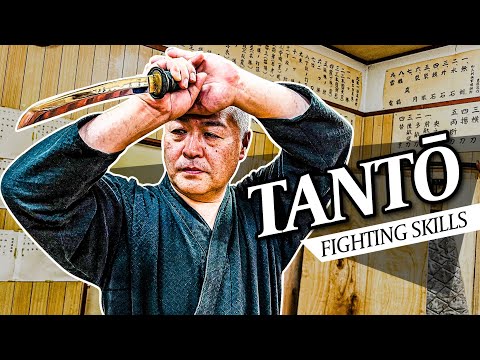
Stunning Techniques You Only Use with Tantō (Shortest Katana)

0
Standard Naginata Cut·Let's ask Seki Sensei | Online Katana Lessons

🎫Purchase Your Ticket to the Annual Asayama Ichiden Ryu Training Camp in Japan: https://asayamaichidenryu.shop/products

The Right Way to Fight with a Katana

0
Standard Naginata Cut·Let's ask Shogo | Your Japanese Friend in Kyoto

▼The BEST online katana shop for martial arts (Iaido, Kendo, etc.): Tozando▼ https://tozandoshop.com/letsaskshogo *This

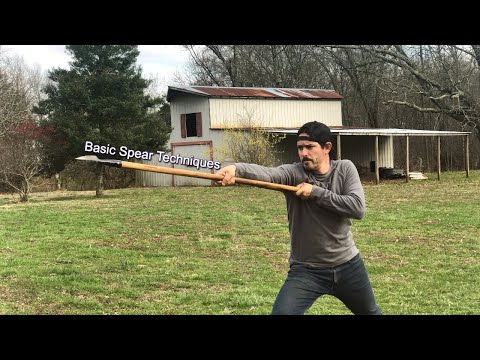
Spear Fighting Basic Techniques - Kali Escrima Arnis

0
Standard Naginata Cut·Kali Center

Join my Online Kali School and buy training gear here: https://www.kalicenter.com/ Subscribe to My NEW Kali Center Vlog

1 / 2
3 videos

What Instructors Say

The standard naginata cut, like its shorter polearm and sword counterparts, functions primarily as a recovery and centering technique rather than an opening attack. Kali Center emphasizes that the slash is a secondary tactic to the thrust in polearm work, used to recover the center line after a blocked or parried thrust or when the weapon has been knocked off course. The mechanics involve positioning the non-dominant hand at the plexus with the dominant hand raised, then slashing downward while bringing the non-dominant hand to the hip, ensuring the blade tip does not cross the center line excessively or strike the ground. Let's ask Shogo and Let's ask Seki Sensei provide complementary detail on power transmission in cutting motions: the dominant hand should squeeze the handle from above rather than the side, with elbows positioned toward the body's interior, and critically, the non-dominant hand supplies approximately 70 percent of the cutting power while the dominant hand provides directional adjustment. This power distribution prevents tip wavering and generates maximum force through the stroke. All three instructors agree that proper stance and hand positioning are foundational, though they address different weapon lengths and cultural contexts—Kali Center focuses on medium-length spears in Filipino martial arts, while the Japanese instructors address katana and tanto principles applicable to longer polearms like the naginata.

Synthesized from 3 instructors

  • Kali CenterSpear Fighting Basic Techniques - Kali Escrima Arnis: Established that the slash is a secondary tactic used to recover the center line after a thrust is blocked or parried; demonstrated proper hand positioning (non-dominant hand at plexus, dominant hand up) and the downward slashing motion while keeping the tip within the center line.
  • Let's ask Shogo | Your Japanese Friend in KyotoThe Right Way to Fight with a Katana: Provided power distribution principle for cutting: non-dominant hand contributes 70 percent power (accelerator role) while dominant hand contributes 30 percent (adjustment/steering); emphasized holding the handle from above with elbows toward the body and maintaining proper two-hand spacing.
  • Let's ask Seki Sensei | Online Katana LessonsStunning Techniques You Only Use with Tantō (Shortest Katana): Reinforced the mechanics of drawing and executing cuts with shorter blades, including stance recovery (sagi chodan) and the importance of hand position in directing blade trajectory safely and effectively.

Learn This Technique

No instructional courses yet for this technique.

Sign in to suggest a course.

Ratings

Danger Rating

Risk of injury to the person this technique is applied to

9
Extreme9/10

Spears, halberds, and naginata; maximum reach with lethal cutting/thrusting capability

Difficulty

Skill level needed to execute this technique reliably

Advanced
Competition Legality

Whether this technique is allowed under major competition rule sets

FIE Sabre — Legal cutting technique to upper body target ...
FIE Rules of CompetitionPDF
FIK Kendo — Legal if targeting valid area with correct form
FIK Kendo Competition RulesPDF
WEKAF — Legal striking technique {srcWEKAF Competition Rules}
HEMA — Legal in applicable weapon categories {srcvarious organizations

Training Notes

The standard naginata cut delivers a men-uchi (head cut) from the overhead position — the most fundamental and commonly practised naginata technique (Draeger, Classical Bujutsu, 1973)
Execution: raise the naginata overhead with both hands widely spaced on the handle, step forward with the lead foot, and drive the blade downward
The cutting motion uses the whole body: the step adds momentum, the hips rotate, and the arms guide the blade — the handle acts as a lever
The blade should contact the target (the crown of the head in competition) with the forward third of the cutting edge — this maximises cutting force
The follow-through carries the blade past the target — in competition, the cut must demonstrate proper hasuji (edge alignment) and correct form
After the cut, the practitioner immediately recovers to a guard position — maintaining the handle at centre line with the blade ready for the next technique
The standard cut is practised thousands of times in suburi (solo practice) — it is the foundation movement that develops all other naginata skills

Common Mistakes

!Raising the naginata too slowly — the preparation and cut should be one continuous motion without pausing overhead
!Not stepping into the cut — the step is essential; stationary cuts lack power and reach
!Cutting with the arms only — the hips and core drive the cut; arm-only technique produces weak, slow cuts
!Contacting the target with the wrong part of the blade — the forward third is the effective cutting zone
!Not following through — stopping the blade on contact rather than cutting through wastes the technique
!Losing balance during the step — the step must be controlled; stumbling forward after the cut creates vulnerability
!Not recovering to guard — the post-cut position must be defensively ready for the opponent's counter

Related Techniques

Counter Techniques

Setup Chain

1Ready Positionassume the guard stance appropriate for the weapon
2Distance Controlmanage spacing relative to the opponent
3Execute Techniqueperform the offensive or defensive action with correct form
4Return to Guardrecover to a defensive ready position

Sources & References

Primary Source

The Book of Five Rings (Miyamoto Musashi, 1645)

1BookKobudo: Okinawan Weapons (Bishop, 1999)

Alias sources — [1] Japanese Swordsmanship (Warner & Draeger, 1982) [2] Japanese Swordsmanship (Warner & Draeger, 1982) [3] Japanese Swordsmanship (Warner & Draeger, 1982)

2BookThe Art of the Japanese Sword (Sato, 1983)

Effectiveness sources — [1] Classical Bujutsu (Draeger, 1973)

3OtherJapanese Martial Arts Standard Terminology (武道用語)

Established Japanese martial arts naming convention — native Japanese term (和語/漢語)

4CitationKobudo: Okinawan Weapons (Bishop, 1999)

Alias sources — [1] Japanese Swordsmanship (Warner & Draeger, 1982) [2] Japanese Swordsmanship (Warner & Draeger, 1982) [3] Japanese Swordsmanship (Warner & Draeger, 1982)

5CitationThe Art of the Japanese Sword (Sato, 1983)

Effectiveness sources — [1] Classical Bujutsu (Draeger, 1973)

Community

Athletics

Requires

wrist control for edge alignment, grip endurance, footwork precision

Favours

quick wrists, strong forearms, good posture

Key muscles

forearm extensors/flexors, deltoids, core, calves

Frequently Asked Questions

How does the Standard Naginata Cut work?

The Standard Naginata Cut executes the fundamental cutting action by sliding the lead hand down the shaft toward the ishizuki (butt end) while the rear hand drives the blade through the target in a sweeping arc, using the full length of the shaft to generate centrifugal force and the curved blade to create a drawing cut. The standard cut targets one of the scoring areas used in competitive naginata: men (head), kote (wrist), do (torso), or sune (shin), with each target requiring a different blade angle and body position.

Where does the Standard Naginata Cut come from?

Standard naginata cutting technique is inherited from the koryu (classical) naginata traditions and adapted for modern competitive naginata. The cutting mechanics — centrifugal force through the shaft combined with a drawing cut from the curved blade — have remained fundamentally unchanged for centuries.

Is the Standard Naginata Cut legal in competition?

FIE Sabre: legal — Legal cutting technique to upper body target area; FIK Kendo: legal — Legal if targeting valid area with correct form; WEKAF: legal — Legal striking technique; HEMA: legal — Legal in applicable weapon categories

How dangerous is the Standard Naginata Cut?

Danger rating 9/10. Extreme — spears, halberds, and naginata; maximum reach with lethal cutting/thrusting capability

How do I set up the Standard Naginata Cut?

The standard setup chain: Ready Position → Distance Control → Execute Technique → Return to Guard.

How do I defend against the Standard Naginata Cut?

Standard counters include: Parry (Absetzen) — deflect the incoming blade with a counter-displacement / Void (Step Back) — withdraw from measure to avoid the cutting arc / Counter-Cut (Nachreisen) — strike into the opponent's opening during their attack.

What are the variants of the Standard Naginata Cut?

Common variants: Standard cut (primary cutting angle from the ready stance); Thrust (tsuki) (straight thrust targeting the throat, chest, or face); Rising cut (kiri-age) (upward diagonal cut from low to high); Diagonal cut (kesa-giri) (downward diagonal cut following the kimono line).

How effective is the Standard Naginata Cut in competition?

Standard naginata cuts are the primary scoring actions in naginata competition at national and international levels.

What are common mistakes when doing the Standard Naginata Cut?

Top errors to watch for: Raising the naginata too slowly — the preparation and cut should be one continuous motion without pausing overhead / Not stepping into the cut — the step is essential; stationary cuts lack power and reach / Cutting with the arms only — the hips and core drive the cut; arm-only technique produces weak, slow cuts / Contacting the target with the wrong part of the blade — the forward third is the effective cutting zone.

What are other names for the Standard Naginata Cut?

The Standard Naginata Cut is also known as Shomen Naginata Cut, Overhead Naginata Strike, Naginata Men Uchi.