How Would a Katana Swordmaster Fight with a Halberd? (Seki Sensei's New Favorite Weapon)
🎫Purchase Your Ticket to the Annual Asayama Ichiden Ryu Training Camp in Japan: https://asayamaichidenryu.shop/products…
スタンダードハルバード技(Sutandādo Harubādo Waza)
TransliterationTranslation: standard halberd technique
The Standard Halberd Technique executes the core pollaxe actions: the overhead strike (delivering the axe head or hammer to the opponent's head or shoulders), the thrust (driving the top spike at the opponent's visor, throat, or armpit), the hook (using the axe head's hook to catch the opponent's limb, weapon, or armour and pull them off balance), and the queue strike (reversing the weapon to strike with the butt spike). [1] Execution follows the guard-to-attack flow described in the historical sources, transitioning between the high guard (weapon raised overhead), middle guard (weapon horizontal at waist level), and low guard (weapon pointing downward). [1],[2] Each technique exploits a specific vulnerability in the opponent's armour or stance, reflecting the weapon's design for armoured combat. [2],[3]
Standard halberd techniques are reconstructed from medieval European fight books, particularly the pollaxe sections of Fiore dei Liberi (1409) and the anonymous Le Jeu de la Hache (c. 1400). [1] These sources provide step-by-step illustrated instructions that form the basis of modern HEMA pollaxe training. [2],[3]
Pollaxe/halberd techniques include strikes with the head, thrusts with the spike, hooks, trips, and disarms, making it one of the most versatile polearm weapons. [1]
Pollaxe competition exists at select HEMA events using padded or blunted training weapons. [1]
No images yet for this technique.
Sign in to suggest an image.
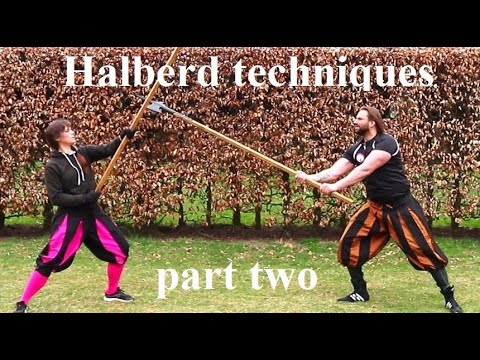
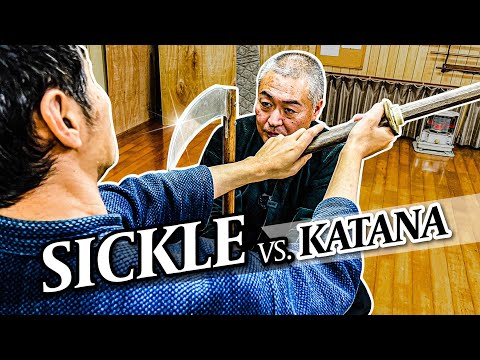
Standard halberd technique emphasizes forceful attack combined with effective defensive counterplay, according to HEMA instructor Björn Rüther. The foundational approach involves executing powerful middle strikes from alternating sides to create openings and apply psychological pressure before committing to finishing blows. When weapon contact occurs—such as axe blades catching—practitioners employ established solutions rather than abandoning technique. Defensive responses include catching incoming strikes with the staff's middle section between both hands, enabling rapid transitions to winding, thrusting, or striking depending on tactical opportunity. Diagonal cuts from below are deflected with counter-cuts that simultaneously generate offensive positioning. Rüther notes that the halberd, unlike swords, is characterized primarily by strength and body control; practitioners must commit to generating sufficient pressure through proper mechanics. However, he emphasizes that passive, reaction-based fencing using counteradvantage is equally legitimate, with some historical systems like Pyke advocating this defensive approach. Let's ask Seki Sensei's exploration of halberd technique through a katana master's perspective demonstrates unique capabilities enabled by the blade—particularly tripping strikes toward legs and neck hooks using the blade gap—while revealing potential vulnerabilities when skilled opponents target the blade itself for deflection or entanglement. The complex blade geometry becomes either significant advantage or liability depending on the wielder's skill level.
Synthesized from 3 instructors
No instructional courses yet for this technique.
Sign in to suggest a course.
Risk of injury to the person this technique is applied to
Spears, halberds, and naginata; maximum reach with lethal cutting/thrusting capability
Skill level needed to execute this technique reliably
Whether this technique is allowed under major competition rule sets
The Art of Combat (Joachim Meyer, 1570)
Alias sources — [1] Fiore dei Liberi's Fior di Battaglia (1409) [2] The Medieval Art of Swordsmanship (Tobler, 2010) [3] The Medieval Art of Swordsmanship (Tobler, 2010)
Effectiveness sources — [1] The Martial Arts of Renaissance Europe (Anglo, 2000)
Standard katakana transliteration of Western martial arts terminology (外来語) — used in Japanese MMA, boxing, and BJJ communities
Alias sources — [1] Fiore dei Liberi's Fior di Battaglia (1409) [2] The Medieval Art of Swordsmanship (Tobler, 2010) [3] The Medieval Art of Swordsmanship (Tobler, 2010)
Effectiveness sources — [1] The Martial Arts of Renaissance Europe (Anglo, 2000)
grip strength, wrist control, weapon-specific conditioning
strong forearms and wrists, good hand-eye coordination
forearms, wrists, shoulders, core
You need to regain control of the weapon by going straight to it again, then continue fencing to the next opening. Björn Rüther emphasizes that maintaining weapon control is essential even when your initial counter is evaded.
The halberd is primarily characterized by strength and body control, unlike lighter weapons like the sword where speed and technique dominate. Björn Rüther notes that you must have the necessary strength and will to build up enough pressure when attacking with this heavy pole weapon.
You can absolutely fence defensively—using counterattacks and what's called the 'counteradvantage' approach is a completely legitimate strategy with the halberd. Björn Rüther explains that going the more passive way by reacting to your opponent's attacks is a suitable variant if aggressive pressure isn't your preference.
The Standard Halberd Technique executes the core pollaxe actions: the overhead strike (delivering the axe head or hammer to the opponent's head or shoulders), the thrust (driving the top spike at the opponent's visor, throat, or armpit), the hook (using the axe head's hook to catch the opponent's limb, weapon, or armour and pull them off balance), and the queue strike (reversing the weapon to strike with the butt spike). Execution follows the guard-to-attack flow described in the historical sources, transitioning between the high guard (weapon raised overhead), middle guard (weapon horizontal at waist level), and low guard (weapon pointing downward).
Standard halberd techniques are reconstructed from medieval European fight books, particularly the pollaxe sections of Fiore dei Liberi (1409) and the anonymous Le Jeu de la Hache (c. 1400).
Traditional martial arts: legal — Practiced in traditional kata/forms and weapon-specific competition under var…; IWUF: legal — Legal in wushu taolu if applicable; HEMA: legal — Legal in applicable historical weapon categories
Danger rating 9/10. Extreme — spears, halberds, and naginata; maximum reach with lethal cutting/thrusting capability
The standard setup chain: Ready Position → Distance Control → Execute Technique → Return to Guard.
Standard counters include: Parry (Absetzen) — deflect the incoming blade with a counter-displacement / Void (Step Back) — withdraw from measure to avoid the cutting arc / Counter-Cut (Nachreisen) — strike into the opponent's opening during their attack.
Common variants: Standard technique (primary execution from the most common grip and stance); Competition variation (adapted for sport-specific rules and scoring); Traditional variation (classical execution as taught in the traditional art); Combination variation (chained with preceding or following techniques in a flow).
Pollaxe competition exists at select HEMA events using padded or blunted training weapons.
Top errors to watch for: Relying only on the initial thrust — the thrust is the entry; the hook and strike are the primary offensive tools / Not rotating the weapon for the hook — the transition from thrust to hook requires rotating the pollaxe to present th… / Hooking weakly — the hook must have enough force to displace the opponent's weapon or body; a gentle tug accomplishes… / Pausing between the thrust and hook — the three-part sequence must be continuous; hesitation between actions allows r….
The Standard Halberd Technique is also known as Sutandādo Harubādo Waza, Basic Pollaxe Strike, Azza Colpo, Standard Halberd Blow.