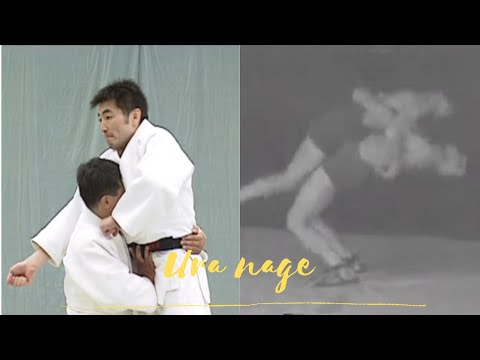
Judo's most devastating throw VS Greco-Roman wrestling's body lock takedown
0
Body-Lock Takedown·Chadi
This video discusses Judo's Ura nage throw, and Greco-Roman wrestling's body lock throw, and compare the different appro…
Translation: Body-lock takedown — a takedown executed by securing a tight grip around the opponent's torso (body lock) and using hip pressure, trips, or lifts to bring them to the ground
The Body-Lock Takedown secures a tight body lock (clasping both hands around the opponent's torso, typically with one arm over the shoulder and one under the armpit, hands clasped behind the opponent's back) and uses a combination of hip pressure, footwork, and tripping mechanics to take the opponent to the ground. [1] The body lock is one of the most controlling clinch positions in grappling because it prevents the opponent from creating distance, denies their ability to disengage to striking range, and provides the attacker with a stable platform from which multiple takedown options are available. [1],[2] BJ Penn documented the Body-Lock Takedown in The Book of Knowledge (2007) as a core MMA clinch technique, presenting it alongside the dirty boxing clinch and the Muay Thai clinch as one of three primary clinch strategies. [1] The technique has become increasingly prominent in modern UFC competition: fighters like Khabib Nurmagomedov, Islam Makhachev, and Daniel Cormier have built their grappling games around the body lock, using it as the foundation for trips, lifts, and cage-wall takedowns that bypass the traditional shot-based takedown system (which can be sprawled on). [2],[3] The body lock's tactical advantage over the double-leg or single-leg takedown is that it does not require a level change (dropping below the opponent's hips) — the attacker maintains an upright posture throughout, which preserves the ability to deliver knees, elbows, and dirty boxing strikes from the clinch if the takedown is not immediately available. [1] In Greco-Roman wrestling, the body lock is the PRIMARY takedown mechanism (leg attacks are prohibited), and the body-lock lifts and throws of Greco-Roman are the most spectacular techniques in Olympic wrestling. [2] The Dagestani wrestling tradition (which heavily influenced Khabib Nurmagomedov's style) combines the Greco-Roman body lock with freestyle trips and cage-wall techniques, creating a body-lock takedown system that has dominated modern MMA grappling. [3]
The body-lock takedown has roots in the oldest wrestling traditions: Greco-Roman wrestling (which has been part of the modern Olympic Games since 1896 and has ancient roots in Greek and Roman wrestling) uses the body lock as its primary takedown mechanism because leg attacks are prohibited. [2] The Dagestani wrestling tradition — a regional style from the Caucasus Mountains that combines elements of Greco-Roman, freestyle, and folk wrestling — refined the body-lock takedown for no-gi and combat application. [3] Khabib Nurmagomedov (29-0, retired UFC lightweight champion) brought the Dagestani body-lock system to global prominence in MMA, demonstrating that persistent body-lock pressure against the cage could defeat the world's best strikers and wrestlers. [3] BJ Penn documented the body-lock takedown in 2007, but its prominence in MMA accelerated dramatically after Khabib's dominance from 2018-2020. [1],[3] Islam Makhachev (Khabib's protégé and current UFC lightweight champion) has continued the body-lock dominance, confirming the technique's effectiveness at the highest level. [3]
The body-lock takedown has become one of the most effective and commonly used takedown methods in modern MMA, particularly against the cage. [1],[2],[3] Its advantages over the traditional double-leg and single-leg takedowns include: (1) no level change required (the attacker stays upright, preserving the ability to strike), (2) more control of the opponent's centre of mass (the body lock grips the torso, not the legs), (3) persistent pressure capability (the body lock can be maintained for extended periods while the attacker works for the takedown), and (4) cage-wall synergy (the body lock + cage wall creates an inescapable control situation). [1],[2] Khabib Nurmagomedov's 29-0 record — built largely on body-lock pressure against the cage — is the strongest evidence for the technique's effectiveness at the highest level. [3] In Greco-Roman wrestling, body-lock lifts and throws are the highest-scoring techniques and have produced some of the most spectacular moments in Olympic wrestling history. [2]
Ancient wrestling (body lock as fundamental grappling control) → Greco-Roman Olympic wrestling (body lock as primary takedown, 1896-present) → Dagestani wrestling tradition (Caucasus regional style combining body lock with trips) → Khabib Nurmagomedov (brought Dagestani body lock to MMA, 2012-2020) → Islam Makhachev (continues the body-lock dominance, 2020-present) → now the most prominent takedown system in modern MMA. [1],[2],[3]
Khabib Nurmagomedov (29-0, retired) — built his undefeated UFC career primarily on body-lock takedowns against the cage || Islam Makhachev (current UFC lightweight champion) — continues the Dagestani body-lock system || Daniel Cormier (UFC double champion) — used body-lock trips and lifts throughout his heavyweight and light heavyweight title reigns || Greco-Roman Olympic wrestling — body-lock throws are the signature techniques of the discipline, producing some of the most spectacular moments in Olympic history || The body-lock takedown against the cage has become the most commonly used takedown method in UFC competition.
No images yet for this technique.
Sign in to suggest an image.
This video discusses Judo's Ura nage throw, and Greco-Roman wrestling's body lock throw, and compare the different appro…
No instructional courses yet for this technique.
Sign in to suggest a course.
Risk of injury to the person this technique is applied to
The Body-Lock Takedown itself is a positional technique with moderate injury risk — the opponent is taken to the ground in a controlled manner. However, the SLAM variant (lifting the opponent and driving them into the mat) can cause significant impact injury to the back and head. In MMA, the body-lock slam has produced concussions and spinal compression injuries when the opponent is driven headfirst into the canvas.
Skill level needed to execute this technique reliably
Whether this technique is allowed under major competition rule sets
Mixed Martial Arts: The Book of Knowledge (Penn, Cordoza & Krauss, 2007)
description: [1] Penn 2007, [2] Couture 2008, [3] UFC records
Standard katakana transliteration of Western martial arts terminology (外来語) — used in Japanese MMA, boxing, and BJJ communities
description: [1] Penn 2007, [2] Couture 2008, [3] UFC records
Strong grip endurance (the clasped hands must maintain the body lock against resistance for extended periods)
Good hip positioning and pressure
Core strength for driving and tripping
Upper body pulling strength for the body lock
Wrestling base for balance during the takedown
Accessible to all body types — the body lock works regardless of the attacker's height or reach (unlike the double-leg, which is harder for shorter fighters to shoot)
The body lock takedown uses double underhooks around the opponent's torso to lift or trip them to the ground. Khabib Nurmagomedov's body lock system is the most studied example — he used it to control and ground virtually every opponent in his undefeated UFC career. (MMA competition records; The Ultimate MMA Training Guide)
Judo's approach to throws like ura nage emphasizes a pressing movement with the hand on the lower abdomen that offers a range of control—you can either completely disconnect or keep the opponent safe and close. This pressing technique is largely untapped in modern practice, though Russian and Georgian judoka are known to be keen on ura nage.
The Body-Lock Takedown secures a tight body lock (clasping both hands around the opponent's torso, typically with one arm over the shoulder and one under the armpit, hands clasped behind the opponent's back) and uses a combination of hip pressure, footwork, and tripping mechanics to take the opponent to the ground. The body lock is one of the most controlling clinch positions in grappling because it prevents the opponent from creating distance, denies their ability to disengage to striking range, and provides the attacker with a stable platform from which multiple takedown options are available.
The body-lock takedown has roots in the oldest wrestling traditions: Greco-Roman wrestling (which has been part of the modern Olympic Games since 1896 and has ancient roots in Greek and Roman wrestling) uses the body lock as its primary takedown mechanism because leg attacks are prohibited. The Dagestani wrestling tradition — a regional style from the Caucasus Mountains that combines elements of Greco-Roman, freestyle, and folk wrestling — refined the body-lock takedown for no-gi and combat application.
IJF: legal — Legal takedown technique; IBJJF: legal — Legal at all belt levels, scored as takedown (2 points); UWW: legal — Legal in freestyle, may be restricted in Greco-Roman depending on technique; Unified MMA: legal — Legal takedown technique; ADCC: legal — Legal, scored 2-4 points in second half of match; FIAS Sport Sambo: legal — Legal — all takedowns permitted; FIAS Combat Sambo: legal — Legal; NCAA Folkstyle: legal — Legal, scored as takedown (2 points)
Danger rating 4/10. The Body-Lock Takedown itself is a positional technique with moderate injury risk — the opponent is taken to the ground in a controlled manner. However, the SLAM variant (lifting the opponent and driving them into the mat) can cause significant impact injury to the back and head. In MMA, the body-lock slam has produced concussions and spinal compression injuries when the opponent is driven headfirst into the canvas.
The standard setup chain: Striking range → Close distance (through punches, cage cutting, or the opponent's advance) → Establish clinch contact → Pummel for double underhooks or over-under position → Clasp hands behind the opponent's back (gable grip or S-grip) → BODY LOCK ESTABLISHED → Drive hips into the opponent → Trip: hook the opponent's outside leg while driving laterally → OR Lift: drive hips under and lift → OR Cage press: drive them into the fence and work for the trip from the wall → Opponent goes to the ground → Establish top control (side control, mount, or maintain the body lock on the ground) → If the takedown is defended → maintain the body lock → deliver knees and short punches → wait for the opening → try again.
Standard counters include: Break the grip — the primary defence: if the body lock's hand clasp is broken, the takedown collapses. Fight the hand… / Underhook and pummel — achieving an underhook inside the body lock creates a wedge that can break the grip / Whizzer — establishing a whizzer (overhook) on one side resists the body lock's driving force / Hip escape — driving the hips backward creates space that can break the body lock.
Common variants: Body-lock trip (using the foot to hook the opponent's leg while driving w…); Body-lock lift (lifting the opponent off the ground and placing them down…); Body-lock slam (lifting and forcefully driving the opponent into the mat …); Body-lock to back (securing the body lock then circling to take the back whi…); Cage body-lock takedown (using the cage wall as a third control point); Body-lock to knee trip (driving the knee behind the opponent's knee to buckle the…); Body-lock lateral drop (dropping laterally with the body lock for a sacrifice-sty…).
Khabib Nurmagomedov (29-0, retired) — built his undefeated UFC career primarily on body-lock takedowns against the cage || Islam Makhachev (current UFC lightweight champion) — continues the Dagestani body-lock system || Daniel Cormier (UFC double champion) — used body-lock trips and lifts throughout his heavyweight and light heavyweight title reigns || Greco-Roman Olympic wrestling — body-lock throws are the signature techniques of the discipline, producing some of the most spectacular moments in Olympic history || The body-lock takedown against the cage has become the most commonly used takedown method in UFC competition.
Top errors to watch for: Grip breaking — the most common failure: if the hands come apart, the body lock collapses and the opponent escapes. T… / Hips too far from the opponent — if the attacker's hips are not driving into the opponent's body, there is no displac… / Trying to muscle the takedown — the body-lock takedown uses trips, hooks, and hip displacement, not brute lifting for… / Not using the cage (in MMA) — the cage is the body-lock's greatest ally; attempting the takedown in open space allows….
The Body-Lock Takedown is also known as Bodi Rokku Teikudaun, Body Lock Trip, Bear Hug Takedown, Body Lock Throw, Clinch Takedown.