9 Standing Arm Locks (BREAKS) in Jiu-Jitsu #jujitsu #armlock
0
Standing·TRITAC Martial Arts·Added by Admin
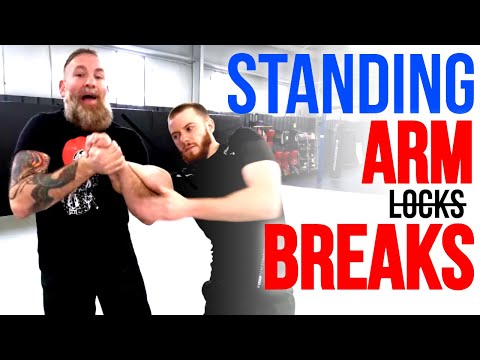
Standing arm locks, or should we call arm breaks are a cornerstone of Japanese Jujitsu Techniques. In the video coach Ma…
Translation: standing
The standing ear pull is a pain compliance technique applied during upright confrontations by gripping and pulling or twisting the opponent's ear to control their head position and movement. [1],[2] The pain from ear cartilage manipulation forces the opponent to follow the direction of the pull, allowing the attacker to steer them, off-balance them, or set up takedowns. [1],[3] In self-defense contexts, the standing ear pull can serve as a quick compliance tool to control an aggressor without striking. [1] It is considered a 'dirty' technique in sport but practical in self-defense and law enforcement. [1],[2]
Standing ear manipulation has been documented in self-defense manuals, traditional jujutsu, and military combatives for centuries. [1],[2] The technique is taught in law enforcement and security training as a pain compliance method for controlling non-compliant individuals. [1],[3] It is universally prohibited in sport grappling competition. [1]
Standing submissions appear in judo (tachi-waza submissions), catch wrestling, and were adopted into MMA from these traditions. [1]
Standing guillotine chokes and standing arm triangles are among the most common standing submissions in UFC competition. [1]
No images yet for this technique.
Sign in to suggest an image.
Standing arm locks, or should we call arm breaks are a cornerstone of Japanese Jujitsu Techniques. In the video coach Ma…
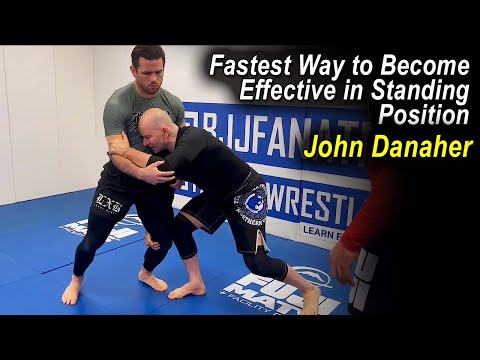
Fastest Way to Become Effective in Standing Position - John Danaher explains his latest BJJ Instructional video called "…
Standing position encompasses foundational control and positional mechanics that precede takedown execution in Brazilian and Japanese jiu-jitsu. TRITAC Martial Arts emphasizes standing arm locks and pressure techniques derived from Japanese jiu-jitsu traditions, focusing on breaking mechanics applied from clinch positions such as the 50/50 pommel and single collar tie. These techniques prioritize violent, explosive application of blade pressure against the elbow joint to achieve arm breaks rather than submissions in self-defense contexts. Conversely, John Danaher (Bernardo Faria BJJ Fanatics) approaches standing position through the lens of grip asymmetry and positional control preceding takedowns, arguing that effective standing requires establishing dominant hand positioning—particularly controlling an opponent's head while denying them control of one's own head—before executing takedown attempts. Both instructors agree that standing position demands prior control before attempting submissions or takedowns, though they differ significantly in application: TRITAC stresses rapid, violent joint-breaking techniques effective against untrained opponents, while Danaher emphasizes systematic grip hierarchy, foot positioning manipulation, and chained takedown sequences for sport contexts like ADCC. Danaher's framework prioritizes postural integrity and weight distribution to maintain dominance, while TRITAC's instruction focuses on isolating limbs at specific anatomical pressure points. Both recognize standing position as increasingly critical in modern jiu-jitsu competition.
Synthesized from 2 instructors
No instructional courses yet for this technique.
Sign in to suggest a course.
Risk of injury to the person this technique is applied to
Ear pull variant — pain compliance with minimal structural risk
Skill level needed to execute this technique reliably
Whether this technique is allowed under major competition rule sets
Japanese traditional martial arts terminology
Japanese traditional martial arts terminology
Standard Japanese martial arts terminology (kanji/hiragana)
Established Japanese martial arts naming convention — native Japanese term (和語/漢語)
Japanese terminology sourced from Japanese traditional martial arts terminology
grip strength, joint isolation ability, positional control
strong forearms and stable base
forearm flexors, core stabilisers, hip muscles for base
John Danaher explains that people often struggle in standing position because they focus only on the final obvious result—the takedown itself—without understanding the subtle chain of events that must happen first. They need to emphasize prior control and the context around takedowns, not just replicate the takedown in isolation.
John Danaher emphasizes that takedowns should be chained together so that when one fails, you have backup options. For example, if a single leg fails, you can transition to a waist position or underhook to continue applying pressure rather than stopping.
According to TRITAC Martial Arts, when using a blade or forearm on standing arm locks, focus on connecting to the inside of the elbow and push forward while maintaining control. The key is referencing that area of the arm to generate breaking pressure rather than relying on aggression alone.
John Danaher stresses never carrying your opponent's weight on your head and shoulders during takedowns. Keep your head up, maintain posture, and stay off your knees as much as possible to avoid exhaustion and exposure to being defeated.
The standing ear pull is a pain compliance technique applied during upright confrontations by gripping and pulling or twisting the opponent's ear to control their head position and movement. The pain from ear cartilage manipulation forces the opponent to follow the direction of the pull, allowing the attacker to steer them, off-balance them, or set up takedowns.
Standing ear manipulation has been documented in self-defense manuals, traditional jujutsu, and military combatives for centuries. The technique is taught in law enforcement and security training as a pain compliance method for controlling non-compliant individuals.
IBJJF: restricted — Varies — pressure-based controls may be legal but direct pain holds without s…; IJF: banned — Not a recognized submission category in judo; ADCC: legal — Legal; Unified MMA: legal — Legal; FIAS Sport Sambo: restricted — Varies by application; FIAS Combat Sambo: legal — Legal
Danger rating 2/10. Ear pull variant — pain compliance with minimal structural risk
The standard setup chain: Establish Position → Create the Threat → Secure the Hold → Finish.
Standard counters include: Early Recognition — identify the submission attempt early and begin defence immediately / Posture and Base — maintain strong posture and base to prevent submission setups / Grip Fight — deny the attacker their preferred gripping configuration.
Common variants: Standard variation (primary grip configuration and finishing angle); Gi variation (using the gi material for grip assistance and control); No-gi variation (adapted grips for submission grappling without the gi); Transition variation (applied during a positional change or scramble).
Standing guillotine chokes and standing arm triangles are among the most common standing submissions in UFC competition.
Top errors to watch for: Attempting standing compliance on a resisting, aggressive opponent — pain compliance works best on cooperative or sem… / Not transitioning to a takedown when compliance fails — if the standing lock isn't working, take the fight to ground … / Using excessive force — standing compliance techniques are designed for control, not injury; excessive force causes d… / Applying standing wrist locks without controlling the elbow — the elbow must be managed; a free elbow allows the oppo….
The Standing is also known as Tachi-waza, Standing Pressure Technique, Tachi-waza Pressure.