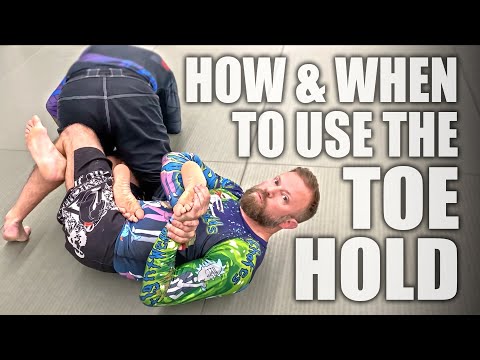
The Toe Hold - How & When to Use It | Jiu-Jitsu Submissions
0
Standard Toe Hold·Knight Jiu-Jitsu·Added by Admin
Hundreds more class instruction videos at Patreon.com/KnightJiuJitsu An extremely popular, useful and effective leg att…
Translation: toe hold
The toe hold is a leg lock that applies combined plantarflexion and inversion to the ankle complex using a figure-four grip configuration. The attacker isolates the opponent's foot and twists it downward and inward, targeting the talocrural and subtalar joints simultaneously. [1] The technique has deep roots in catch wrestling — Frank Gotch used it as his signature finishing move, defeating Georg Hackenschmidt in their famous 1908 World Championship match. [2] In BJJ, Rolls Gracie popularized leg attacks in the 1970s, and his students called this technique 'Pe de Vaca' (cow's foot).
The toe hold has roots in catch wrestling, where Frank Gotch adopted it as his signature finishing move. He used it to defeat Georg Hackenschmidt in their 1908 World Championship match (a 2-hour bout in Chicago). [1] In BJJ, Rolls Gracie defied the Gracie family's dismissal of leg locks in the 1970s, encouraging his students to attack feet and legs. His student Marcio 'Macarrao' Stambowsky called the technique 'Pe de Vaca' (cow's foot) — because it was like a wristlock but on the foot. [2]
The toe hold is an effective submission from leg entanglement positions, particularly when the opponent defends the higher-percentage heel hook. Frank Mir's 46-second submission of Tank Abbott at UFC 41 (2003) remains the only toe hold finish in UFC history. [1] The technique is particularly effective in sambo competition where it has been a standard part of the competitive repertoire for decades.
The toe hold traces from catch wrestling (Frank Gotch, early 1900s) through Brazilian Jiu-Jitsu (Rolls Gracie, 1970s) to the modern leg lock revolution led by Dean Lister and John Danaher's systematic approach. The Estima Lock variant was developed by Victor and Braulio Estima in the mid-2000s.
First and only UFC toe hold finish: Frank Mir vs. Tank Abbott, UFC 41, February 28, 2003, Round 1 at 0:46. [1] Masakazu Imanari submitted Masahiro Oishi with a toe hold at DEEP: 59 Impact. Notable practitioners include Victor Hugo, Dean Lister, and Felipe 'Preguica' Pena.
No images yet for this technique.
Sign in to suggest an image.
Hundreds more class instruction videos at Patreon.com/KnightJiuJitsu An extremely popular, useful and effective leg att…
Toe hold submissions from different leg entanglements such as Irimi Ashi Garami (Straight ankle lock/Single Leg X positi…
PLEASE Click this link to SUPPORT the TeachMeGrappling Channel!!! https://www.patreon.com/TeachMeGrappling or https:/…
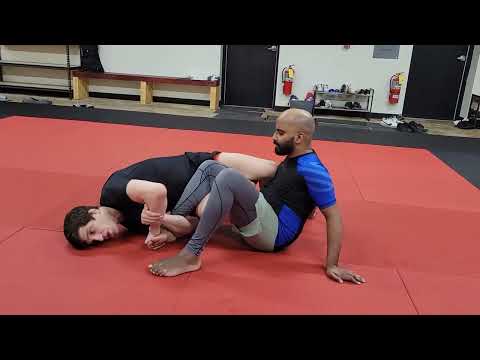
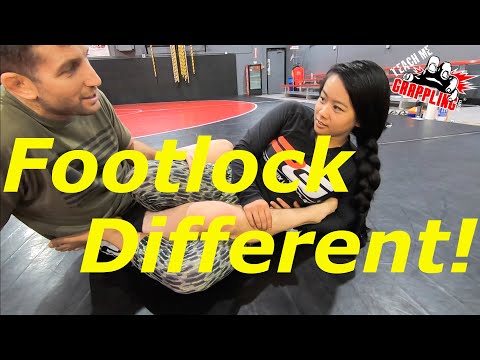
The standard toe hold is an ankle lock submission executed by controlling the opponent's foot and using the ankle as a fulcrum to apply rotational and compressive pressure. Knight Jiu-Jitsu emphasizes that proper hand placement is critical: the grip should be positioned high on the toes (ideally using the thumb for added crushing pressure when foot size permits), with the forearm placed snugly against the heel to create the mechanical fulcrum. A common error identified by all three instructors is pushing the foot away rather than pulling it backward toward the opponent's buttocks, analogous to finishing a rear naked choke by pulling the elbow back. Knight Jiu-Jitsu notes the submission should typically be kept below chin level to maintain adequate leg bend and prevent the opponent from straightening out and escaping. Pica Pau Jiu Jitsu & Grappling provides detailed grip specifics: middle finger on the pinky knuckle with a perpendicular foot orientation, and emphasizes drawing the elbows inward (using the "tight jar" analogy) while pushing toes and lifting the heel toward the ceiling to direct pressure through the ankle. Both Knight Jiu-Jitsu and Pica Pau describe entry points including outside ashi garby, silo knot/figure-four configurations, open guard diving attacks, neon belly transitions, and leg entanglement positions like single-leg X and 50/50. Knight Jiu-Jitsu highlights the Go Core variation where the grip shifts to the heel with a spade arm, creating spiral pressure similar to a heel hook. All instructors present the toe hold as highly effective in combination with other submissions—particularly as a transitional tool between straight footlocks, heel hooks, and knee bars—rather than as an isolated finishing position.
Synthesized from 3 instructors
No instructional courses yet for this technique.
Sign in to suggest a course.
Risk of injury to the person this technique is applied to
Attacks ankle ligaments with fewer sensory receptors than other joints — damage can occur before adequate pain signals reach the brain; can injure both ankle AND knee simultaneously through force transmission up the leg
Skill level needed to execute this technique reliably
Whether this technique is allowed under major competition rule sets
Leglocks: Enter the System (Danaher, 2017) — Toe Hold mechanics within ashi garami hierarchy
Biomechanical analysis — [1] Kinematics of the Toe Hold (Dr. Mike Piekarski, DPT) — clinical analysis of ATFL/CFL ligament involvement
Leg lock system — [2] Leglocks: Enter the System (Danaher, 2017) — comprehensive positional hierarchy
Leglocks: Enter the System (Danaher, 2017) || The Estima Lock & New School Toe Hold (Estima, BJJ Fanatics) || Kinematics of the Toe Hold (Dr. Mike Piekarski, DPT, mmaleech.com)
Standard katakana transliteration of Western martial arts terminology (外来語) — used in Japanese MMA, boxing, and BJJ communities
Biomechanical analysis — [1] Kinematics of the Toe Hold (Dr. Mike Piekarski, DPT) — clinical analysis of ATFL/CFL ligament involvement
Leg lock system — [2] Leglocks: Enter the System (Danaher, 2017) — comprehensive positional hierarchy
Historical — Frank Gotch biography (Wikipedia), Rolls Gracie history (Evolve MMA, BJJ Heroes)
grip strength for figure-four control, understanding of leg entanglement positions
strong wrists and forearms for maintaining rotational pressure
forearm flexors, biceps, core stabilizers
Make sure your hips are situated through the line of your opponent's knee, rather than positioned up high. This proper hip placement is essential for effective control and finishing the submission.
Get a good outside grip on the foot. Knight Jiu-Jitsu recommends using your thumb to squeeze and crush the foot if space allows, though the specific finger placement can vary depending on your opponent's foot size.
Similar to finishing a one-arm rear naked choke, pull your elbow back rather than pulling the leg back. Also, sit off to the side and pinch your legs together to create an inside configuration, ideally hooking your bottom leg through to your opponent's far-side hip.
The toe hold can be effective from neon belly position as a transition, and it can work into an attacking-style guard pass to help you pass the guard. It can also open up opportunities for other submissions like the omoplata.
The toe hold is a leg lock that applies combined plantarflexion and inversion to the ankle complex using a figure-four grip configuration. The attacker isolates the opponent's foot and twists it downward and inward, targeting the talocrural and subtalar joints simultaneously.
The toe hold has roots in catch wrestling, where Frank Gotch adopted it as his signature finishing move. He used it to defeat Georg Hackenschmidt in their 1908 World Championship match (a 2-hour bout in Chicago).
IBJJF: restricted — Brown and black belt only; IJF: banned — Only elbow joint locks (kansetsu-waza) permitted in judo — all other joint lo…; ADCC: legal — Legal — all submissions legal in ADCC; Unified MMA: legal — Legal submission technique; FIAS Sport Sambo: legal — Legal; FIAS Combat Sambo: legal — Legal
Danger rating 7/10. Attacks ankle ligaments with fewer sensory receptors than other joints — damage can occur before adequate pain signals reach the brain; can injure both ankle AND knee simultaneously through force transmission up the leg
The standard setup chain: Establish Ashi Garami Control → Isolate the Foot → Secure Figure-Four Grip → Apply Rotational Torque.
Standard counters include: The Boot — flex and straighten the foot maximally to create resistance and disrupt rotational mechanics / Grip Fighting — peel the figure-four grip; breaking even one hand off disrupts the lock / Rolling Escape — roll in the direction of pressure to unwind the grip / Counter-Attack — attack opponent's neglected leg with a heel hook, ankle lock, or kneebar.
Common variants: Inside toe hold (applied from inside ashi garami, rotates foot inward towa…); Outside toe hold (applied from outside leg entanglement at a different angle); Estima Lock (developed by Victor and Braulio Estima in the mid-2000s, …); Aoki Lock (twists the foot outward (eversion) from inside entangleme…); Gotch toe hold (Frank Gotch's original catch wrestling step-over variatio…).
First and only UFC toe hold finish: Frank Mir vs. Tank Abbott, UFC 41, February 28, 2003, Round 1 at 0:46.
Top errors to watch for: Not controlling the opponent's hip — allows them to spin out and relieve pressure / Applying too fast — the low pain receptor density means injuries happen before the opponent can tap / Not securing a proper figure-four grip — the grip must be tight with wrists locked to maintain rotational control / Losing knee line control — the opponent's knee must be controlled to prevent straightening the leg and escaping.
The Standard Toe Hold is also known as Tō Hōrudo, Toe Hold, Figure-Four Toe Hold, Pe de Vaca, Foot Lock.
The toe hold attacks ankle ligaments (ATFL, CFL) that have fewer sensory receptors than other joints. This means damage can occur before the opponent feels enough pain to tap. The IBJJF restricts it to experienced practitioners who understand the risks and can apply/defend it safely. In ADCC and MMA, it is legal at all levels.
The toe hold attacks the ankle joint through plantarflexion and inversion (folding the foot down and in). The heel hook attacks the knee ligaments through rotation of the heel. The heel hook is generally considered more dangerous because the knee has even fewer pain receptors than the ankle, and ACL tears can happen with almost no warning. The toe hold is often used when the heel hook is defended.
The 'boot' defense: dorsiflex your foot (pull toes toward shin) and straighten your leg to resist the rotation. Grip fight to peel their figure-four apart — breaking even one hand disrupts the lock. If caught deep, roll in the direction of pressure to relieve the torque on your ankle. Counter-attack by going after their legs while they are committed to your foot.