Wing Chun Phoenix Eye Punch — The Pressure Point Knockout Secret
0
Phoenix Eye Fist·WING CHUN WISDOM • IP MAN LEGACY
Free 2‑minute chain punch test (scorecard + 3 drills): https://wingchunwisdom.com See if your Wing Chun would hold up un…
Translation: Fung (鳳) = phoenix, Ngan (眼) = eye, Kuen (拳) = fist — the single protruding knuckle resembles the eye of a phoenix when viewed from the front
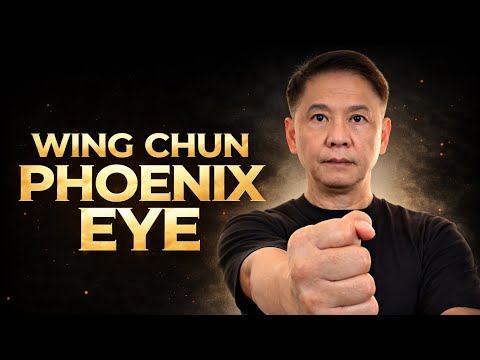
The Phoenix Eye Fist is a Chinese martial arts striking technique where the index finger knuckle is extended beyond the other knuckles to form a single protruding point, creating a concentrated striking surface for attacking pressure points, nerve clusters, and other anatomically vulnerable targets. [1] The fist is formed by curling all fingers tightly except the index finger, which extends its proximal interphalangeal (PIP) joint slightly forward of the other knuckles while the distal phalanx curls back toward the palm — the result is a fist with a single bony point protruding approximately 1-2 centimetres beyond the standard fore-fist surface. [1],[2] This single-point concentration of force dramatically increases the pressure (force per unit area) delivered to the target: a standard punch distributes impact across approximately 8-10 cm² of the front two knuckles, while the Phoenix Eye concentrates the same force onto approximately 1 cm² of a single knuckle — producing roughly 8-10x the pressure on the target tissue. [1] This extreme pressure concentration is what makes the Phoenix Eye effective against small, precise targets that a regular punch would strike too broadly to affect: the temple, the hollow behind the ear (mastoid process), the throat (specifically the carotid sinus), the sternum notch (suprasternal notch), intercostal nerve points between the ribs, and the philtrum (the groove between the nose and upper lip). [1],[2] The technique appears across multiple Chinese martial arts systems, most prominently in Wing Chun, Southern Praying Mantis, Hop-Gar, and various Hakka boxing styles. [1],[2] In Japanese karate, the equivalent technique is called Ippon Ken (一本拳, 'one-point fist') and appears in several traditional kata. [3] The Phoenix Eye requires significant finger conditioning to use safely — without conditioning, the protruding index knuckle can fracture, dislocate, or hyperextend on impact against hard targets like the skull. [1],[2]
The Phoenix Eye Fist is one of the classical hand formations of Southern Chinese kung fu, with documented use across multiple Cantonese and Fujian martial arts systems dating back several centuries. [1],[2] In the Hop-Gar (Tibetan White Crane) system, the Phoenix Eye is one of several animal-inspired hand shapes (alongside the Tiger Claw, Crane Beak, and others) that give the practitioner a diverse arsenal of striking surfaces for different tactical situations. [1] The name 'Phoenix Eye' (鳳眼) comes from the visual appearance of the fist when viewed from the front: the single protruding knuckle surrounded by the curled fingers resembles the eye of a phoenix, the mythical bird of rebirth in Chinese culture. [1] Wing Chun's use of the Phoenix Eye (as part of its centreline striking system) and Praying Mantis' use (for pressure point attacks) represent parallel developments of the same concept within different Southern Chinese martial arts traditions. [2] The Japanese equivalent, Ippon Ken, appears in several Okinawan karate kata (including Seienchin and Seipai), indicating that the technique was transmitted from Chinese martial arts to Okinawan te through the historical cultural exchange between Fujian province and the Ryukyu Islands. [3]
The Phoenix Eye is extremely effective against its intended targets (pressure points, nerve clusters, soft tissue) but essentially useless against unintended targets (thick muscle, skull bone). [1],[2] Its effectiveness depends entirely on accuracy: a precise Phoenix Eye to the carotid sinus, throat, or temple produces immediate physiological responses (fainting, choking, concussion) that are disproportionate to the force applied — this is what traditional martial artists mean by 'pressure point' effectiveness. [1] Modern sports science has partially validated the concept: the carotid sinus is a known baroreceptor that, when stimulated by pressure, triggers a vasovagal reflex causing blood pressure drop and potential syncope — the Phoenix Eye's concentrated point provides an ideal stimulation mechanism. [2] The technique's limitation is practical: under the stress of real combat, hitting a 1-2 cm target on a moving opponent is extremely difficult, which is why the Phoenix Eye is considered an expert-level technique requiring years of precision training. [1]
Not applicable in modern sport competition (targets are prohibited or impractical in competitive settings). The Phoenix Eye is primarily a self-defence and traditional martial arts technique. Historical accounts describe its use in Chinese martial arts challenge matches (leitai) and in Okinawan karate demonstrations.
No images yet for this technique.
Sign in to suggest an image.
Free 2‑minute chain punch test (scorecard + 3 drills): https://wingchunwisdom.com See if your Wing Chun would hold up un…
Combat applications from the Baguazhang Phoenix Chi Awakening form. These training methods are used to develop timing, m…
The Phoenix Eye Fist is a specialized striking technique prominent in Wing Chun and Bagua Zhang, designed to deliver precise pressure-point damage with minimal movement. Wing Chun Wisdom details fist formation by curling fingers inward with the thumb positioned against the index finger knuckle, creating a compact striking surface that targets three primary pressure points: the temple, the area between the eyebrows, and below the nose above the mouth. The instructor emphasizes relaxation during approach and maximum tension only at impact, with rapid return velocity matching the outgoing force to maximize damage efficiency. The Kung Fu Platform contextualizes the technique within Bagua's Phoenix form, describing it as part of a flowing combat sequence involving eye strikes, neck chops, and forearm techniques for self-defense applications, often combining palm strikes and hammer fists with the basic Phoenix Eye mechanics. Rattan Ring Training shifts focus to conditioning methodology, stressing high-volume, light-to-medium intensity training on mung bean bags rather than heavy impact work that risks hand damage. All three instructors agree on the fist structure and pressure-point targeting, though they diverge in emphasis: Wing Chun prioritizes center-line control and tension mechanics, Bagua emphasizes integrated application within flowing combinations, and Rattan Ring focuses on sustainable conditioning practices and proper knuckle alignment to prevent long-term injury while building practical striking power.
Synthesized from 3 instructors
No instructional courses yet for this technique.
Sign in to suggest a course.
Risk of injury to the person this technique is applied to
The Phoenix Eye to the throat (carotid sinus) can cause immediate vasovagal syncope (blood pressure drop and fainting), laryngospasm (involuntary throat closure), or carotid dissection (tearing of the carotid artery wall — a medical emergency). To the temple, the concentrated force can cause concussion with less overall force than a standard punch. To the sternum notch, it can cause severe pain and breathing difficulty. The technique is considered potentially lethal when applied to the throat with full force. [1,2]
Skill level needed to execute this technique reliably
Whether this technique is allowed under major competition rule sets
Hop-Gar Kung Fu (Chin & Staples)
description: [1] Chin & Staples, [2] Yang 1996 pressure points
Official karate technique names (和語/漢語)
Established Japanese martial arts naming convention — native Japanese term (和語/漢語)
description: [1] Chin & Staples, [2] Yang 1996 pressure points
Requires years of progressive finger conditioning (the index PIP joint must be toughened to withstand impact)
Exceptional hand-eye coordination for precise targeting of small anatomical points
Strong wrist alignment (any deviation causes injury)
Knowledge of anatomical pressure points (the technique is useless without knowing WHERE to strike)
Does NOT require exceptional strength — precision and conditioning are the key attributes, not power
The phoenix eye fist (feng yan quan) uses the extended index finger knuckle as the striking surface — similar to karate's ippon ken. Targets pressure points and soft tissue. Appears in 4 books in our corpus. Used in Wing Chun, Southern Shaolin, and other Chinese systems. (4 books; Chinese martial arts texts)
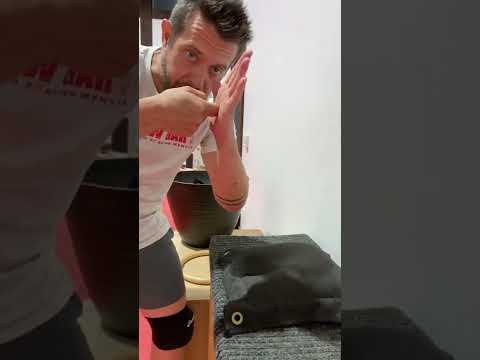
Form the fist by folding your fingers in a specific sequence (1, 2, 3, 4, 5), and ensure your thumb hangs on the side to block the fist so it doesn't collapse. The structure must remain strong to maintain proper shape during striking.
Relax your hand and arm as you punch, then tense only when you reach the target. Practice with slow, medium, and fast repetitions along the center line to build consistency and power.
Hit the bag with your whole fist, not just a single knuckle, and avoid excessive conditioning on hard objects like pebbles or steel, as damaging these joints will prevent you from holding the proper fist shape needed for effective striking.
No—Wing Chun's Phoenix Eye Fist is about precision, angle, timing, and structure rather than size or strength, allowing a single strike to function as a pressure point knockout weapon.
The Phoenix Eye Fist is a Chinese martial arts striking technique where the index finger knuckle is extended beyond the other knuckles to form a single protruding point, creating a concentrated striking surface for attacking pressure points, nerve clusters, and other anatomically vulnerable targets. The fist is formed by curling all fingers tightly except the index finger, which extends its proximal interphalangeal (PIP) joint slightly forward of the other knuckles while the distal phalanx curls back toward the palm — the result is a fist with a single bony point protruding approximately 1-2 centimetres beyond the standard fore-fist surface.
The Phoenix Eye Fist is one of the classical hand formations of Southern Chinese kung fu, with documented use across multiple Cantonese and Fujian martial arts systems dating back several centuries. In the Hop-Gar (Tibetan White Crane) system, the Phoenix Eye is one of several animal-inspired hand shapes (alongside the Tiger Claw, Crane Beak, and others) that give the practitioner a diverse arsenal of striking surfaces for different tactical situations.
Unified MMA: legal — Legal striking technique; WBC/Boxing: legal — Legal — punches are the core technique of boxing; WKF: legal — Legal, jodan/chudan punch scores 1 point (yuko) — controlled contact required; Kyokushin: restricted — Body punches legal at full power, head punches banned; WT: restricted — Punches to trunk only (1 point), punches to head banned; ITF: legal — Legal — hand techniques to head and body both permitted; WAKO: legal — Legal in Full Contact and Low Kick formats; K: legal — 1/GLORY — Legal — full power punches to head and body; IFMA: legal — Legal
Danger rating 8/10. The Phoenix Eye to the throat (carotid sinus) can cause immediate vasovagal syncope (blood pressure drop and fainting), laryngospasm (involuntary throat closure), or carotid dissection (tearing of the carotid artery wall — a medical emergency). To the temple, the concentrated force can cause concussion with less overall force than a standard punch. To the sternum notch, it can cause severe pain and breathing difficulty. The technique is considered potentially lethal when applied to the throat with full force.
The standard setup chain: Close distance (through feints, trapping, or footwork) → Trap or clear the opponent's guard (pak sao, lop sao, or simultaneous block-strike) → Identify the target (throat, temple, behind ear, intercostal points) → Deliver the Phoenix Eye with precise alignment through the knuckle, wrist, and forearm → Strike the exact anatomical target → Opponent reacts to physiological effect (fainting, choking, nerve shock) → Follow up with additional strikes or control.
Standard counters include: Distance — the Phoenix Eye has the same range as a standard punch; staying beyond that range negates it / High guard — keeping both hands high protects the primary targets (throat, temple, behind the ear) / Movement — a moving target makes the precision required for pressure point striking extremely difficult / Covering the throat — in self-defence, simply raising the chin and turning the head protects the most vulnerable Phoe….
Common variants: Standard Phoenix Eye (index knuckle protruding, thumb bracing the side of the i…); Thumb-supported Phoenix Eye (thumb pressed against the side of the protruding index fi…); Middle finger Phoenix Eye (some systems use the middle finger knuckle instead of the…); Vertical Phoenix Eye (delivered with the fist vertical (like a Wing Chun centre…); Hooking Phoenix Eye (delivered with a slight hook trajectory to reach targets …); Rapid-fire Phoenix Eye (multiple quick Phoenix Eye strikes to different pressure …).
Not applicable in modern sport competition (targets are prohibited or impractical in competitive settings). The Phoenix Eye is primarily a self-defence and traditional martial arts technique.
Top errors to watch for: No finger conditioning — using the Phoenix Eye without progressive conditioning leads to index finger PIP joint dislo… / Poor wrist alignment — any wrist deviation causes the single protruding knuckle to deflect laterally, losing precisio… / Index finger not sufficiently protruding — if the knuckle doesn't extend beyond the other fingers, the punch becomes … / Striking hard bone (skull, forehead) — the Phoenix Eye is designed for soft tissue and nerve point targets; striking ….
The Phoenix Eye Fist is also known as Fung Ngan Kuen (Cantonese: 鳳眼拳, fung6 ngaan5 kyun4), Fung Ngan Kuen, Phoenix Fist, Single Knuckle Fist, Ippon Ken (Japanese equivalent).