Jack Dempsey's Falling Step - PART 2 (nuances and interpretation)
0
Falling Step Punch·expertboxing
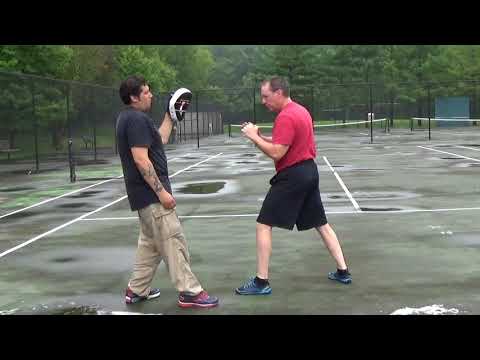
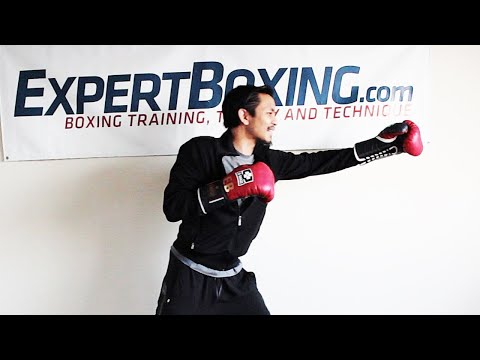
Another video on my interpretation of Jack Dempsey's falling step and how boxers can find the essence of what he's sayin…
Translation: Falling step punch — a punch powered by the body's controlled forward fall, with impact timed to coincide with the lead foot landing
The Falling Step Punch is a punching method where the fighter initiates a controlled forward fall and times the punch to land at the exact instant the lead foot touches the ground, transferring the full momentum of the falling body weight into the fist. [1] Jack Dempsey, heavyweight champion of the world from 1919 to 1926 and one of boxing's most devastating punchers, identified the falling step as the single most important mechanism behind punching power — more fundamental than hip rotation, shoulder torque, or arm strength. [1] Dempsey reasoned that a falling body generates force through gravity alone, requiring no muscular effort, and that even a small person falling into a punch delivers substantially more force than a large person pushing a punch with arm strength. [1] He illustrated the concept with a striking analogy: a year-old baby falling from a fourth-floor window would knock unconscious a burly truck driver standing below — not because the baby is strong, but because a body-weight set into fast motion by gravity is an irresistible force. [1] The lead foot and the fist arrive at their targets at the same instant — if the fist lands before the foot touches down, the full body weight is behind the punch; if the foot lands first, the body weight is absorbed by the ground and lost. [1] This synchronisation of foot-plant and fist-impact is what Dempsey called 'the explosion' — the moment when gravitational momentum converts into punching force. [1]
Jack Dempsey (1895-1983), the 'Manassa Mauler', documented the falling step theory in his 1950 book Championship Fighting: Explosive Punching and Aggressive Defense, one of the most influential boxing instructional works ever written. [1] Dempsey's fighting style was built entirely on the falling step — his aggression was not recklessness but a deliberate system of falling into opponents with every punch. [1] His destruction of Jess Willard at the 1919 Toledo championship (7 knockdowns in Round 1, resulting in a broken jaw, cheekbone, ribs, and lost teeth) remains one of the most devastating performances in boxing history. [1] Dempsey wrote the book because he believed punching power was a LEARNABLE SKILL, not an innate gift — revolutionary at the time and now the foundation of modern boxing coaching. [1] His principle has been validated by modern sports science: Walilko et al. (2008) in the British Journal of Sports Medicine confirmed that the largest component of punching force comes from body mass in motion, not arm speed. [2]
The falling step is the single most important concept in punching power across all striking martial arts. [1] Dempsey's 52 knockouts in 83 fights — many against significantly larger opponents — provides empirical evidence. [1] Modern trainers including Freddie Roach, Teddy Atlas, and Cus D'Amato taught variations as the foundation of power. [2] The concept explains why some smaller fighters punch disproportionately hard (mastered weight transfer) while some larger fighters punch weakly (rely on arm strength). [1]
Jack Dempsey (1919-1926 champion) → Championship Fighting (1950) → Cus D'Amato/Mike Tyson (1980s) → modern boxing coaching worldwide → MMA striking. [1]
Jack Dempsey: 52 KOs in 83 fights, heavyweight champion 1919-1926 || Destruction of Jess Willard (1919): 7 knockdowns Round 1, broken jaw/cheekbone/ribs || Mike Tyson (trained by Cus D'Amato using Dempsey methods): 44 KOs in 50 wins, youngest heavyweight champion ever || Underlies virtually all knockout punching in modern boxing and MMA.
No images yet for this technique.
Sign in to suggest an image.
Another video on my interpretation of Jack Dempsey's falling step and how boxers can find the essence of what he's sayin…
Jack Dempsey's Falling Step, his "straight jolt" and how it became a big part of Bruce Lee's JKD lead punch.
The falling step, also called the drop step or trigger step and popularized by Jack Dempsey in his 1920s boxing career and 1950 book Championship Fighting, transforms a jab into a power punch by dropping and shifting weight forward onto the lead leg. Iron Fist Wing Chun Boxing explains the foundational mechanics: the practitioner begins with weight on the lead leg, lifts that leg forward (without pushing off the rear leg), and catches themselves as the foot lands heel-to-toe, creating a forward lurch that drives power into the punch—analogous to a fencer's thrust. The punch lands with the foot pointing straight at the target and weight centered over the lead leg, maintaining balance and alignment. Expertboxing emphasizes a more subtle, compact interpretation, arguing that excessive forward reach dissipates power and that the technique works across a range of weight distributions (front leg, middle, or between). Both instructors agree on the core principle: weight dropping and shifting forward into the punch rather than relying on arm extension alone. Iron Fist Wing Chun Boxing extends the concept to longer ranges, where the rear leg launches the punch (similar to Bruce Lee's application), but contact still occurs with the same heel-to-toe weight shift and forward momentum. The technique requires practice on heavy bags and in sparring to develop sensitivity to optimal weight placement and distance.
Synthesized from 2 instructors
No instructional courses yet for this technique.
Sign in to suggest a course.
Risk of injury to the person this technique is applied to
The falling step dramatically amplifies punching force by adding body-weight momentum — Dempsey's falling step punches produced 52 knockouts in 83 career fights, including the destruction of 6'6" 245-pound Jess Willard (broken jaw, broken cheekbone, broken ribs, lost teeth) in Round 1 of the 1919 heavyweight title fight. [1]
Skill level needed to execute this technique reliably
Whether this technique is allowed under major competition rule sets
Championship Fighting (Dempsey, 1950)
description: [1] Dempsey 1950 Ch.8-10
Standard katakana transliteration of Western martial arts terminology (外来語) — used in Japanese MMA, boxing, and BJJ communities
description: [1] Dempsey 1950 Ch.8-10
Does NOT require exceptional strength — key requirement is timing and coordination
Good balance and proprioception to control the forward fall
Explosive calves and quadriceps help initiate from the rear foot
Strong core for structural integrity during weight transfer
Dempsey argued smaller fighters benefit MORE — their relative body-weight contribution is proportionally larger than their arm-strength deficit [1]
The falling step punch appears in 29 passages across 2 books. Jack Dempsey's signature technique — falling forward into the punch, using gravity and body weight to generate devastating power. Dempsey called it the most important punch in Championship Fighting (1950). (2 books; Dempsey, Championship Fighting)
The falling step punch works by dropping your weight and shifting it forward into the punch. According to Iron Fist Wing Chun Boxing, your weight transfers down and forward as you step, creating a 'lurch' that delivers all your weight behind the lead punch instead of just a jab. The key is that snap of weight transfer—similar to popping a towel—applied directly behind your strike.
You should not push off your rear leg. Iron Fist Wing Chun Boxing emphasizes that in the falling step, you simply lift your lead leg forward and catch yourself—it's non-telegraphic and doesn't involve shifting weight backward first. The rear foot comes along for balance, but the momentum comes from falling forward and catching the step.
A common error is trying to cover too much distance. Expert Boxing notes that the more you have to travel and reach, the weaker your punch becomes; it's better to keep the technique compact with energy and power that travels far. Also avoid landing on the ball of your foot where your heel torques, because this converts your straight-line power into rotary force and reduces impact.
Yes. Iron Fist Wing Chun Boxing explains that you can apply the same weight-dropping dynamic at jab range by shifting your weight from your heel to your toe as you punch, without taking an actual step forward. This delivers the same falling step power in a smaller, more subtle form.
The Falling Step Punch is a punching method where the fighter initiates a controlled forward fall and times the punch to land at the exact instant the lead foot touches the ground, transferring the full momentum of the falling body weight into the fist. Jack Dempsey, heavyweight champion of the world from 1919 to 1926 and one of boxing's most devastating punchers, identified the falling step as the single most important mechanism behind punching power — more fundamental than hip rotation, shoulder torque, or arm strength.
Jack Dempsey (1895-1983), the 'Manassa Mauler', documented the falling step theory in his 1950 book Championship Fighting: Explosive Punching and Aggressive Defense, one of the most influential boxing instructional works ever written. Dempsey's fighting style was built entirely on the falling step — his aggression was not recklessness but a deliberate system of falling into opponents with every punch.
Unified MMA: legal — Legal striking technique; WBC/Boxing: legal — Legal — punches are the core technique of boxing; WKF: legal — Legal, jodan/chudan punch scores 1 point (yuko) — controlled contact required; Kyokushin: restricted — Body punches legal at full power, head punches banned; WT: restricted — Punches to trunk only (1 point), punches to head banned; ITF: legal — Legal — hand techniques to head and body both permitted; WAKO: legal — Legal in Full Contact and Low Kick formats; K: legal — 1/GLORY — Legal — full power punches to head and body; IFMA: legal — Legal
Danger rating 9/10. The falling step dramatically amplifies punching force by adding body-weight momentum — Dempsey's falling step punches produced 52 knockouts in 83 career fights, including the destruction of 6'6" 245-pound Jess Willard (broken jaw, broken cheekbone, broken ribs, lost teeth) in Round 1 of the 1919 heavyweight title fight.
The standard setup chain: Establish jab rhythm (small falling steps) → Opponent times the jab → Load a larger falling step behind a feint jab → EXPLODE forward with the full falling step cross → Fist and foot land simultaneously → Follow up with hooks → Reset or continue.
Standard counters include: Counter-punch timing — the falling step commits forward, creating a vulnerable window during the fall / Clinch — grabbing the falling fighter neutralises momentum before the punch lands / Lateral movement — stepping aside avoids the linear forward fall entirely / Pull counter — pulling the head back as the opponent falls forward causes over-extension.
Common variants: Falling step jab (shortest, fastest version with minimal forward fall); Falling step cross (most powerful version using full rear-side body weight); Falling step hook (body falls forward AND laterally, timing the hook to an a…); Falling step uppercut (body drops slightly during the fall with the rising fist …); Double falling step (two successive falling steps chaining punches (basis of t…).
Jack Dempsey: 52 KOs in 83 fights, heavyweight champion 1919-1926 || Destruction of Jess Willard (1919): 7 knockdowns Round 1, broken jaw/cheekbone/ribs || Mike Tyson (trained by Cus D'Amato using Dempsey methods): 44 KOs in 50 wins, youngest heavyweight champion ever || Underlies virtually all knockout punching in modern boxing and MMA.
Top errors to watch for: Punching before the foot lands (arm-punching) — the most fundamental error: if the fist arrives before the foot, body… / Falling too far forward — over-commitment sacrifices balance. Dempsey specified only 2-4 inches of fall is sufficient. / Not using the rear foot — the rear foot must push the body into the fall, providing initial acceleration that gravity… / Tensing the punching arm — the arm should be relaxed until impact, when the fist 'catches' the falling body weight. P….
The Falling Step Punch is also known as Fōringu Suteppu Panchi, Drop Step Punch, Gravity Punch, Dempsey Falling Step, Weight Punch.